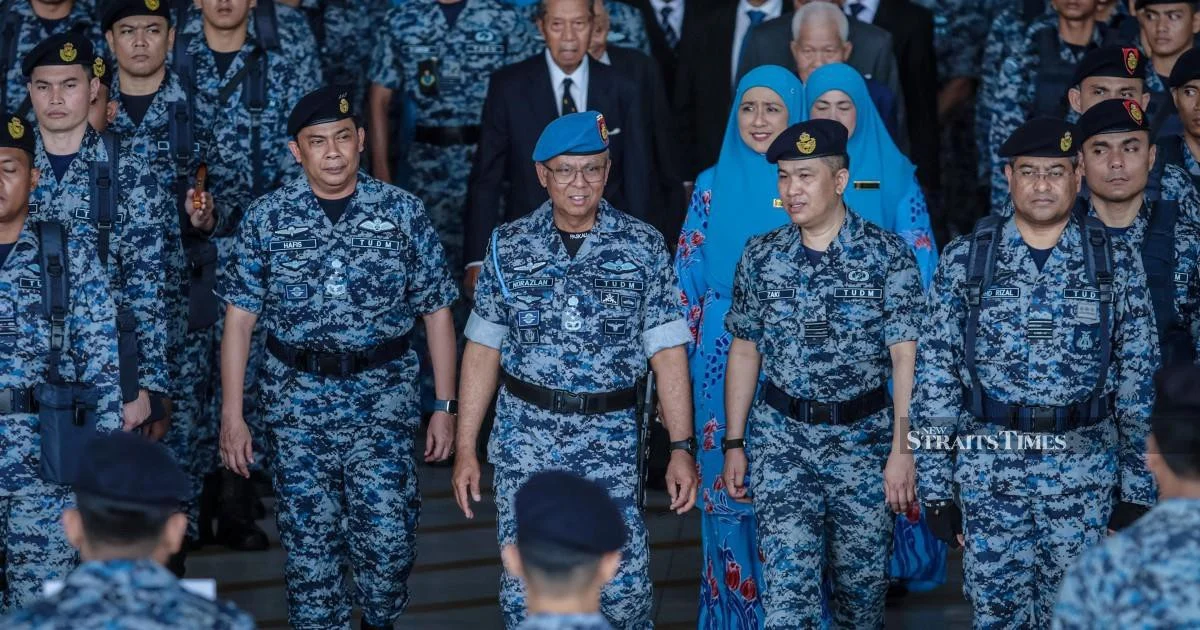
Malaysia's dependence on uninterrupted maritime trade makes the country acutely vulnerable to regional instability, and the Royal Malaysian Air Force is raising alarm about the urgent requirement to bolster air defence systems. General Tan Sri Muhamad Norazlan Aris, the RMAF's commanding officer, has stressed that protecting the nation's sea lanes through enhanced air capabilities has become non-negotiable as geopolitical dynamics across Southeast Asia grow increasingly unpredictable.
The South China Sea and surrounding waters represent vital arterial routes for Malaysian commerce and global trade. Billions in cargo transit through these waterways annually, connecting Malaysia to major economic partners across Asia, Europe, and beyond. Any disruption to these passages would cripple the nation's export-dependent economy and threaten the livelihoods of industries relying on seamless logistics networks. The RMAF chief's remarks underscore the hard reality that maritime security can no longer rest solely on naval assets—modern threats require a comprehensive, layered defence architecture.
Regional geopolitical developments have intensified scrutiny of Southeast Asian waters in recent years. Competition among major powers, territorial disputes, and increasingly sophisticated military capabilities have transformed what were once predictable shipping corridors into zones where military posturing occurs with regularity. Malaysia, as a nation with substantial maritime claims and critical sea lanes running through its territorial waters and exclusive economic zones, faces particular exposure to these shifting power dynamics.
Air power provides several strategic advantages that surface vessels alone cannot match. Aircraft can rapidly respond to emerging threats, conduct persistent surveillance across vast ocean expanses, and maintain defensive positions without the fuel and logistical constraints facing seagoing assets. The ability to project force quickly and monitor developments in real time has become essential for any nation seeking to defend its maritime interests effectively.
The RMAF's position reflects a global trend among maritime nations seeking to upgrade air capabilities. Countries throughout the Indo-Pacific region have invested substantially in modern fighter jets, maritime patrol aircraft, and advanced radar systems designed specifically for ocean surveillance. These acquisitions represent not merely military modernization but recognition that future security challenges will demand rapid, precise response capabilities across unprecedented distances.
Malaysia's geographic position amplifies these concerns. The country's lengthy coastline and multiple maritime zones create an enormous defensive perimeter requiring surveillance and rapid-response assets. The Strait of Malacca, one of the world's most strategically important waterways, passes through Malaysian waters and remains a focal point for international maritime traffic. Ensuring security in these spaces demands technology and training that existing air force capabilities are increasingly strained to provide.
The current regional environment includes unresolved maritime disputes, military exercises involving external powers, and evolving defence alliances that affect Southeast Asian security architectures. These developments create uncertainty about future access to critical sea routes and raise questions about Malaysia's ability to maintain freedom of navigation in areas where its national interests are most concentrated. The RMAF chief's warning suggests military planners assess current defences as inadequate for emerging threats.
Modernizing air capabilities entails substantial financial commitments, particularly for nations with competing budgetary priorities. New fighter aircraft systems, maintenance infrastructure, pilot training programmes, and support equipment represent multi-billion-ringgit investments. Yet delaying such investments carries its own risks, potentially leaving Malaysia vulnerable during a period of regional tension or conflict. The strategic calculus increasingly favours treating air power development as essential rather than optional spending.
Beyond hardware, developing robust air defence requires sustained personnel development, training relationships with allied nations, and integration with broader security strategies. The RMAF's emphasis on air power protection reflects understanding that modern maritime security demands coordinated military capabilities rather than isolated platforms. Enhancing air capacity necessarily involves upgrading related systems—communication networks, radar infrastructure, maintenance facilities, and command-and-control frameworks.
The RMAF chief's comments resonate within Malaysia's broader defence strategy review. Policymakers have increasingly recognized that rapid regional change demands continuous reassessment of security requirements and capabilities. The air force has long operated with resources below theoretical requirements, managing critical functions with agility and economy rather than abundance. Current regional developments have elevated air power from a specialized military function to a central pillar of national security strategy.
International security partnerships offer pathways for Malaysia to enhance capabilities without bearing entire modernization costs independently. Collaborative defence arrangements, technology-sharing agreements with trusted partners, and joint training initiatives can amplify the effectiveness of available resources. Several regional nations have pursued similar approaches, leveraging partnerships to achieve security goals that unilateral efforts might not support.
The implications of inadequate maritime air defence extend beyond military considerations. Shipping insurance costs, investor confidence in Malaysia's ability to protect commerce, and the nation's strategic standing among regional powers all depend partly on credible maritime security capabilities. Other Southeast Asian nations and international commercial interests watch Malaysia's defence investments as signals of commitment to maintaining stable, secure sea lanes.
General Tan Sri Muhamad Norazlan Aris's emphasis on air power addresses a strategic vulnerability that, if left unaddressed, could undermine Malaysian economic interests and regional standing. As geopolitical competition intensifies and technological capabilities advance, delaying necessary air force modernization risks creating security gaps at precisely the moment when vigilance and responsive capacity matter most. The RMAF chief's warnings merit serious policy attention and budgetary consideration within Malaysia's national security planning.

%22%2F%3E%3C%2Fpattern%3E%3C%2Fdefs%3E%3Crect%20width%3D%22100%25%22%20height%3D%22100%25%22%20fill%3D%22url(%23ph523ndg)%22%2F%3E%3Crect%20width%3D%22100%25%22%20height%3D%22100%25%22%20fill%3D%22url(%23ph523ndp)%22%2F%3E%3Ctext%20x%3D%2250%25%22%20y%3D%2250%25%22%20text-anchor%3D%22middle%22%20dominant-baseline%3D%22central%22%20fill%3D%22rgba(255%2C255%2C255%2C0.95)%22%20font-family%3D%22Georgia%2C%20'Times%20New%20Roman'%2C%20serif%22%20font-weight%3D%22700%22%20font-size%3D%22272%22%20letter-spacing%3D%22-0.02em%22%3EAnwar%3C%2Ftext%3E%3C%2Fsvg%3E)