Authorities in Ipoh have implemented strict security measures across five separate zones within storm-ravaged Bercham, responding to widespread damage that has left residents vulnerable to criminal activity during the recovery phase. The Ipoh district police chief, ACP Muhammad Najib Hamzah, announced the lockdown at a press briefing held at Bercham police station, emphasizing that the cordon serves as a protective measure against opportunistic theft and home invasions that often follow natural disasters in affected communities.
The police response reflects a significant challenge facing disaster-stricken areas across Malaysia: the difficulty of balancing public access for legitimate cleanup work with the need to safeguard properties during a period of vulnerability. While residents are permitted to enter and exit the affected zones, Najib noted that police officers will exercise heightened vigilance, particularly during nighttime hours when the risk of criminal activity increases and visibility decreases. The approach demonstrates an understanding of residents' urgent need to salvage belongings and assess damage, while simultaneously acknowledging the security vacuum that emerges in the aftermath of such catastrophic weather events.
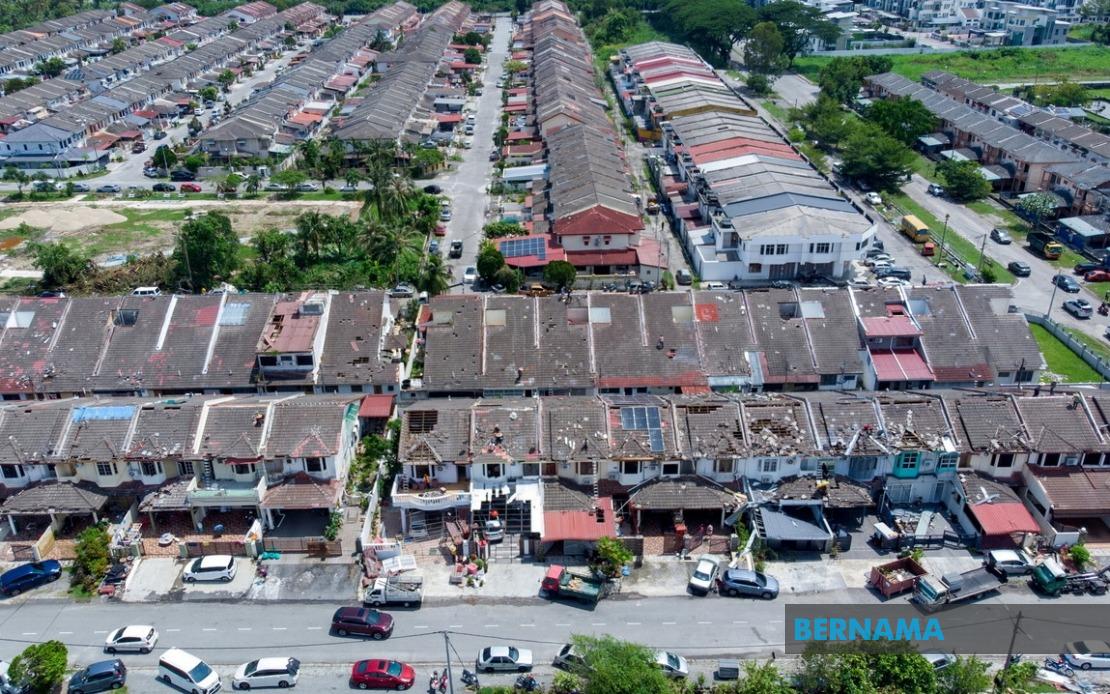
The scale of the disaster became clearer as officials continued their assessment. Ipoh Barat Member of Parliament M. Kulasegaran, who also serves as Deputy Minister in the Prime Minister's Department (Law and Institutional Reform), characterized the storm as extraordinary in its intensity and scope. According to Kulasegaran's initial observations, the weather phenomenon damaged more than 200 residential structures across the locality, making it one of the more significant meteorological events to strike the region in recent memory. The sheer number of affected households underscores the magnitude of the recovery challenge facing both residents and government agencies.
Meteorological experts and officials have attributed the devastating storm to a landspout phenomenon, a relatively rare and localized weather event that produces intense rotating columns of air descending from cloud formations. Unlike traditional tornadoes, which develop from established storm systems, landspouts can emerge suddenly with limited warning, making them particularly dangerous to unprepared communities. The landspout explanation provides crucial context for understanding why the damage was so concentrated and severe in specific Bercham neighborhoods rather than spread across a broader geographic area.
Several residential areas bear the brunt of the destruction. Anjung Bercham Utara, Taman Mujur, Kampung Bercham, Kampung Tersusun Tasek, Taman Pusat Bercham, and Taman Indah Sakti emerged as the hardest-hit locations, each experiencing substantial structural damage that will require weeks or months of reconstruction. Among the most pressing immediate challenges is the absence of electricity in certain zones, including Anjung Bercham, which complicates cleanup efforts and forces residents to work under difficult conditions during daylight hours or with inadequate lighting. This infrastructure damage creates additional hardship for residents attempting to assess and document losses for insurance claims and government assistance applications.
The police operational response has generated significant casework, with officers receiving 492 storm-related reports through Op Bencana as of 8 a.m. on the day of the briefing. These reports encompass damage assessments, missing persons inquiries, and theft or damage incidents occurring during the immediate aftermath of the storm. Importantly, Najib indicated that no deadline has been imposed for victims to lodge reports, offering residents flexibility to document losses as they conduct thorough examinations of their properties. This open-ended reporting window recognizes that full damage assessment often requires time as residents clear debris and discover secondary damage.
The financial toll of the disaster remains uncertain at this stage, with authorities acknowledging that calculating total losses will require sustained effort involving multiple agencies and specialists. Preliminary loss assessments typically focus on structural damage, damaged contents, and infrastructure destruction, but determining precise monetary values requires detailed inspections and coordination with insurance adjusters, municipal authorities, and property valuation experts. For many residents, particularly those in lower-income neighborhoods where insurance coverage may be limited, the gap between actual losses and recoverable amounts through formal channels will pose significant financial strain.
The Bercham incident carries particular relevance for Malaysian policymakers and disaster management specialists, as it highlights the vulnerability of urban and semi-urban residential areas to severe weather phenomena. Climate pattern shifts and increasing atmospheric instability in recent years have made weather-related disasters more frequent and less predictable across the region. The landspout event in Bercham demonstrates that sophisticated, densely populated areas cannot assume immunity from catastrophic meteorological events, requiring continuous investment in early warning systems, community preparedness programs, and rapid response infrastructure.
Police operations in the sealed zones reveal the multifaceted security challenges arising from natural disasters. Beyond the immediate humanitarian response, law enforcement agencies must balance competing priorities: enabling residents' legitimate access to damaged properties while preventing organized criminal elements from exploiting the chaos and reduced surveillance. The nighttime movement restrictions represent a pragmatic compromise, acknowledging that most theft and break-ins occur after dark when darkness provides cover for criminal activity. The police verification procedures ensure that individuals claiming to be residents can substantiate their claims, reducing vulnerability to false pretenses.
The incident also underscores the importance of inter-agency coordination in disaster response. While police focus on security and access control, other agencies must simultaneously address humanitarian needs, infrastructure restoration, and recovery planning. The Incident Control Post at Bercham police station serves as a coordination hub where officers from multiple services can share information and synchronize response efforts. This centralized approach improves efficiency and reduces gaps in service delivery that might otherwise leave vulnerable populations without adequate support.
For affected residents, the combination of police access controls and ongoing cleanup represents both protection and inconvenience. While security measures reduce risk of theft, movement restrictions complicate daily activities and delay recovery progress. Some residents may find the verification procedures intrusive or time-consuming, particularly elderly individuals or those with mobility challenges. These tensions between security and access must be managed carefully to maintain public cooperation with police directives while acknowledging legitimate frustration with bureaucratic requirements during genuine emergencies.
The Bercham storm response will likely influence future disaster management protocols across Perak and neighboring states. Lessons learned regarding the timing and geographic scope of access restrictions, the effectiveness of the verification procedures, and the adequacy of police resources will inform training and planning for subsequent incidents. As climate variability continues to challenge weather prediction and disaster preparedness, Malaysian communities must develop increasingly sophisticated approaches to balancing rapid recovery with crime prevention, a challenge that will require sustained investment in both physical infrastructure and human capital within disaster management institutions.