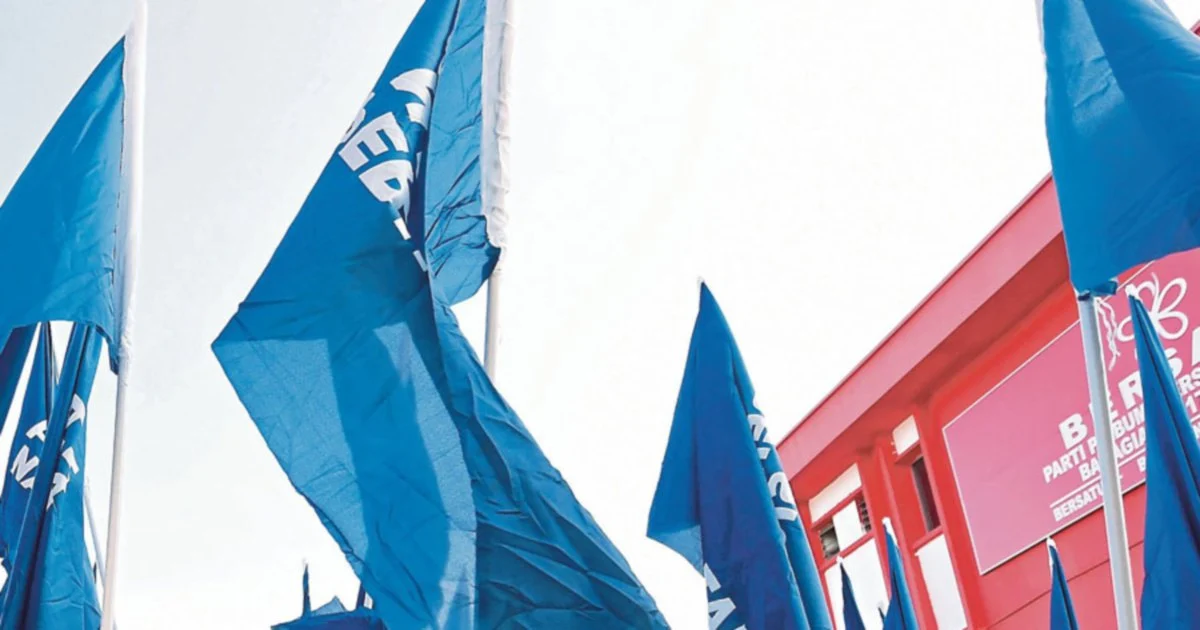
A brewing dispute over the control and use of the Perikatan Nasional logo threatens to create significant complications for Bersatu's electoral prospects, with political observers cautioning that party candidates may face exclusion from upcoming polls unless they obtain explicit authorisation from coalition chairman Datuk Seri Dr Ahmad Samsuri Mokhtar. The potential barrier underscores the fragile nature of multiparty coalitions in Malaysian politics, where administrative and procedural control over shared symbols can become flashpoints for internal tension and power struggles.
The central issue revolves around who holds the authority to permit candidates to contest elections under the PN banner. If Datuk Seri Dr Ahmad Samsuri Mokhtar, in his capacity as coalition chairman, withholds or delays approval, Bersatu's candidates would find themselves unable to use the logo that has become synonymous with the PN alliance. This administrative mechanism, while seemingly technical, carries profound implications for the party's electoral viability and its position within the broader coalition framework that has shaped Malaysian politics since PN's formation.
Bersatu's situation reflects broader challenges facing coalition-based politics in Malaysia, where structural governance remains undefined in ways that create leverage points for individual leaders. The absence of clear, codified procedures for logo authorisation leaves room for interpretation and potential abuse of administrative power. This ambiguity becomes especially consequential during election cycles, when timing and procedural delays can effectively eliminate candidates from contention even without formal expulsion or deregistration.
The implications extend beyond Bersatu's immediate electoral concerns. The PN coalition itself, which has served as a significant political force, risks becoming paralysed or fractured if internal disputes over fundamental procedural matters escalate. Malaysian voters have grown accustomed to coalition politics, yet they remain sensitive to perceptions of internal instability or leaders using administrative mechanisms against allies. Such manoeuvres, even if technically permissible, can damage the coalition's public credibility and voter confidence.
Historically, Malaysian political coalitions have weathered internal tensions through negotiation and informal agreements among component parties. However, the growing sophistication of party politics and the rising stakes of electoral competition have highlighted the need for more transparent, codified procedures. The PN logo dispute exemplifies this tension between informal coalition practices and the requirement for clear institutional safeguards that protect minority parties' interests.
For Bersatu specifically, the threat carries particular weight given the party's evolution. Bersatu emerged as a significant political force following the 2018 election cycle and has since competed for influence within the PN framework. Any exclusion from upcoming elections would substantially diminish the party's capacity to retain or expand its parliamentary representation and, consequently, its bargaining power within the coalition. This dynamic creates perverse incentives for political maneuvering that may undermine coalition unity.
The administrative control over logo usage also raises questions about the PN's formal structure and governance. Unlike federal-level political institutions that operate under constitutional constraints and statutory frameworks, coalitions typically function on the basis of agreements that lack enforceable transparency mechanisms. This governance gap becomes acute when disputes arise, as there exists no neutral arbiter or pre-established procedure for resolving conflicts over fundamental coalition assets like the shared logo.
Political analysts monitoring the situation have highlighted that the outcome of this dispute could establish precedent for how PN addresses future conflicts among its component parties. If authorisation processes become weaponised as a means of enforcing party discipline or punishing dissent, the coalition's cohesion could suffer permanent damage. Conversely, if clear procedures are established and followed, PN could strengthen its institutional credibility heading into elections.
The timing of this dispute, occurring amid active electoral preparations, amplifies its significance. Candidates require certainty regarding their electoral status well in advance of nomination deadlines and campaign periods. Prolonged uncertainty creates operational challenges for party machinery and election management, potentially affecting campaign effectiveness across the coalition. Malaysian voters, observing such internal chaos, may view it as a sign of political weakness or dysfunction.
For the broader Southeast Asian region, the PN logo dispute reflects challenges facing multiparty coalitions across democracies in the area. Indonesia, Thailand, and the Philippines have all grappled with similar coalition management problems. The mechanisms by which coalitions resolve internal disputes, maintain transparency, and protect minority partners' rights significantly influence electoral stability and democratic outcomes. Malaysia's handling of the PN logo controversy will be observed closely as a case study in coalition governance.
The path forward likely requires either formal mediation between coalition leadership and Bersatu representatives, or the establishment of an independent mechanism for reviewing logo authorisation requests. Without such intervention, the dispute risks escalating into a more serious breach that could fundamentally alter PN's electoral strategy and viability. Political actors across the coalition have incentive to prevent such an outcome, though immediate negotiations appear necessary to resolve the underlying tensions.

%22%2F%3E%3C%2Fpattern%3E%3C%2Fdefs%3E%3Crect%20width%3D%22100%25%22%20height%3D%22100%25%22%20fill%3D%22url(%23ph523ndg)%22%2F%3E%3Crect%20width%3D%22100%25%22%20height%3D%22100%25%22%20fill%3D%22url(%23ph523ndp)%22%2F%3E%3Ctext%20x%3D%2250%25%22%20y%3D%2250%25%22%20text-anchor%3D%22middle%22%20dominant-baseline%3D%22central%22%20fill%3D%22rgba(255%2C255%2C255%2C0.95)%22%20font-family%3D%22Georgia%2C%20'Times%20New%20Roman'%2C%20serif%22%20font-weight%3D%22700%22%20font-size%3D%22272%22%20letter-spacing%3D%22-0.02em%22%3EAnwar%3C%2Ftext%3E%3C%2Fsvg%3E)