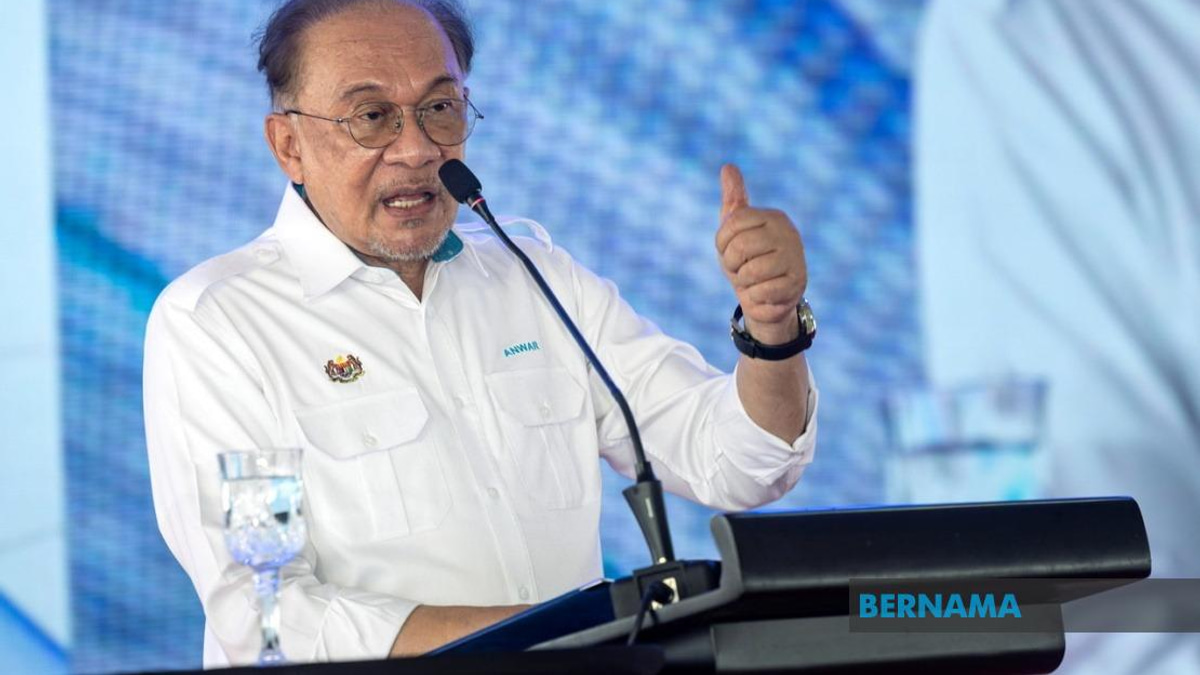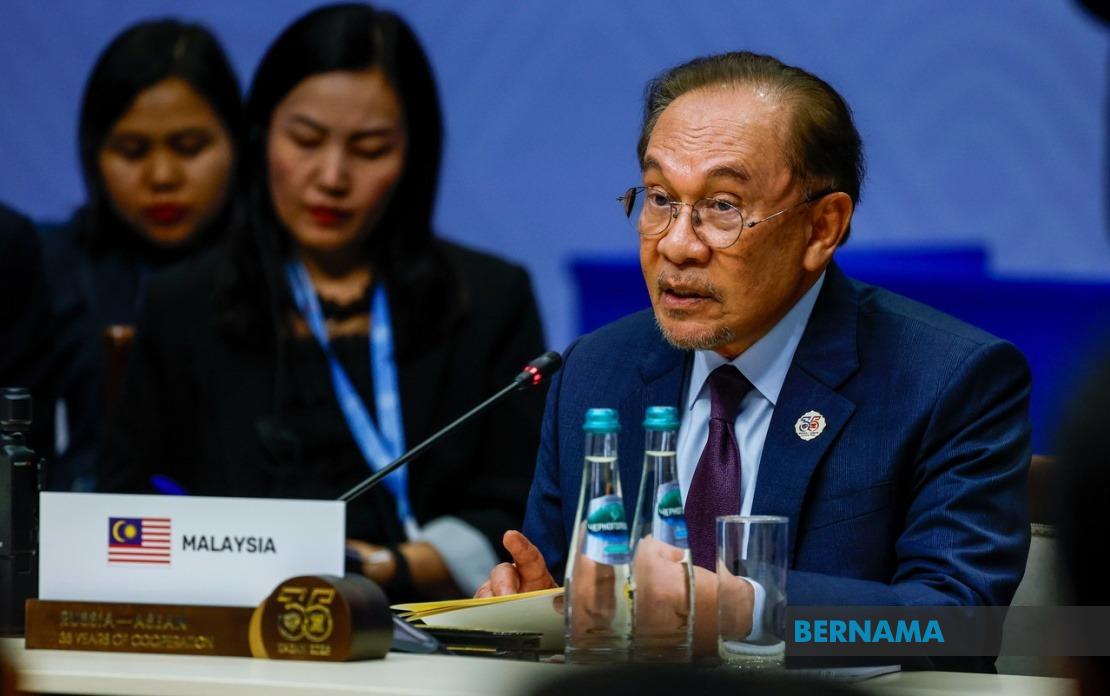
Prime Minister Datuk Seri Anwar Ibrahim has issued a comprehensive call for ASEAN and Russia to accelerate cooperation in critical areas, underscoring that diplomatic engagement and peaceful dialogue remain essential pillars for managing international conflicts and the mounting geopolitical tensions reshaping the global landscape. Speaking during the plenary session of the ASEAN-Russia Commemorative Summit in Kazan, Anwar positioned the two-day gathering as a vital platform for developing collaborative frameworks at a time when the international community faces unprecedented challenges and mounting uncertainty.
The summit, held in Russia's historic city, represents the highest level of dialogue between the ten-member bloc and Moscow, bringing together the leaders of Philippines President Ferdinand Marcos Jr, who currently holds the ASEAN chair, alongside representatives from other member states. This convergence of regional and major power diplomacy underscores the growing importance Southeast Asian nations place on maintaining balanced relationships with major powers, particularly as strategic competition intensifies in the Indo-Pacific region. For Malaysia specifically, the engagement reflects Kuala Lumpur's longstanding approach of cultivating pragmatic partnerships across geographical and ideological divides.
Anwar placed particular emphasis on expanding bilateral cooperation in several domains critical to regional development and prosperity. Trade and investment channels warrant acceleration to boost economic ties and create mutual opportunities for both ASEAN enterprises and Russian businesses navigating shifting global supply chains. The digital economy and technological advancement featured prominently in his remarks, reflecting recognition that Southeast Asia's technological gap with developed nations remains a constraint on competitiveness. Artificial intelligence capabilities, emerging as transformative across sectors from manufacturing to governance, demand collaborative frameworks where Russian expertise can complement ASEAN's growing digital ecosystem.
Beyond technology, Anwar highlighted the strategic importance of energy cooperation—a particularly resonant theme given rising global energy prices and ASEAN's diverse energy portfolios. Food security, increasingly precarious due to climate disruptions and supply chain vulnerabilities, demands coordinated approaches between Moscow, a major grain exporter, and Southeast Asian nations heavily reliant on food imports. The halal industry represents a distinctive focus reflecting Malaysia's position as a global halal hub and the broader Muslim-majority character of ASEAN. People-to-people exchanges—cultural, educational, and scientific—form the social foundation upon which durable state-to-state relationships ultimately rest.
The Malaysian premier grounded his vision in explicit principles, declaring that Malaysia remains steadfast in its conviction that enduring peace emerges exclusively through dialogue, mutual understanding, and adherence to established international legal frameworks. This statement carries weight given Malaysia's historical commitment to the ASEAN Way—a consensus-based, non-confrontational approach to regional affairs that has underpinned Southeast Asian stability for decades. By reiterating this principle at a major bilateral summit, Anwar signalled that Malaysia will not abandon its foundational diplomatic philosophy regardless of shifting global power dynamics.
On the volatile situation in West Asia, Anwar articulated Malaysia's firm position demanding an immediate end to violence engulfing Gaza, insisting that humanitarian assistance flow unobstructed to civilian populations, and defending the Palestinian people's inherent right to self-determination and statehood. Malaysia's condemnation extended to the expansion of Israeli military operations into Lebanon and attacks on UNIFIL peacekeeping forces, reflecting longstanding solidarity with Palestinian causes that resonates deeply across Malaysian society. These pronouncements align Malaysia with broader ASEAN sentiment on Middle Eastern conflicts, though individual member states maintain varying degrees of diplomatic engagement with Israel.
Anwar expressed confidence that ASEAN and Russia possess substantial untapped potential to cultivate increasingly intimate cooperation grounded in principles of mutual respect, reciprocal advantage, and shared commitments to global peace and stability. This optimism appears calibrated, acknowledging real constraints while emphasizing possibilities. The partnership framework itself rests on pragmatic recognition that despite geopolitical differences, ASEAN and Russia share interests in maintaining regional stability, combating transnational threats, and ensuring that neither becomes subject to coercive pressure from other major powers.
The summit's timing carries historical significance, coinciding with the 35th anniversary of ASEAN-Russia diplomatic relations, which began in 1991 in Kuala Lumpur immediately following the Cold War's conclusion. This three-and-a-half decade trajectory reflects how Southeast Asian nations skillfully navigated the post-Cold War era, integrating major powers into regional frameworks without surrendering autonomy. The commemorative aspect acknowledges this history while positioning future cooperation as evolution rather than revolutionary rupture from established patterns.
The gathering is expected to produce four substantial outcome documents establishing the architecture for enhanced bilateral cooperation. The Kazan Declaration marks the 35-year relationship milestone, while separate joint statements specifically address energy and cultural cooperation—sectors where meaningful collaboration can advance without treading into sensitive geopolitical territory. Most significantly, a comprehensive action plan for implementing the ASEAN-Russia Strategic Partnership through 2030 provides a detailed roadmap identifying specific cooperation mechanisms, timelines, and performance indicators.
These documents collectively chart an ambitious trajectory for deepening ties across multiple dimensions. The 2030 timeframe suggests medium-term commitment requiring sustained political will and institutional capacity from both sides. For Malaysia and other ASEAN members, the strategic partnership documents offer opportunity to leverage Russian strengths—particularly in energy technology, space science, and resource management—while expanding Southeast Asian influence in Moscow's calculus regarding Asian geopolitics. The emphasis on comprehensive plans reflects lessons learned from previous cooperation frameworks that succeeded through specificity and measurable objectives rather than rhetorical aspirations.
From a Malaysian perspective, deepened ASEAN-Russia relations align with Kuala Lumpur's broader strategy of maintaining multiple great power partnerships while advancing regional integration. As China's influence expands and the United States recalibrates its Asian commitments, Russia represents a counterbalance that Southeast Asian nations can engage without triggering zero-sum competition dynamics that plague some regional relationships. Malaysia's role as the original summit host nation in 1991 positions it as a custodian of ASEAN-Russia friendship, a status reflected in Anwar's prominent platform at the Kazan proceedings and Malaysia's continued advocacy for balanced, multilateral approaches to regional challenges.

%22%2F%3E%3C%2Fpattern%3E%3C%2Fdefs%3E%3Crect%20width%3D%22100%25%22%20height%3D%22100%25%22%20fill%3D%22url(%23ph523ndg)%22%2F%3E%3Crect%20width%3D%22100%25%22%20height%3D%22100%25%22%20fill%3D%22url(%23ph523ndp)%22%2F%3E%3Ctext%20x%3D%2250%25%22%20y%3D%2250%25%22%20text-anchor%3D%22middle%22%20dominant-baseline%3D%22central%22%20fill%3D%22rgba(255%2C255%2C255%2C0.95)%22%20font-family%3D%22Georgia%2C%20'Times%20New%20Roman'%2C%20serif%22%20font-weight%3D%22700%22%20font-size%3D%22272%22%20letter-spacing%3D%22-0.02em%22%3EAnwar%3C%2Ftext%3E%3C%2Fsvg%3E)