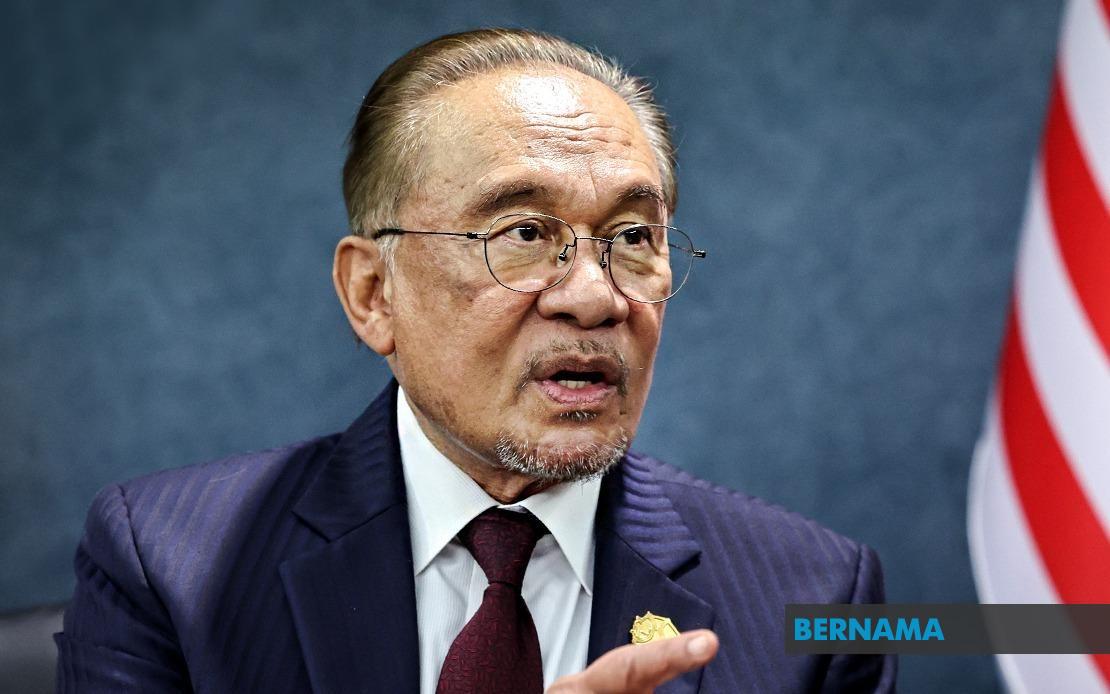
Prime Minister Datuk Seri Anwar Ibrahim is set to deliver a keynote address at the ASEAN-Russia Business Forum in Kazan, underscoring Malaysia's continued commitment to strengthening ties between Southeast Asia and Russia through high-level diplomatic engagement. The forum, held at Kazan IT Park, brings together business representatives and government officials from across the ASEAN region alongside their Russian counterparts to explore collaborative opportunities and discuss bilateral matters of mutual interest. The event forms a cornerstone of the broader ASEAN-Russia Commemorative Summit, which celebrates a partnership spanning more than three decades of institutional cooperation.
As both Prime Minister and Finance Minister, Anwar's participation signals Malaysia's priority in fostering economic connections with Russia whilst balancing regional dynamics within ASEAN. His address will provide insights into Malaysia's economic outlook and policy priorities, offering Russian businesses a window into investment opportunities within Southeast Asia's largest Muslim-majority nation. The forum represents an important platform for Malaysian enterprises to showcase their capabilities in sectors ranging from technology to manufacturing, whilst Russian companies explore pathways into one of Asia's most dynamic markets.
Following the business forum, Anwar will attend a gala dinner at the Tatar State Academic Theater, where diplomatic protocols will include a courtesy call on Russian President Vladimir Putin. This ceremonial component reflects the strategic significance both countries place on their relationship, demonstrating that engagement extends beyond commercial considerations into the realm of high-level political discourse. Such interactions are crucial for maintaining channels of communication and reinforcing commitments between Malaysia and Russia across multiple policy domains.
The choice of Kazan as the summit venue carries symbolic weight. Straddling the Volga and Kazanka rivers approximately 800 kilometres east of Moscow, the city is home to roughly 1.3 million inhabitants and occupies a unique cultural position within Russia. Often described as the country's third capital after Moscow and St Petersburg, Kazan has accumulated more than a millennium of history and stands as a major centre of Islamic cultural heritage. This character makes it particularly appropriate for hosting ASEAN-Russia discussions, as it embodies the bridge between Russian and Muslim civilisations that ASEAN nations, with Islam central to many member states' identities, can readily appreciate and relate to.
The 2024 summit marks a significant milestone: 35 years since ASEAN and Russia first established formal dialogue relations in 1991. That initial engagement laid groundwork for deeper institutional ties, culminating in Russia's elevation to full ASEAN Dialogue Partner status in 1996. The relationship reached a new threshold in 2018 when it was upgraded to a Strategic Partnership, cementing both sides' determination to expand cooperation across political-security dimensions, economic integration, and socio-cultural exchange. This progression reflects a deliberate strategy by ASEAN to maintain inclusive relationships with major global powers despite geopolitical complexities.
From an economic standpoint, the ASEAN-Russia relationship remains modest but growing. In 2024, bilateral trade between the two blocs reached USD18.1 billion, whilst Russian foreign direct investment in ASEAN totalled USD92.97 million. These figures, whilst meaningful, suggest considerable untapped potential given the size of both economies and their complementary strengths. Russia's resource endowments and technological capabilities could address ASEAN's energy and infrastructure needs, whilst ASEAN's manufacturing prowess and market access offer Russians alternative platforms in an increasingly complex global trading environment.
Malaysia's own economic relationship with Russia reflects both the opportunities and constraints within the broader partnership. As Russia's ninth-largest trading partner among European countries in 2025, Malaysia recorded total bilateral trade valued at RM8.72 billion (USD2.04 billion). This positions Russia as a significant but not dominant economic partner, reflecting Malaysia's diversified trade portfolio and reliance on traditional partners in the United States, China, and Europe. The composition of trade reveals complementarities: Malaysian exports to Russia lean heavily on electrical and electronic products, machinery, equipment components, and processed food items—sectors where Malaysia has developed competitive advantages. Conversely, Malaysian imports from Russia concentrate on petroleum products, minerals, chemicals, and chemical-based goods, reflecting Russia's resource-rich economy and industrial capabilities.
The business forum provides an opportunity to explore deepening these trade relationships, particularly given the headwinds both economies face from global sanctions, supply chain disruptions, and shifting trade patterns. Malaysian companies operating in sectors like semiconductors, palm oil processing, and manufacturing could explore Russian demand for their products. Simultaneously, Russian suppliers of energy, raw materials, and industrial inputs could strengthen commercial ties with Malaysian counterparts, reducing both economies' dependence on historically fragile global supply chains. Enhanced business-to-business networking at such forums often catalyses commercial partnerships that develop gradually over subsequent years.
Beyond commerce, the summit underscores ASEAN's broader diplomatic strategy of maintaining constructive engagement with Russia despite international pressures and competing strategic alignments. This reflects ASEAN's historical commitment to non-alignment and its emphasis on dialogue over confrontation as mechanisms for managing interstate relations. In an era of intensifying great power competition, ASEAN's willingness to host high-level summits with Russia demonstrates the bloc's determination to remain a consequential actor shaping its own strategic environment rather than a passive recipient of great power influence.
For Malaysia specifically, the prime ministerial presence at such events reinforces the country's position as a responsible middle power actively shaping regional integration initiatives. It signals to domestic audiences that Malaysia's government is pursuing pragmatic foreign policy whilst maintaining principled positions on international matters. The forum also provides an opportunity for Anwar to articulate Malaysia's vision for regional economic cooperation and to underscore the importance of stable, rules-based international order—themes central to Malaysia's diplomatic messaging.
The economic dimensions of the summit warrant close attention from Malaysian businesses and policymakers. Whilst current trade volumes remain relatively modest, the potential for expansion exists across multiple sectors. Russian companies exploring diversification away from European markets may find Malaysia a gateway to ASEAN's broader market. Similarly, Malaysian firms seeking to reduce supply chain concentration and explore new markets could benefit from strengthened relationships with Russian counterparts. The business forum provides a structured environment for identifying such opportunities, facilitating introductions, and establishing foundations for long-term commercial partnerships.
The timing of this commemorative summit, marking three and a half decades of dialogue relations, offers a natural juncture for both ASEAN and Russia to assess their partnership and chart directions for future cooperation. The elevated status of the relationship to Strategic Partnership and the continued willingness to invest in high-level engagement suggest mutual interest in sustaining and deepening ties. For Malaysia, participating actively in this process reinforces its role within ASEAN as a proponent of inclusive regionalism and balanced engagement with major powers—an approach that has served the country well amid broader regional tensions and shifting geopolitical alignments.