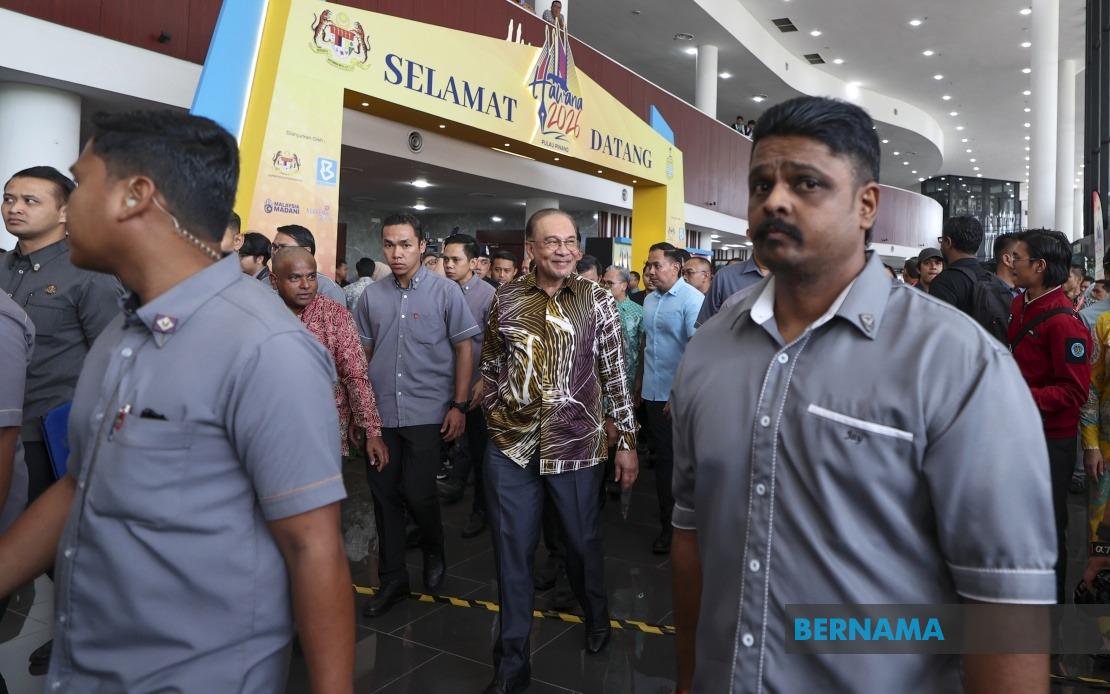
Prime Minister Datuk Seri Anwar Ibrahim travelled to Butterworth on June 20 to officially launch the centrepiece of Malaysia's National Journalists' Day commemoration for 2026. The ceremony took place at the PICCA Convention Centre @ Butterworth Arena, where he arrived at 2.40 pm and was welcomed by Penang Chief Minister Chow Kon Yeow, Communications Minister Datuk Fahmi Fadzil and the secretary-general of the Communications Ministry, Datuk Abdul Halim Hamzah. The presence of senior government figures underscored the government's commitment to recognising the vital role of the media in Malaysian society and the broader Southeast Asian region.
Beyond the formal proceedings, the Prime Minister took time to engage with the event's exhibition offerings, touring the display booths and reviewing the HAWANA 2026 Photo Gallery situated in the convention centre's foyer. This hands-on approach demonstrated a willingness to understand the diverse perspectives and initiatives being showcased by media organisations and journalism bodies participating in the nationwide commemoration.
The event drew considerable representation from Malaysia's news establishment. Bernama chairman Datuk Seri Wong Chun Wai, Bernama chief executive officer and HAWANA 2026 Working Committee chairman Datin Paduka Nur-ul Afida Kamaludin, Bernama editor-in-chief Arul Rajoo Durar Raj, and HAWANA 2026 project director Mohd Shukri Ishak were among the dignitaries present. Their involvement highlighted the Malaysian National News Agency's central coordinating role in organising a celebration that seeks to elevate professional journalism standards across the nation.
What distinguishes HAWANA 2026 is its pronounced regional dimension. The gathering attracted ASEAN delegates from multiple neighbouring nations, signalling a coordinated effort to foster journalistic excellence and cross-border dialogue on media standards. Timor-Leste's Secretary of State for Social Communication, Expedito Loro Dias Ximenes, attended alongside Cambodia's Undersecretary of State at the Ministry of Information, Prak Thaveak Amida, and Laos' Permanent Secretary of the Cabinet Office within the Ministry of Technology and Communications, Phuangpasert Keosouvanh. Leadership from Timor-Leste's news agency, Agencia Noticiosa de Timor-Leste (TATOLI), represented by president Noemio Mateus Soares Falcao and deputy president Madalena DE JCP Carlos, further strengthened regional representation.
International participation extended beyond ASEAN members. Media delegations from Indonesia's Antara News Agency, the Vietnam News Agency (VNA), the Xinhua News Agency, and professional bodies including the Indonesian Journalists Association (PWI) and the Ikatan Setiakawan Wartawan Malaysia-Indonesia (ISWAMI) attended the ceremony. This international footprint reflects growing recognition that journalistic standards and media credibility are transnational concerns requiring sustained dialogue and knowledge exchange among practitioners across Asia and beyond.
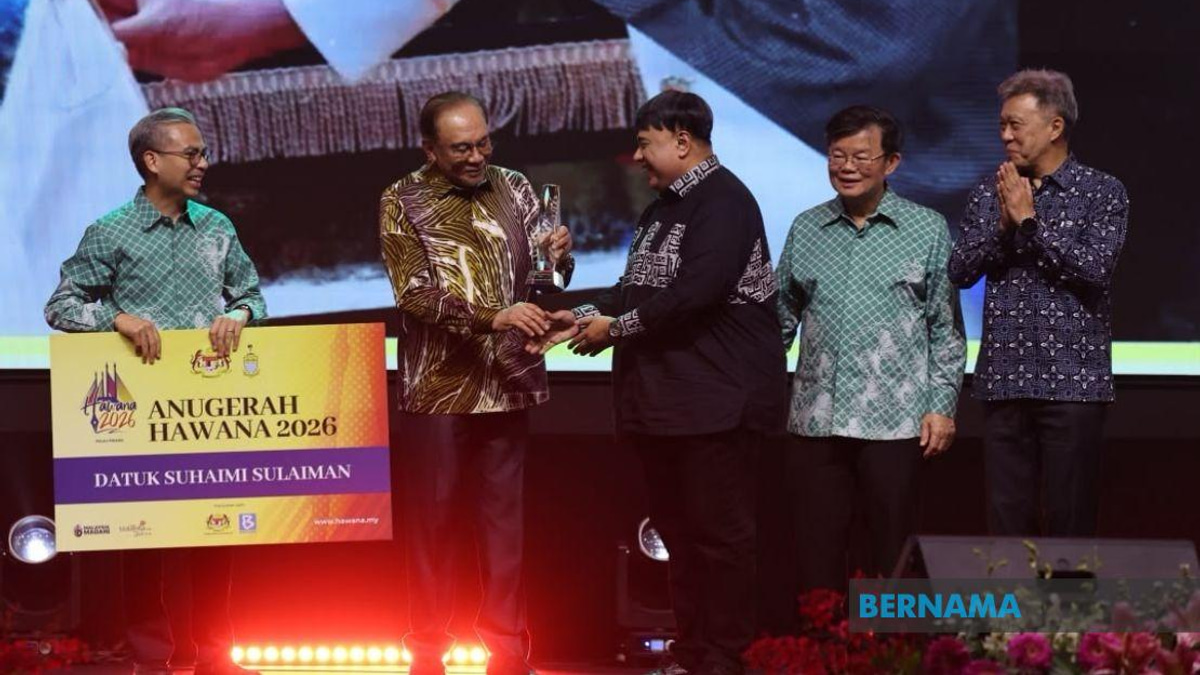
During the official proceedings, the Prime Minister presented both the HAWANA Award and the Special HAWANA Award to individuals recognised for their substantial contributions to advancing journalism and shaping public discourse. The distinction between these two categories allows for recognition of excellence across different dimensions of journalistic practice, from investigative reporting to opinion leadership and institutional innovation. Additionally, the Prime Minister distributed funds from the Kasih@HAWANA Fund to media veterans facing financial hardship, reinforcing the government's commitment to supporting those who have dedicated their careers to the profession.
The overarching theme of HAWANA 2026—"Media Integrity Strengthens Credibility"—encapsulates contemporary challenges facing journalism globally and within Malaysia specifically. As digital platforms proliferate and information ecosystems become increasingly fragmented, the focus on integrity serves as a corrective counterweight to concerns about misinformation, sensationalism, and polarisation. By elevating this theme at a national celebration, Malaysian authorities acknowledge that credible journalism requires more than technical competence; it demands adherence to ethical principles, transparency in sourcing, and commitment to truth-telling even when commercially or politically inconvenient.
The gathering attracted approximately 1,000 media practitioners from across Malaysia and international jurisdictions, transforming the event into a substantive forum for exploring contemporary journalism's direction. The scale of attendance demonstrates significant industry engagement and suggests that practitioners view such platforms as valuable opportunities to benchmark their work against international standards, share innovative approaches to digital journalism, and discuss the economics of sustainability in an era of declining traditional revenue models.
Organised by the Communications Ministry in partnership with Bernama as the implementing agency, HAWANA functions as the nation's principal platform for annually honouring media professionals and reinforcing shared commitments to journalistic excellence. The initiative recognises that media practitioners serve as custodians of public knowledge and opinion formation, wielding considerable influence over how citizens understand governance, economy, and society. By institutionalising recognition of excellence and creating space for professional development, HAWANA acknowledges journalism's essential democratic function.
For Malaysian and Southeast Asian readers, the HAWANA 2026 celebration signals a strategic emphasis on maintaining professional standards amid rapid technological disruption and information environment polarisation. The regional participation suggests coordinated efforts to strengthen media systems across ASEAN, promoting consistency in ethical frameworks and quality benchmarks. This becomes increasingly important as news flows across borders digitally, and citizens consume information from multiple jurisdictions simultaneously. When journalists across the region share common understandings of integrity and credibility, the entire regional information ecosystem benefits through improved reliability and reduced susceptibility to coordinated disinformation campaigns.
The presence of high-level government leadership, international delegates, and substantial industry participation indicates that Malaysian authorities view the media sector as meriting continued investment and recognition. This stance contrasts with contexts where governments view journalism primarily as a potential constraint on executive authority. By celebrating media integrity and supporting media veterans financially, Malaysia positions itself as committed to sustaining a professional journalism sector capable of serving the public interest through rigorous reporting and ethical practice. The theme of credibility—the foundation of journalism's social licence—provides a unifying focus that transcends partisan politics and speaks to universal concerns about information quality and trustworthiness.