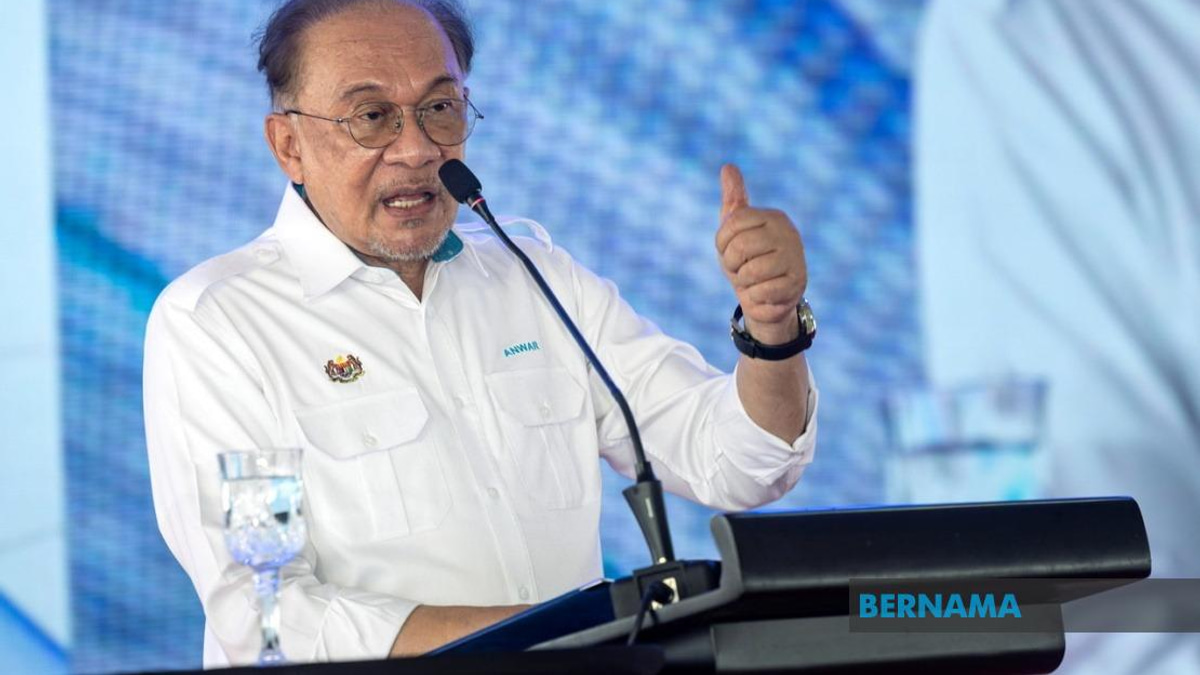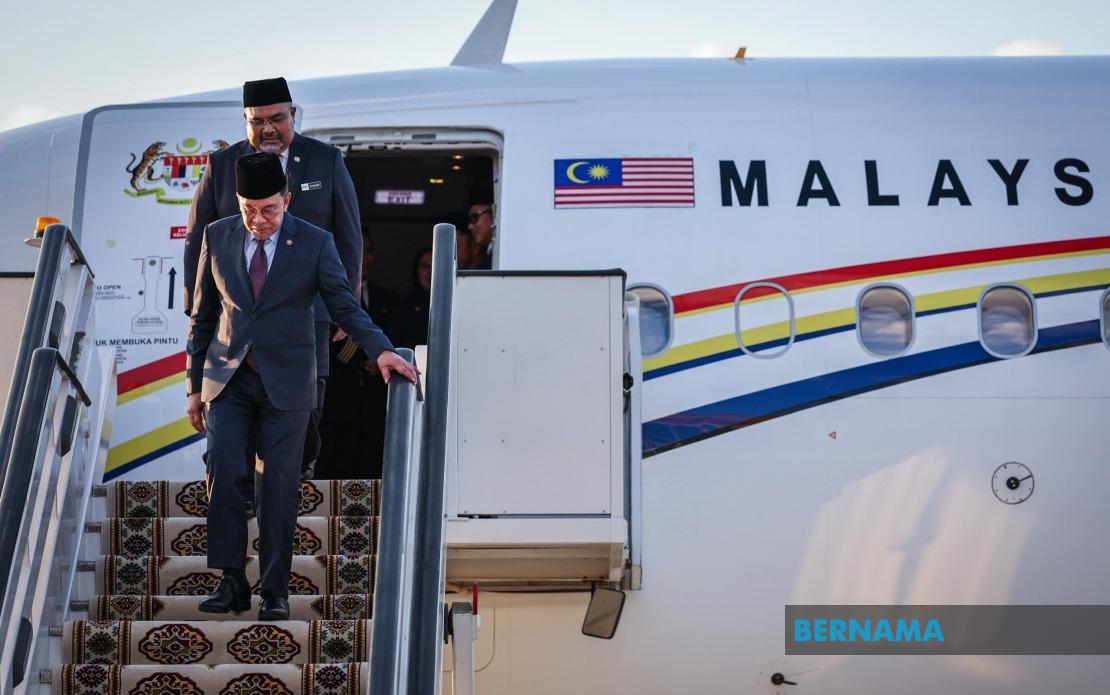
Prime Minister Datuk Seri Anwar Ibrahim has touched down in Ashgabat after concluding a working visit to Russia's Tatarstan region, embarking on the second leg of his Central Asian diplomatic swing. His aircraft landed at Ashgabat International Airport at 8 pm local time on June 18, beginning an official two-day engagement with Turkmenistan that carries particular significance for Malaysia's growing presence in the energy-rich region.
The delegation accompanying the prime minister reflects the economic emphasis of this visit. Alongside Finance Minister Anwar are Minister of Investment, Trade and Industry Datuk Seri Johari Abdul Ghani and Minister of Economy Akmal Nasrullah Mohd Nasir, signalling that discussions will centre on deepening commercial partnerships and exploring new investment avenues. Senior officials from both the Prime Minister's Office and the Foreign Ministry complete the entourage, underscoring the diplomatic weight placed on this engagement. Malaysia's Ambassador to Turkmenistan Mohd Suhaimi Ahmad Tajuddin received the delegation upon arrival, while Turkmenistan's Deputy Chairman of the Cabinet of Ministers for Oil and Gas Guvanch Agajanov led the host nation's welcoming committee.
This visit reciprocates the official call to Malaysia by Turkmenistan President Serdar Berdimuhamedov last December, maintaining the diplomatic momentum between the two countries. The timing reflects a deliberate pattern of engagement, with Anwar's visit marking both his personal inaugural trip to the Central Asian nation and the fifth such visit by a Malaysian prime minister. The frequency of these top-level exchanges suggests a relationship that extends beyond ceremonial courtesy into substantive partnership-building.
The economic dimensions of the bilateral relationship merit close attention for Malaysian stakeholders. In 2025, Turkmenistan ranked as Malaysia's fourth-largest trading partner within Central Asia, with bilateral trade reaching RM75.80 million. Malaysian exports to the country valued RM75.50 million, reflecting a nine per cent year-on-year increase that demonstrates expanding commercial activity between the nations. These figures, while modest in global terms, represent meaningful expansion in a region where Malaysian business engagement has historically been limited compared to traditional Asian markets.
Beyond merchandise trade, Malaysia's energy sector maintains a substantial footprint in Turkmenistan through Petronas, the national oil company. The cumulative investment by Petronas in the country has reached RM52.73 billion since 1996, making the energy giant one of the most significant foreign investors in Turkmenistan's hydrocarbon sector. This deep-rooted commercial presence provides the foundation for the bilateral relationship and ensures that technical and operational considerations complement diplomatic discussions.
On June 19, the schedule encompasses the full spectrum of formal state engagement. President Berdimuhamedov will host a welcoming ceremony at the Presidential Palace, followed by one-on-one discussions between the two leaders. These private sessions often serve as critical opportunities to address sensitive issues and establish personal rapport that can smooth bureaucratic pathways for future collaboration. The bilateral talks will cover the full range of bilateral concerns and opportunities, culminating in the signing of a joint statement and the exchange of agreements and memoranda of understanding previously negotiated by technical teams.
Cultural and religious dimensions feature prominently in the itinerary, reflecting Malaysia's commitment to engaging Turkmenistan as a whole society rather than merely through governmental channels. The prime minister will attend Friday prayers at the Turkmenbashi Ruhy Mosque, also known as the Gypjak Mosque, allowing him to connect with the local Muslim community and demonstrate respect for Turkmenistan's Islamic heritage. This gesture carries symbolic weight in a nation where religion and state identity intertwine, and such observances underscore Malaysia's positioning as a fellow Muslim-majority nation with shared values.
A scheduled luncheon hosted by President Berdimuhamedov provides another avenue for informal discussion and relationship-building between the principals. The Malaysia-Turkmenistan Forum, to be jointly inaugurated by both leaders at the Chamber of Commerce and Industry of Turkmenistan, offers a platform for business representatives from both nations to identify collaboration opportunities and address trade impediments. Such forums typically result in actionable outcomes, from simplified customs procedures to preferential agreements that facilitate cross-border commerce.
The visit's timing coincides with broader geopolitical recalibration in Central Asia, where traditional powers remain influential but medium-sized nations increasingly seek balanced engagement with multiple partners. Malaysia's diplomatic outreach to Turkmenistan reflects this regional dynamic and positions the country as a reliable, non-threatening partner capable of delivering commercial benefits without imposing broader political conditions. For Turkmenistan, engagement with Southeast Asian nations offers diversification of its international relationships beyond traditional Central Asian and Middle Eastern alignments.
For Malaysian business interests, this visit signals potential expansion opportunities in energy cooperation, infrastructure development, and services sectors. The Petronas presence establishes natural synergies that extend beyond oil and gas into downstream industries and technological partnerships. The growing trade figures suggest that Malaysian exporters have begun penetrating Turkmenistan's market, and the prime minister's personal advocacy can catalyse further commercial growth by reducing bureaucratic friction and elevating Malaysia's profile in Ashgabat's policy circles.
The press conference concluding the visit will provide Anwar with an opportunity to frame the outcomes for Malaysian and international audiences. His statements will likely emphasise shared interests in stability and prosperity, while highlighting specific commercial breakthroughs or political agreements reached during the two-day engagement. Such messaging serves multiple audiences—Malaysian voters and investors at home, Turkmenistan's leadership and public, and the broader international community monitoring Central Asian developments.
This diplomatic engagement underscores Malaysia's strategic pivot towards diversified international partnerships beyond Southeast Asia. Central Asia represents an emerging frontier for Malaysian commercial expansion, offering energy resources, investment opportunities, and markets for Malaysian goods and services. By placing such visits within the prime minister's schedule, Malaysia signals long-term commitment to the region and positions itself as a serious partner for Central Asian nations seeking reliable external relationships. The outcomes of this Turkmenistan visit will likely establish templates for deeper engagement with other Central Asian republics, potentially expanding Malaysia's economic and diplomatic footprint in a region of increasing global significance.

%22%2F%3E%3C%2Fpattern%3E%3C%2Fdefs%3E%3Crect%20width%3D%22100%25%22%20height%3D%22100%25%22%20fill%3D%22url(%23ph523ndg)%22%2F%3E%3Crect%20width%3D%22100%25%22%20height%3D%22100%25%22%20fill%3D%22url(%23ph523ndp)%22%2F%3E%3Ctext%20x%3D%2250%25%22%20y%3D%2250%25%22%20text-anchor%3D%22middle%22%20dominant-baseline%3D%22central%22%20fill%3D%22rgba(255%2C255%2C255%2C0.95)%22%20font-family%3D%22Georgia%2C%20'Times%20New%20Roman'%2C%20serif%22%20font-weight%3D%22700%22%20font-size%3D%22272%22%20letter-spacing%3D%22-0.02em%22%3EAnwar%3C%2Ftext%3E%3C%2Fsvg%3E)