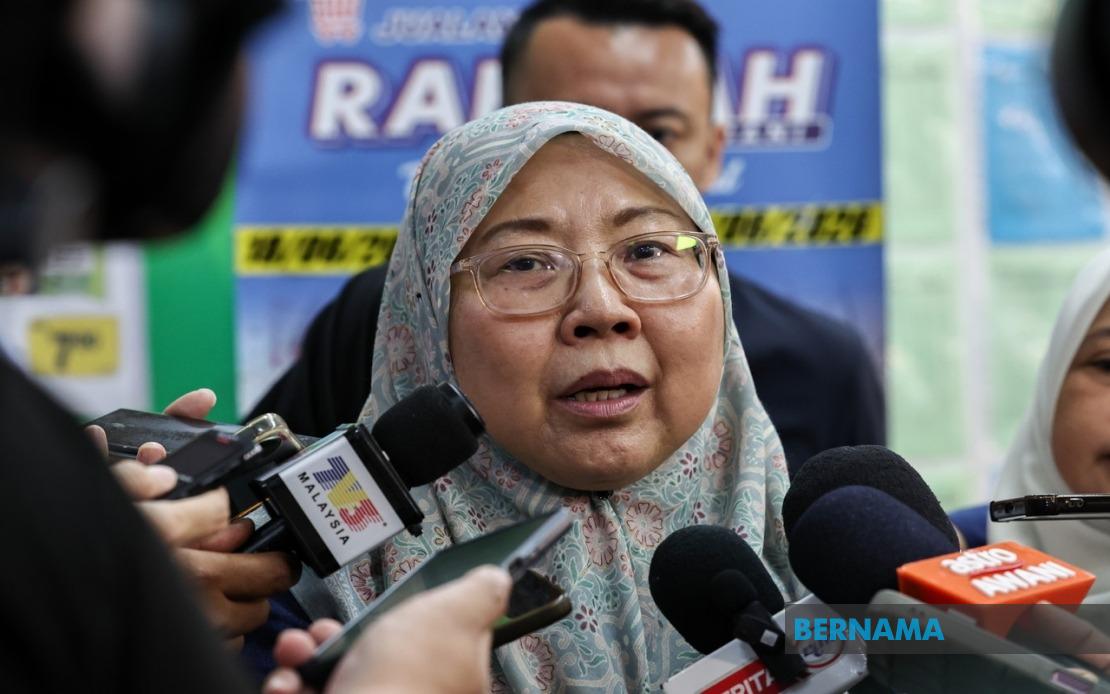
PKR's slate of candidates for the Johor and Negeri Sembilan state elections has reached the final stages, with party secretary-general Datuk Dr Fuziah Salleh confirming that the list is 99 per cent complete as the two states prepare for crucial electoral contests. The announcement of the formal candidate lineup is anticipated within the coming days, marking a significant development in the coalition's preparations for simultaneous polls that will reshape the political landscape across two important southwestern Malaysian states.
The party will contest a total of 36 seats across both states, committing 20 candidates to the Johor race and 16 to the Negeri Sembilan contest. Fuziah's remarks, delivered at a public engagement in Johor Bahru, underscored PKR's commitment to presenting a diverse candidate pool that reflects contemporary political expectations. The party leadership has deliberately sought to balance representation across generational, gender, and experience lines, a strategy increasingly important for coalition acceptance among urban and younger voters who dominate Malaysia's electoral demographics.
The composition of PKR's candidate list will emphasise a mixture of established political figures with proven track records alongside fresh political talents entering the electoral arena. Women and young people feature prominently in this recruitment strategy, responding to broader demographic shifts in Malaysian politics and the growing influence of female voters and youth engagement in recent electoral cycles. However, Fuziah declined to specify the precise percentage of newcomers at this stage, deferring complete details until the formal announcement ceremony, suggesting the party may still be making final adjustments to the final configuration.
One contentious issue threatening to overshadow the party's campaign preparations is an ongoing dispute with coalition partner Amanah over the Puteri Wangsa constituency in Johor. Amanah's Johor chapter, through vice chairman Dr Zuhan Zain, has challenged PKR's claim to the seat, arguing that the seat's allocation history creates ambiguity regarding rightful ownership. PKR asserts that Puteri Wangsa rightfully belongs to them after being temporarily loaned to the Malaysian Democratic Alliance Party (MUDA) during the 2022 state election, a loan that the party contends should have concluded following that contest.
The dispute reflects broader tensions within Pakatan Harapan over seat allocation mechanisms and the challenges of managing competing interests among coalition members with overlapping electoral bases. Rather than attempting to mediate through public statements, Fuziah indicated that the top leadership of both parties would resolve the matter at the highest decision-making levels, a diplomatic formulation that acknowledges the political sensitivity of inter-coalition conflicts during an active election period. Such disputes, if not resolved swiftly, risk undermining coalition unity and presenting opposition parties with tactical opportunities to exploit internal divisions.
Beyond candidate selection, PKR is also managing a separate disciplinary matter involving Subang Member of Parliament Wong Chen, whose public challenge to party leadership regarding his potential expulsion has drawn internal attention. Following an investigation into allegations against him, the matter has been transferred to PKR's Disciplinary Board for formal adjudication. The handling of this case will serve as an important test of party governance and disciplinary consistency, particularly given Wong Chen's prominence as a vocal parliamentarian and the public nature of his challenge to party authority.
The Johor state election represents the more immediate electoral test, with the Election Commission setting June 27 as nomination day and July 11 as polling day. This compressed timeline follows the dissolution of the Johor State Legislative Assembly on June 1, providing parties with approximately six weeks to prepare campaigns. The 56-seat assembly represents a significant prize, currently controlled by Barisan Nasional with 40 seats, followed by Pakatan Harapan with 12 seats, Perikatan Nasional with three, and MUDA with one. The distribution suggests a challenging environment for PKR and its coalition partners, though shifting voter sentiment and urban consolidation around Harapan could alter this calculus.
Negeri Sembilan's election follows a different calendar, scheduled for August 1 with nomination proceedings on July 18 and early voting on July 28. The smaller 36-seat assembly is currently held more competitively, with Pakatan Harapan controlling 17 seats, Barisan Nasional holding 14, and Perikatan Nasional retaining five. This more balanced distribution suggests a genuinely contested race where PKR's 16 candidates could prove decisive in determining overall control, particularly if coalition coordination proves effective and voter consolidation succeeds in key constituencies.
These two elections carry implications extending beyond state-level governance. They represent the first major electoral contests following the 2022 general election and will provide important indicators regarding voter sentiment toward the federal government, Pakatan Harapan's coalition performance, and the political momentum of opposition coalitions. The results will influence internal dynamics within the government and Pakatan Harapan itself, potentially affecting future cabinet considerations and coalition positioning ahead of the next general election cycle. For Malaysian political observers, these contests offer a crucial barometer of shifting voter preferences and the sustainability of the current governing arrangement.

%22%2F%3E%3C%2Fpattern%3E%3C%2Fdefs%3E%3Crect%20width%3D%22100%25%22%20height%3D%22100%25%22%20fill%3D%22url(%23ph523ndg)%22%2F%3E%3Crect%20width%3D%22100%25%22%20height%3D%22100%25%22%20fill%3D%22url(%23ph523ndp)%22%2F%3E%3Ctext%20x%3D%2250%25%22%20y%3D%2250%25%22%20text-anchor%3D%22middle%22%20dominant-baseline%3D%22central%22%20fill%3D%22rgba(255%2C255%2C255%2C0.95)%22%20font-family%3D%22Georgia%2C%20'Times%20New%20Roman'%2C%20serif%22%20font-weight%3D%22700%22%20font-size%3D%22272%22%20letter-spacing%3D%22-0.02em%22%3EAnwar%3C%2Ftext%3E%3C%2Fsvg%3E)