The Philippine Department of Justice has launched a formal investigation into possible criminal charges against government officials in connection with a shooting incident at the Senate building on May 13 and the subsequent escape of Senator Ronald Dela Rosa from protective custody early the next day. Justice Secretary Fredderick Vida confirmed that prosecutors are actively examining the circumstances surrounding both events, with particular attention to establishing whether they are linked or represent separate criminal matters requiring prosecution.
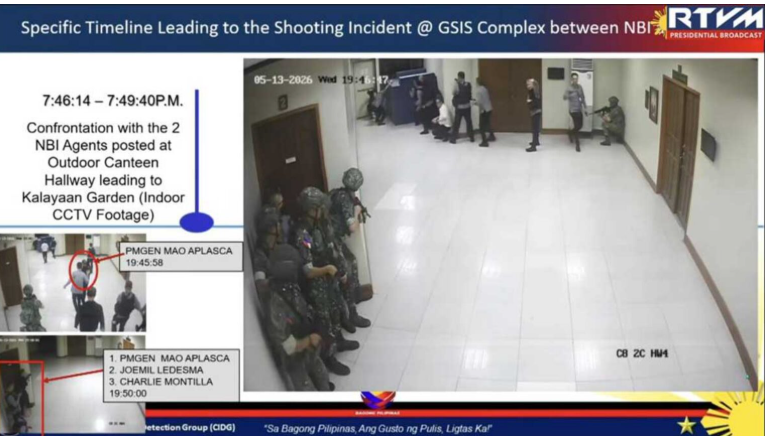
According to Vida, the investigative panel has compiled evidence from multiple sources, including testimony from National Bureau of Investigation personnel and accounts provided by media practitioners who were present at the scene. Significantly, CCTV footage has been obtained and reviewed, revealing that sniper fire was discharged from the fifth floor of the Senate building, with rounds directed toward an identifiable NBI vehicle positioned at the GSIS premises. This ballistic evidence suggests a deliberate and targeted shooting rather than a random or accidental incident, raising serious questions about who authorized or carried out the operation.
The timeline of events appears crucial to the investigation. The shooting occurred on May 13, and Dela Rosa's escape from protective custody took place in the early morning hours of May 14, suggesting a possible causal relationship or coordinated sequence of events. Investigators are apparently seeking to determine whether the shooting was designed to create chaos and opportunity for the senator to flee, or whether these incidents were independently motivated. The proximity of these events has understandably drawn intense scrutiny from both law enforcement and the public.
When pressed about whether specific individuals have been identified as persons of interest, Vida declined to name names but made a telling admission: based on preliminary findings, many of the personalities involved in the incident appear to be public officials. This revelation is significant for a developing democracy like the Philippines, where allegations of official misconduct carry profound implications for institutional integrity and public confidence in government institutions.
Vida emphasized that the investigation remains in its active phase and has not yet reached the stage of formal charges. He stated carefully that prosecutors are still gathering evidence and establishing the factual foundation necessary for any potential indictment. This cautious approach reflects an apparent commitment to building an airtight case rather than pursuing individuals based on speculation or incomplete information. The Justice Secretary appears intent on avoiding the appearance of political motivation or hasty action.
The phrasing of Vida's remarks reveals a nuanced understanding of the sensitivities involved. He pointedly noted that "no individual is above the law," a statement that carries particular weight given that Dela Rosa himself is a sitting senator and former Police Chief, suggesting that even high-ranking officials may face accountability if evidence warrants prosecution. Simultaneously, Vida cautioned against prejudging anyone, emphasizing that conclusions must be based on thoroughly examined evidence rather than preliminary impressions or media speculation.
The Department of Justice's stated commitment to proceed "professionally, objectively, and without fear or favor" addresses public concerns about potential political interference or selective justice. Such assurances are necessary in the Philippine context, where documented instances of weaponized justice and investigations perceived as politically motivated have eroded public trust. By publicly committing to impartial conduct, Vida is attempting to preempt accusations of bias, though skeptics may remain unconvinced.
For regional observers, this incident highlights persistent governance challenges in the Philippines. The involvement of what appear to be senior officials in either the shooting itself or the escape raises troubling questions about institutional controls, chain of command, and accountability mechanisms. How could a sitting senator escape from protective custody? Who ordered the shooting, if indeed it was a deliberate operation? These questions suggest possible systemic failures at multiple levels of government.
The investigation also carries implications for Southeast Asia more broadly. The Philippines' ability to investigate and prosecute officials credibly—regardless of rank or political connections—affects not only its democratic credentials but also regional confidence in its institutions. International observers and neighboring governments are closely watching how thoroughly and fairly this matter is handled, as it reflects broader trends in rule of law and institutional integrity across the region.
The complexity of this case is compounded by its political dimensions. Dela Rosa has been a controversial figure, leading the drug war under President Rodrigo Duterte before entering the Senate. His unexplained escape from protective custody, combined with evidence of sniper fire at government premises, suggests either a genuine security threat against him or something far more sinister. The investigation must untangle whether officials were attempting to protect the senator, harm him, or facilitate his escape for reasons yet unknown.
Both the Senate shooting and Dela Rosa's escape represent extraordinary breaches of security and procedure at the highest levels of government. The investigation will need to examine not only who fired the shots or who facilitated the escape, but also how such incidents were even possible given the security protocols that should govern the Senate building and protective custody arrangements for a senator. Systemic failures may be as important as individual culpability.
The Justice Department now faces the considerable challenge of navigating a politically sensitive investigation while maintaining public credibility and institutional legitimacy. How transparently this case is prosecuted, whether high-ranking officials are held accountable, and whether the final outcome satisfies public expectations will significantly influence Philippine democracy's trajectory. The coming weeks and months will reveal whether the investigation proceeds with genuine independence or succumbs to political pressure from various quarters.