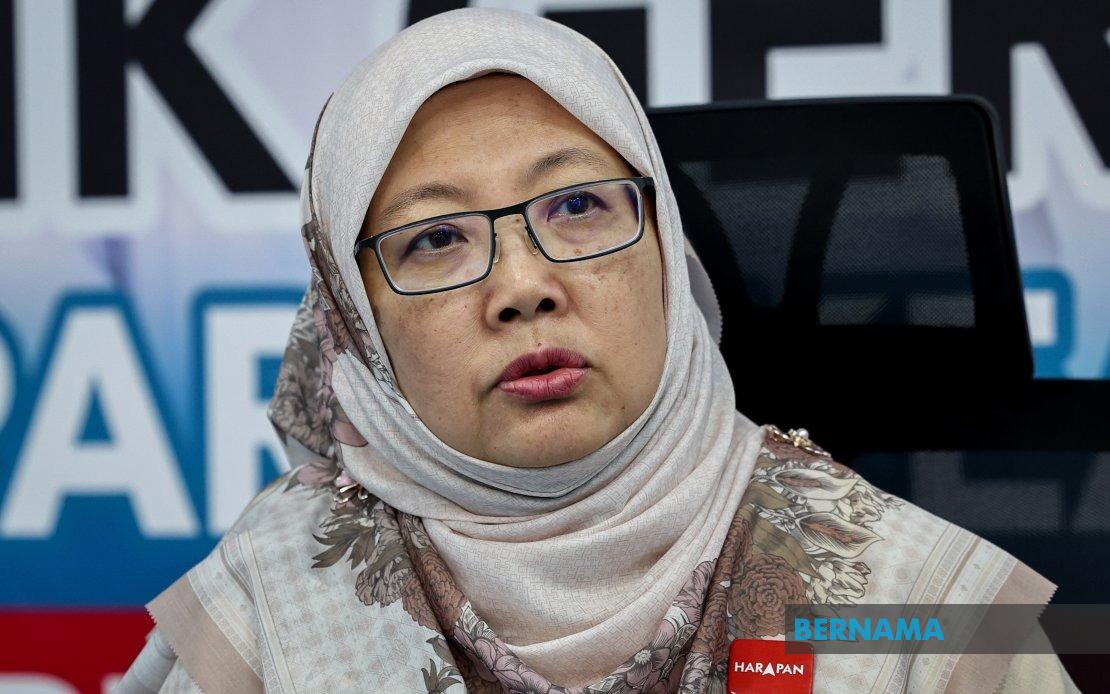
Pakatan Harapan has made a formal commitment to respect the constitutional framework governing Johor's governance, pledging that if given the mandate to form the state administration following the upcoming election, the coalition will fully honour both the Johor State Constitution 1895 and the Sultan of Johor's prerogative powers in appointing the Menteri Besar. This assurance, delivered by Johor PKR chairman Datuk Seri Dr Zaliha Mustafa, represents a clear positioning on a matter that has occasionally become contentious in Malaysian state politics, where the relationship between elected representatives and constitutional monarchs requires careful navigation.
Dr Zaliha's statement came in direct response to remarks from incumbent Johor Menteri Besar Datuk Onn Hafiz Ghazi, who had publicly called upon PH to identify and name its preferred Menteri Besar candidate before the election concludes. This request reflected a tactical approach from the incumbent coalition, seeking to press the opposition into making binding commitments that could be scrutinised by voters or potentially used to create internal divisions within PH should the election outcome not align with pre-announced preferences.
The PKR leader deliberately sidestepped the naming of any specific candidate, instead framing PH's position around constitutional propriety and respect for institutional hierarchies. By anchoring the party's stance to the existing constitutional arrangement rather than proposing electoral innovations, Dr Zaliha positioned PH as the guardian of established legal norms—a strategically important posture in a state where the monarchy commands considerable respect and where constitutional questions carry significant weight with traditional voter constituencies.
PH's reluctance to identify a specific Menteri Besar candidate before the election reflects broader strategic considerations within Malaysian politics. Unlike some democracies where party leaders or candidates are formally designated in advance, the Malaysian system preserves greater flexibility in this regard, particularly given the role of constitutional monarchs in government formation. This flexibility can be advantageous to opposition coalitions, as it allows them to negotiate with the palace following an election result while avoiding premature commitments that might alienate different factions or invite targeted criticism.
The coalition instead chose to redirect the campaign conversation toward substantive governance matters. Dr Zaliha emphasised that PH's central campaign focus would centre on policy offerings rather than personalities, specifically highlighting economic development, employment generation, and improved living standards as the coalition's core messaging priorities. This strategic choice reflects a calculated assessment that Johor voters, facing cost-of-living pressures and economic concerns, may be more receptive to detailed policy platforms than to personalised political positioning.
Dr Zaliha's assertion that PH possesses numerous qualified and experienced leaders capable of managing state affairs strategically validates the coalition's position while simultaneously reassuring different party factions that their interests would be considered in any government formation process. This formulation—emphasising the depth of leadership talent rather than crowning a single candidate—serves the coalition's internal cohesion by avoiding the resentment that might accompany early exclusion of potential contenders.
The constitutional dimension of this dispute deserves particular attention for Malaysian observers and regional watchers alike. The Johor State Constitution 1895 vests significant authority in the Sultan, reflecting the state's constitutional monarchy framework. Unlike some federal systems where the monarch's role in government formation has become largely ceremonial, the Johor sultans maintain more substantive powers in this domain. PH's commitment to uphold these constitutional provisions signals deference to institutional arrangements that have long governed the state and suggests the coalition would not pursue reform of executive selection processes immediately upon taking office.
For Malaysia's broader political landscape, this episode illustrates how constitutional monarchy remains a live and practical aspect of governance rather than a purely symbolic institution. State-level politics frequently involve navigation of these royal prerogatives, and opposition coalitions must carefully balance democratic electoral mandates with respect for constitutional arrangements. The manner in which PH has addressed this challenge—by emphasising constitutional fidelity rather than opposing it—reflects political maturity and an understanding that attempting to circumscribe royal powers would prove both legally and politically counterproductive.
From the perspective of Johor voters, the substantive policy debate that PH seeks to foster may ultimately prove more consequential than the procedural question of who will carry the Menteri Besar title. Johor's economy, employment market, and public services face challenges that transcend personality politics. Whether the state government pursues business-friendly regulatory reform, invests adequately in education and healthcare, or successfully manages the transition toward higher-value economic activities matters more to household welfare than does the specific identity of the chief minister, provided that person possesses basic competence and integrity.
The refusal to name a candidate also offers PH tactical advantages in a closely contested election. By keeping the question open, the coalition maintains maximum flexibility should the election produce a fragmented outcome requiring coalition partners to negotiate their terms and conditions. In Malaysian state politics, post-election negotiations can prove as decisive as polling day itself, and parties that enter such negotiations without having locked themselves into rigid pre-election commitments preserve their negotiating position.
Onn Hafiz Ghazi's original request for PH to name its candidate may have been partly tactical, designed to highlight what the incumbent might characterise as a lack of clarity in the opposition's plans. However, Dr Zaliha's response—dignified, constitutionally grounded, and policy-focused—effectively neutralised this line of attack by reframing the question not as opposition evasion but rather as respect for constitutional processes and concentration on voter priorities.
Looking forward, this exchange provides useful context for how the Johor election campaign may unfold. Rather than focusing on personality contests between aspiring chief ministers, PH appears intent on steering the debate toward governance records, policy proposals, and economic management. Whether voters will reward this approach depends partly on whether the coalition can articulate a sufficiently compelling alternative vision for the state's future and partly on whether economic conditions remain a primary voter concern.

%22%2F%3E%3C%2Fpattern%3E%3C%2Fdefs%3E%3Crect%20width%3D%22100%25%22%20height%3D%22100%25%22%20fill%3D%22url(%23ph523ndg)%22%2F%3E%3Crect%20width%3D%22100%25%22%20height%3D%22100%25%22%20fill%3D%22url(%23ph523ndp)%22%2F%3E%3Ctext%20x%3D%2250%25%22%20y%3D%2250%25%22%20text-anchor%3D%22middle%22%20dominant-baseline%3D%22central%22%20fill%3D%22rgba(255%2C255%2C255%2C0.95)%22%20font-family%3D%22Georgia%2C%20'Times%20New%20Roman'%2C%20serif%22%20font-weight%3D%22700%22%20font-size%3D%22272%22%20letter-spacing%3D%22-0.02em%22%3EAnwar%3C%2Ftext%3E%3C%2Fsvg%3E)