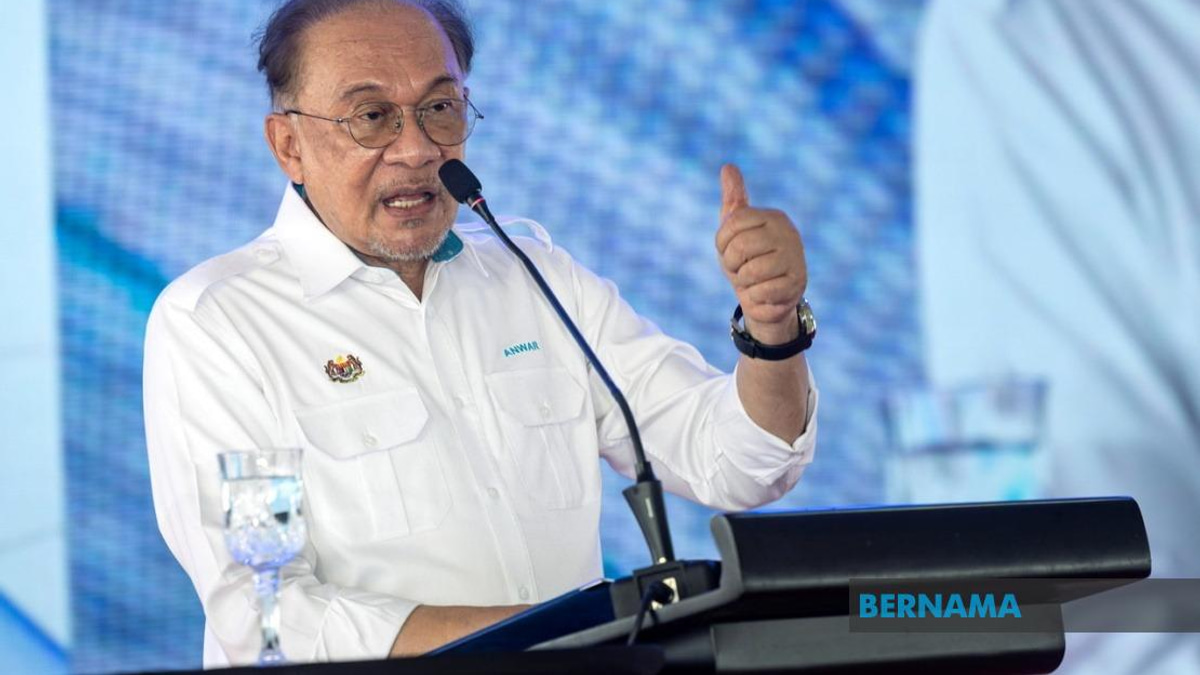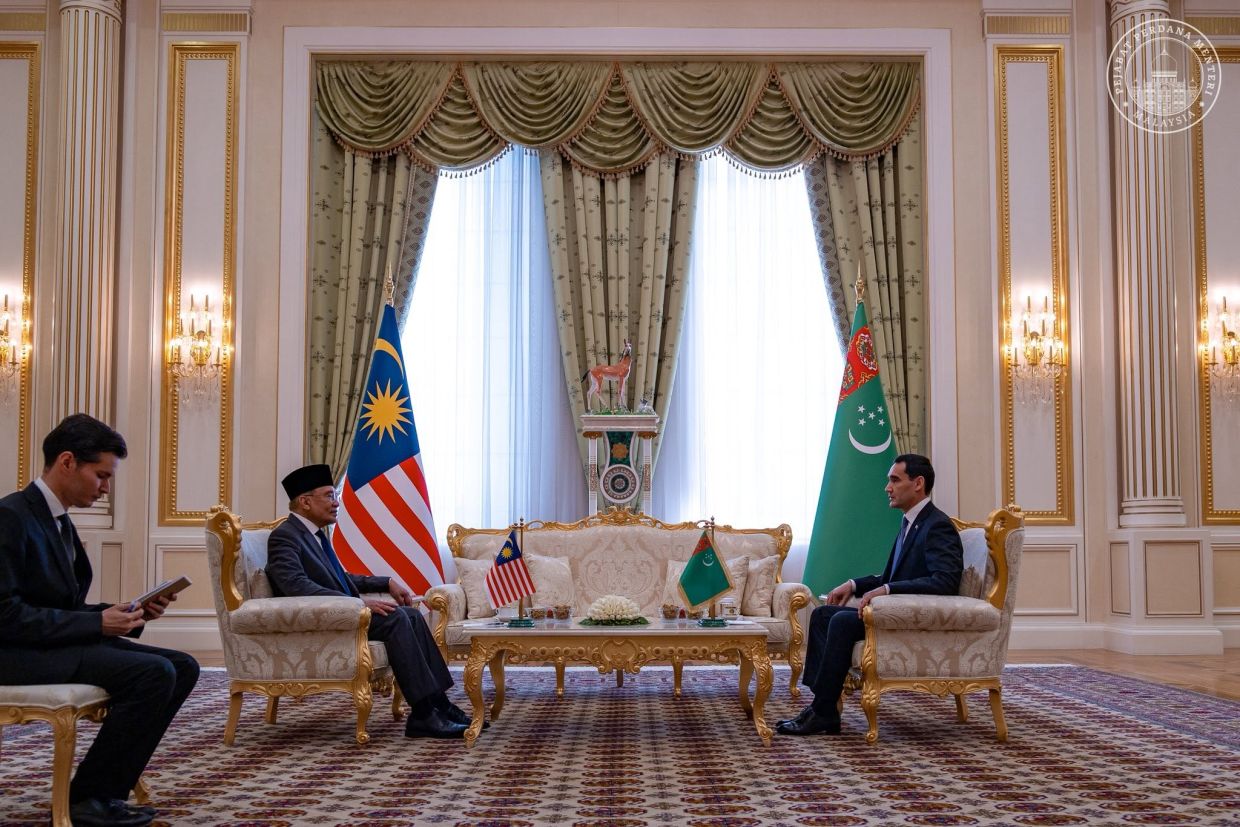
Prime Minister Datuk Seri Anwar Ibrahim was present at the formal signing of a strategic partnership between national oil company Petronas and Turkmenistan's authorities during an official visit to Ashgabat. The agreement, witnessed by Turkmenistan President Serdar Berdimuhamedov, represents a significant expansion of Malaysia's footprint in Central Asia's energy landscape and builds upon established diplomatic channels between the two nations.
The accord carries particular symbolic weight as it coincides with three decades of continuous Malaysian-Turkmen cooperation in the energy sector, a relationship that has served as the bedrock of economic engagement between the countries. This milestone reflects the depth of institutional trust developed over the years and signals confidence from both sides in deepening their partnership further. The Prime Minister's Office emphasized that the new agreement transcends mere commercial transactions, framing it as a partnership rooted in mutual respect, shared development goals, and long-term strategic alignment.
Central to the partnership's appeal is access to Turkmenistan's natural gas resources, among the world's largest proven reserves. For Malaysia, a nation dependent on energy security and seeking to diversify its hydrocarbon portfolio, involvement in Central Asian gas fields offers insulation from regional supply fluctuations and strengthens its position in global energy markets. Petronas, as Southeast Asia's leading integrated energy corporation, brings technical expertise, operational experience, and technological capabilities that Turkmenistan values as it seeks to maximize extraction efficiency and attract credible international partners.
The partnership framework encompasses not only resource development but also knowledge transfer and capacity building. Malaysian officials stressed that the arrangement facilitates the movement of skilled personnel, sharing of best practices, and technology integration that strengthens institutional capabilities on both sides. For Turkmenistan, collaboration with Petronas provides access to advanced techniques in exploration, production, and downstream operations. For Malaysia, the engagement strengthens its credentials as a reliable energy player capable of executing complex projects across diverse geopolitical contexts.
The Prime Minister's Office characterized the agreement as validation of Malaysia's standing in global energy markets and its capacity to compete internationally. By securing partnerships in resource-rich nations and contributing technical solutions to pressing energy challenges, Malaysia reinforces its position as a bridge between Asian economies and Central Asian suppliers. This expanded role enhances the country's diplomatic leverage and creates downstream opportunities for Malaysian professionals, suppliers, and service providers in the broader Central Asian market.
The timing of the announcement underscores Malaysia's deliberate pivot toward Central Asia as a frontier for economic expansion. With Turkmenistan ranking as Malaysia's fourth-largest trading partner among Central Asian nations, the bilateral relationship already possesses quantifiable commercial substance. In 2025, trade between the countries reached RM75.80 million, with Malaysian exports accounting for RM75.50 million of that total, representing a 9.0 percent year-on-year increase. This upward trajectory suggests growing commercial confidence and expanding opportunities for Malaysian businesses in the Turkmen market.
Petrolas's accumulated investment in Turkmenistan since 1996 totals RM52.73 billion, a figure that underscores the company's long-term commitment and the scale of operations already undertaken. This substantial capital deployment demonstrates that the strategic partnership represents not an experimental venture but rather a consolidation and expansion of existing operations. The company's three-decade presence has generated institutional knowledge, regulatory relationships, and operational infrastructure that facilitate the implementation of new initiatives.
The bilateral meeting between Anwar and Berdimuhamedov, conducted during the formal ceremony at the Presidential Palace, provided opportunity for leaders to discuss not only energy matters but broader economic cooperation frameworks. Such high-level dialogue typically encompasses trade facilitation, investment protection mechanisms, and coordination on regional security and development issues. The Prime Minister's presence in Ashgabat signals Malaysia's commitment to maintaining high-level engagement with Central Asian partners and demonstrates that Southeast Asian nations regard the region as strategically significant.
The partnership reflects evolving patterns in global energy markets where traditional producers seek partnerships with companies possessing advanced technology and established operational networks. Petronas's involvement brings capital efficiency, operational expertise, and access to international markets that benefit Turkmenistan's long-term resource monetization strategy. For Malaysia, the partnership diversifies national income sources and reduces economic dependency on Southeast Asian energy markets alone, contributing to broader macroeconomic resilience.
The MADANI government's endorsement of the partnership aligns with broader policy objectives emphasizing strategic industries, technology transfer, and international competitiveness. Officials framed the agreement as exemplifying how Malaysian expertise can generate economic value while contributing to energy security in partner nations. This narrative positions Malaysia not merely as a resource consumer but as a provider of solutions to global energy challenges.
Looking forward, the partnership potentially opens pathways for Malaysian companies to participate in supporting industries including drilling services, equipment supply, engineering consultation, and infrastructure development. Such ancillary opportunities multiply the economic benefit flowing from the core energy partnership and create employment for Malaysian professionals in Central Asian markets. The agreement thereby functions as a catalyst for broader economic integration beyond the energy sector itself.

%22%2F%3E%3C%2Fpattern%3E%3C%2Fdefs%3E%3Crect%20width%3D%22100%25%22%20height%3D%22100%25%22%20fill%3D%22url(%23ph523ndg)%22%2F%3E%3Crect%20width%3D%22100%25%22%20height%3D%22100%25%22%20fill%3D%22url(%23ph523ndp)%22%2F%3E%3Ctext%20x%3D%2250%25%22%20y%3D%2250%25%22%20text-anchor%3D%22middle%22%20dominant-baseline%3D%22central%22%20fill%3D%22rgba(255%2C255%2C255%2C0.95)%22%20font-family%3D%22Georgia%2C%20'Times%20New%20Roman'%2C%20serif%22%20font-weight%3D%22700%22%20font-size%3D%22272%22%20letter-spacing%3D%22-0.02em%22%3EAnwar%3C%2Ftext%3E%3C%2Fsvg%3E)