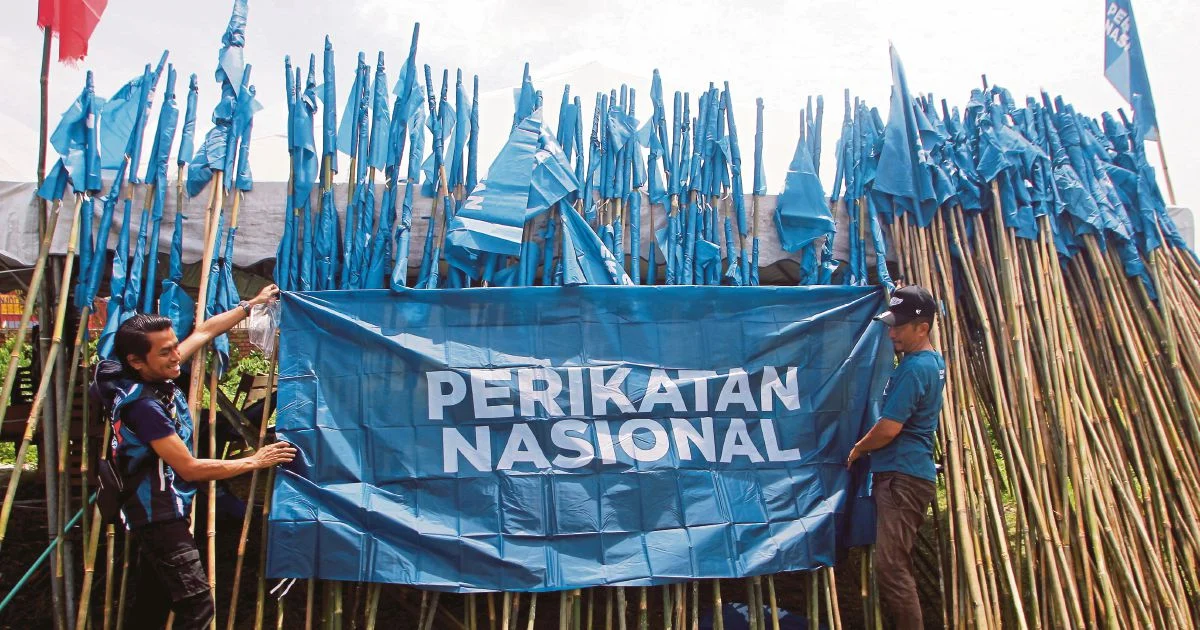
The Perikatan Nasional coalition will hold a significant leadership gathering on June 22 aimed at settling a series of contentious internal matters that have troubled the opposition alliance, particularly disagreements over party branding rights and the mechanisms for approving and endorsing election candidates.
The planned session of the Supreme Council represents a crucial moment for the coalition as it prepares for electoral contests on the horizon. Multiple unresolved disputes have created friction within the partnership, threatening both its public credibility and operational cohesion. Among the most pressing concerns is the determination of which member parties and leaders possess authority to deploy the PN insignia in campaign activities and official communications.
This logo question carries substantial practical and symbolic weight in Malaysian politics. The ability to use a coalition's registered symbol can significantly influence voter recognition and campaign effectiveness. For PN, which comprises several distinct political entities united under a single banner, clarity about branding rights becomes essential to prevent rival factions from claiming legitimacy through unauthorised use of the trademark. The wrangle hints at deeper tensions between coalition partners who may harbour differing strategic visions.
Equally significant is the question of candidate endorsements. Electoral contests demand unified party discipline if coalitions are to maximise their seat gains. When member parties cannot agree on a consistent endorsement procedure or when leadership disputes arise over which candidates merit official backing, campaigns become fractured and voter messaging becomes contradictory. The PN coalition must establish transparent, binding protocols that all partners accept before elections commence.
For Malaysian observers, these institutional struggles within PN carry broader implications. A coalition weakened by internal bickering cannot effectively function as a counterweight to the federal government. Meanwhile, the public growing tired of political squabbling may increasingly question whether opposition leadership possesses the discipline required to govern responsibly. Such perceptions directly impact electoral prospects across the nation.
The timing of the June 22 meeting also warrants attention. Calling the session indicates that PN recognises the severity of these disputes and understands that postponing resolutions could prove catastrophic once campaigning intensifies. Leadership evidently believes that confronting these thorny matters now, before elections are officially called, provides the best chance for reaching consensus among sometimes fractious member parties.
From a Southeast Asian perspective, PN's internal management difficulties reflect broader trends in the region's opposition coalitions. Many counter-government alliances struggle to maintain unity across diverse ideological platforms and competing party interests. PN's handling of these disputes—whether it emerges stronger or fractures further—may offer lessons for other regional opposition movements attempting to coordinate across significant differences.
The Supreme Council format suggests that resolution will occur at the highest levels of the coalition's hierarchy. This institutional approach, while formal, may help ensure that any decisions carry sufficient weight to bind all member parties. However, it also means that negotiations could prove protracted and contentious if powerful figures within the coalition hold incompatible positions on these matters.
For Malaysian voters evaluating their electoral choices, PN's ability to resolve these administrative and branding questions transparently will factor into assessments of the coalition's readiness for governance. Political parties and coalitions function as organisations before they function as governments, and demonstrated competence in managing internal affairs builds confidence among supporters.
The June 22 meeting also arrives at a moment when Malaysian politics faces significant uncertainty. With various state and federal polls potentially approaching, opposition coalitions must present clarity about their structures, leadership hierarchies, and decision-making processes. Confusion about logo usage or endorsement procedures creates openings for the ruling coalition to attack opposition credibility.
Stakeholders across PN's member parties understand that the Supreme Council meeting represents a critical juncture. Failing to achieve binding agreements on logos and candidate endorsements could trigger further public disputes that damage the coalition's electoral prospects. Conversely, successful resolution could project an image of a maturing opposition capable of imposing discipline upon itself.
As June 22 approaches, all eyes will be fixed on whether PN's leadership can transcend sectional interests and forge compromise that strengthens the coalition. The decisions made during that session will reverberate through the electoral cycle ahead and may ultimately shape the political trajectory of Malaysian democracy.

%22%2F%3E%3C%2Fpattern%3E%3C%2Fdefs%3E%3Crect%20width%3D%22100%25%22%20height%3D%22100%25%22%20fill%3D%22url(%23ph523ndg)%22%2F%3E%3Crect%20width%3D%22100%25%22%20height%3D%22100%25%22%20fill%3D%22url(%23ph523ndp)%22%2F%3E%3Ctext%20x%3D%2250%25%22%20y%3D%2250%25%22%20text-anchor%3D%22middle%22%20dominant-baseline%3D%22central%22%20fill%3D%22rgba(255%2C255%2C255%2C0.95)%22%20font-family%3D%22Georgia%2C%20'Times%20New%20Roman'%2C%20serif%22%20font-weight%3D%22700%22%20font-size%3D%22272%22%20letter-spacing%3D%22-0.02em%22%3EAnwar%3C%2Ftext%3E%3C%2Fsvg%3E)