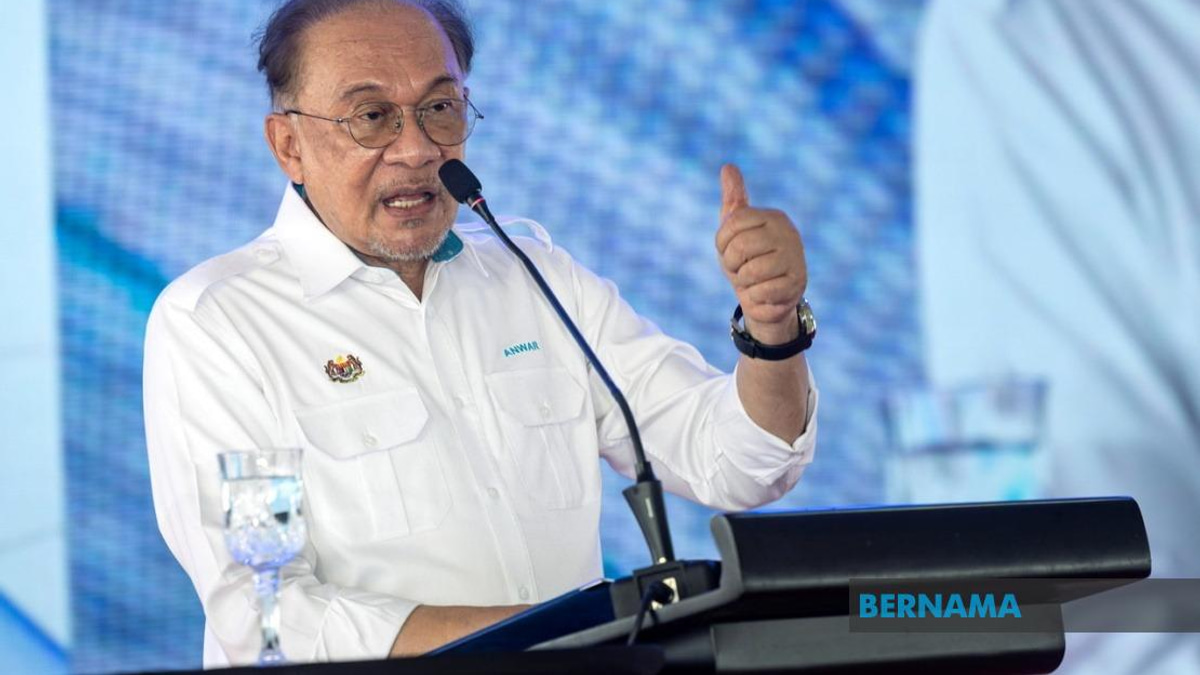
Perikatan Nasional has moved to publicly affirm its readiness to contest the 16th General Election should Prime Minister Anwar Ibrahim opt to dissolve Parliament this year, with senior coalition officials confirming that the opposition alliance's electoral machinery has already been activated at grassroots and state levels across the country. The declaration, made by a leading PN figure in Kota Baru, underscores the coalition's confidence in its organisational capacity and signals that the group sees itself as a credible alternative should Malaysia's political landscape shift unexpectedly.
The statement reflects the enduring uncertainty surrounding Malaysia's electoral timeline. While the Constitution permits Parliament to remain intact until 2027, constitutional provisions allow for earlier dissolution at the Prime Minister's discretion. For PN, a coalition formed in the aftermath of the 2022 general election collapse of the previous administration, maintaining readiness for an unscheduled contest represents both a tactical necessity and a demonstration of organisational maturity to potentially persuadable voters.
PN's pre-mobilisation strategy carries particular significance in the Malaysian context, where political fragmentation has accelerated over the past two election cycles. The coalition, which comprises the Islamist Parti Islam Se-Malaysia (PAS), the Malay-nationalist Bersatu party, and several smaller regional formations, has worked to project unity despite their previously fractious relationships. By signalling campaign readiness now, the coalition aims to establish itself as a coherent political force rather than a loose alliance of convenience, addressing lingering questions about its internal cohesion among voters who have grown sceptical of opposition formations.
The logistics of electoral preparation in Malaysia remain substantial, particularly for opposition parties lacking the organisational infrastructure of the ruling Pakatan Harapan government. PN's activation of campaign structures across federal territories, state assemblies, and local constituencies requires coordinating between parties with distinct organisational cultures and geographic strongholds. PAS, dominant in northeastern Peninsula states, brings constituency strength but faces competition from Bersatu in Perak and the East Coast, requiring careful negotiation over seat allocation to prevent internal friction from undermining overall campaign effectiveness.
From a regional perspective, PN's election posturing reflects broader Southeast Asian patterns of political volatility. Unlike neighbouring Thailand or the Philippines, where electoral unpredictability stems partly from institutional fragility, Malaysian snap elections would represent strategic political calculation by an elected government. Such a move carries implications for regional stability assumptions and investor confidence, given Malaysia's role as a significant Southeast Asian economy. Opposition readiness claims therefore serve double purpose: both domestic political positioning and international signalling that Malaysia's institutions retain democratic legitimacy regardless of outcome.
The timing of such statements also matters tactically. By declaring readiness months in advance, PN positions itself to respond swiftly should dissolution occur unexpectedly, potentially capturing media attention and setting campaign narratives before the government mobilises its own apparatus. This mirrors global opposition practices of maintaining electoral readiness during non-campaign periods, particularly in systems where dissolution can occur relatively quickly.
For Malaysian voters navigating a fragmented political landscape, opposition readiness claims require contextual analysis. PN's declaration reflects genuine organisational investment, yet opposition coalitions historically face challenges converting ground-level mobilisation into parliamentary seats, given Malaysia's first-past-the-post electoral system and gerrymandered constituency boundaries that favour incumbents. The coalition's ability to mount effective challenges depends not merely on campaign readiness, but on constructing persuasive policy platforms and resolving public perceptions of internal instability that have dogged it since formation.
Economically, political uncertainty carries measurable consequences for Malaysia's business environment and ringgit valuation. Any authentic prospect of snap elections could influence investor sentiment and government policy implementation timelines, particularly regarding long-term infrastructure projects and fiscal planning. Opposition parties' claims of readiness thus enter calculations beyond purely electoral considerations, affecting broader macroeconomic conditions that impact ordinary Malaysians' employment prospects and cost of living stability.
The coalition's readiness posture simultaneously reflects and shapes intra-opposition dynamics. By appearing organised and forward-thinking, PN seeks to consolidate support among coalition members and sympathetic voters who might otherwise doubt its viability. However, public declarations risk creating expectations that must be met when the inevitable election eventually occurs; over-promising capability without corresponding electoral success could undermine PN's credibility for subsequent contests.
Looking ahead, PN's electoral preparation strategy will likely intensify if any signs emerge of government intentions toward early dissolution. The coalition's capacity to translate organisational readiness into actual political gains remains the critical variable determining whether such preparedness translates into meaningful parliamentary representation change, or remains merely administrative positioning that leaves Malaysia's political balance essentially unaltered.

%22%2F%3E%3C%2Fpattern%3E%3C%2Fdefs%3E%3Crect%20width%3D%22100%25%22%20height%3D%22100%25%22%20fill%3D%22url(%23ph523ndg)%22%2F%3E%3Crect%20width%3D%22100%25%22%20height%3D%22100%25%22%20fill%3D%22url(%23ph523ndp)%22%2F%3E%3Ctext%20x%3D%2250%25%22%20y%3D%2250%25%22%20text-anchor%3D%22middle%22%20dominant-baseline%3D%22central%22%20fill%3D%22rgba(255%2C255%2C255%2C0.95)%22%20font-family%3D%22Georgia%2C%20'Times%20New%20Roman'%2C%20serif%22%20font-weight%3D%22700%22%20font-size%3D%22272%22%20letter-spacing%3D%22-0.02em%22%3EAnwar%3C%2Ftext%3E%3C%2Fsvg%3E)