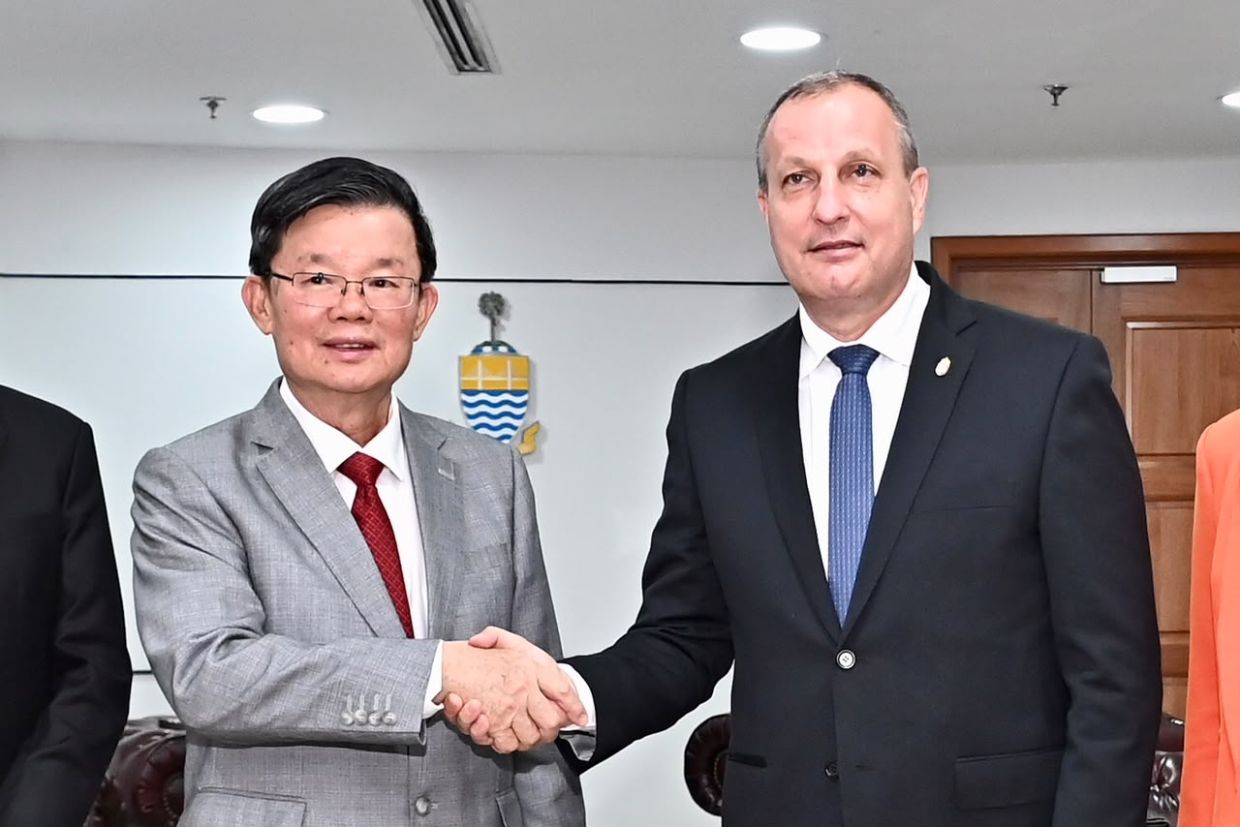
Penang is positioning itself to expand cooperation with Hungary across multiple strategic sectors, with state leadership signalling serious intent to translate diplomatic overtures into tangible collaborative projects. Chief Minister Chow Kon Yeow held substantive discussions with Hungarian Ambassador to Malaysia Dr Sándor Sipos and his delegation, identifying education, technological advancement, water resource management, environmental solutions and cultural preservation as priority areas for mutual engagement. The exchange represents Penang's broader strategy to leverage international partnerships in addressing development challenges while maintaining its competitive edge in the region's knowledge economy.
The timing of these discussions underscores a significant shift in how Malaysian state governments are approaching international relations. Rather than limiting engagement to traditional economic and trade channels, Penang is deliberately cultivating partnerships that address contemporary concerns around sustainability, technological innovation and human capital development. Hungary's position as a Central European knowledge hub and technology innovator makes it an attractive partner for a state that has positioned itself as Malaysia's premier innovation and green manufacturing destination. The specific focus on research and development, water security and renewable energy reflects Penang's recognition that long-term competitive advantage depends on mastering technologies and practices that will shape the post-carbon economy.
Education emerged as a cornerstone of the proposed partnership framework. The Hungarian government currently allocates 40 fully funded scholarship places annually for Malaysian students, a commitment that Sipos indicated remains robust and expandable. For Penang specifically, this represents an opportunity to broaden the horizons of local talent beyond traditional study destinations in Anglo-American universities or established Asian hubs. Hungary's strength in engineering, mathematics, renewable energy research and water management technologies offers Penang students exposure to cutting-edge expertise in fields directly aligned with the state's development priorities. Chow's explicit endorsement of educational exchanges signals that Penang recognises talent circulation and knowledge acquisition as essential investments for advancing its innovation ecosystem.
The water management dimension carries particular regional relevance. Southeast Asia faces escalating water stress driven by climate volatility, industrial expansion and competing demands across agricultural, industrial and domestic sectors. Hungary has developed sophisticated approaches to water treatment, conservation and cross-border water resource management born from its geographic position and historical experience navigating shared river systems. Transferring such expertise to Penang could strengthen the state's resilience against supply disruptions and support industrial expansion without straining existing infrastructure. This practical dimension distinguishes the partnership from purely ceremonial diplomatic engagement and positions it as addressing a genuine development bottleneck.
Green technology and renewable energy constitute another pillar of collaboration with clear implications for Penang's manufacturing and industrial base. The state has set ambitious targets for transitioning to cleaner production methods and reducing carbon intensity across its economy. Hungary's experience in renewable energy deployment, energy efficiency standards and environmental compliance could inform Penang's regulatory frameworks and industrial support programmes. Companies operating in Penang seeking to enhance their green credentials or develop sustainable product lines might access Hungarian technological partners or expertise through formalised bilateral channels established through this partnership framework.
Cultural heritage conservation represents a less obvious but strategically important component of the engagement. Both Penang and Hungary possess historically significant urban centres with architectural and cultural assets requiring careful management amid contemporary development pressures. George Town's UNESCO World Heritage status and Hungary's own rich architectural traditions create natural common ground for knowledge exchange around heritage preservation methodologies, community engagement in conservation projects and integrating historic preservation with economic development through tourism and cultural industries. Such exchanges can yield practical benefits while strengthening people-to-people connections that underpin deeper bilateral relationships.
The state government's approach also encompassed sports cooperation and youth development. Executive Councillor Gooi Zi Sen indicated that Penang intends to conduct formal assessments identifying sporting disciplines suitable for bilateral exchange and coaching partnerships with Hungary. This dimension, while appearing marginal, reflects a holistic partnership philosophy that extends beyond government agencies to embrace civil society engagement and community-level interaction. Hungarian expertise in certain Olympic sports and athletic development systems could enhance Penang's grassroots sports infrastructure and identify young athletes with international competitive potential.
The partnership framework also acknowledges the business community's role in translating diplomatic goodwill into commercial opportunity. The discussions explicitly explored trade and investment channels, recognising that sustainable cooperation depends on reciprocal economic benefit. Hungarian companies in technology, environmental engineering and water systems may find Penang an attractive regional base for Southeast Asian operations, while Penang-based enterprises could access Central European markets through Hungarian business networks. Such commercial interconnection creates stakeholder constituencies on both sides with vested interests in deepening the relationship beyond government-to-government protocols.
For Malaysia more broadly, Penang's initiative illustrates how individual states can pursue targeted international partnerships that complement national foreign policy while serving specific regional development objectives. Rather than waiting for federal diplomatic initiatives, Penang is proactively cultivating relationships with nations offering complementary expertise and shared development aspirations. This approach potentially expands Malaysia's diplomatic footprint and deepens engagement with Central European partners in ways that benefit the broader region's technology transfer and knowledge circulation networks.
The partnership's success will ultimately depend on converting rhetorical commitments into institutional mechanisms and sustained resource allocation. Chow's expressed hope that discussions would yield concrete collaborative projects suggests recognition that agreements without implementation frameworks remain merely aspirational. Formalising scholarship pathways, establishing research joint ventures between Penang-based universities and Hungarian institutions, creating business matchmaking platforms and developing specific projects around water management or renewable energy deployment would transform these discussions into tangible outcomes measurable in years ahead.

%22%2F%3E%3C%2Fpattern%3E%3C%2Fdefs%3E%3Crect%20width%3D%22100%25%22%20height%3D%22100%25%22%20fill%3D%22url(%23ph523ndg)%22%2F%3E%3Crect%20width%3D%22100%25%22%20height%3D%22100%25%22%20fill%3D%22url(%23ph523ndp)%22%2F%3E%3Ctext%20x%3D%2250%25%22%20y%3D%2250%25%22%20text-anchor%3D%22middle%22%20dominant-baseline%3D%22central%22%20fill%3D%22rgba(255%2C255%2C255%2C0.95)%22%20font-family%3D%22Georgia%2C%20'Times%20New%20Roman'%2C%20serif%22%20font-weight%3D%22700%22%20font-size%3D%22272%22%20letter-spacing%3D%22-0.02em%22%3EAnwar%3C%2Ftext%3E%3C%2Fsvg%3E)