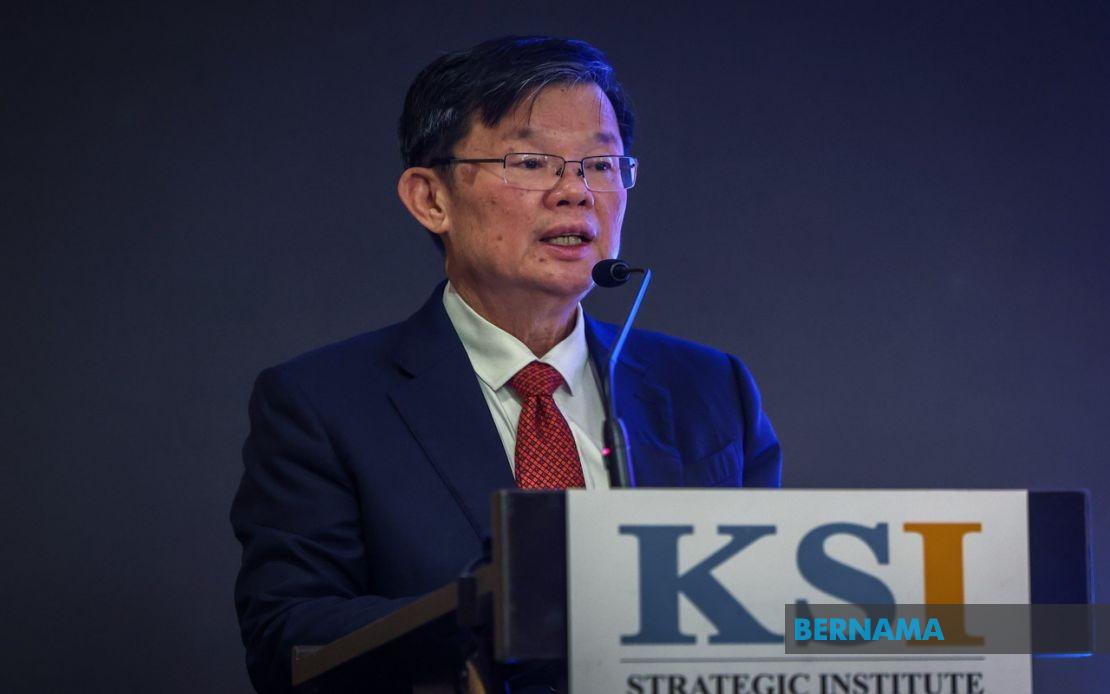
Penang's Pakatan Harapan coalition has reiterated its commitment to increasing female representation in the state election, yet leadership remains candid about the structural barriers preventing swift progress toward gender parity in politics. Speaking after inaugurating the World Women Economic and Business Summit 2026 in George Town on June 15, Chief Minister Chow Kon Yeow outlined the coalition's aspiration to field more women candidates while simultaneously acknowledging that candidate availability remains the fundamental constraint on achieving this goal.
The 30 per cent women's representation target, a benchmark that Malaysia has pursued since 2009, continues to elude the country. Currently, women comprise only 13.5 per cent of Members of Parliament and 12 per cent of state assemblypersons nationwide—a stark gap that underscores both the ambition of the target and the distance Malaysian politics must travel to reach it. Penang's situation reflects this national pattern, with Chow indicating that while the state coalition remains proactive in supporting gender diversity, the real bottleneck lies not in leadership willingness but in candidate recruitment.
The challenge, as Chow articulated, centres on a supply-demand mismatch. Political parties cannot simply mandate representation without qualified, motivated individuals willing to subject themselves to electoral contests. The process of identifying, vetting, and securing commitment from suitable women candidates requires sustained effort and careful groundwork that frequently goes underappreciated in public discourse about representation targets. Chow emphasised that Penang PH would continue fielding women in every election, but realistic expectations must acknowledge that the actual numbers will fluctuate based on the pool of available candidates rather than arbitrary quotas.
This candour reflects a tension that persists across Southeast Asia's political landscape. Women have demonstrably advanced in professional domains—education, business, engineering, and public service sectors showcase substantial female participation and achievement. Yet politics remains distinctly inhospitable by comparison, a domain where progress stalls despite women's demonstrated capability in nearly every other field. The barriers to political participation operate differently than professional career obstacles; they encompass not merely glass ceilings but deeper cultural hesitations, family pressures, and the particular brutality of electoral contestation.
Chow articulated a practical framework for systemic progress, moving beyond rhetorical commitments to concrete institutional measures. Political parties should institutionalise the 30 per cent target within their candidate selection mechanisms rather than treating it as an aspirational goal subject to annual reinterpretation. Such formalisation creates enforceable benchmarks and shifts the burden from individual motivation to organisational accountability. Without structural embedding, representation targets risk becoming convenient talking points that disappear when political convenience dictates otherwise.
Equal access to decision-making committees represents another dimension Chow identified as requiring urgent attention. Women's political participation cannot remain confined to candidate roles; sustainable progress demands that female politicians occupy positions of genuine influence within party structures, policy committees, and legislative bodies. This vertical integration ensures that women contribute to agenda-setting rather than merely implementing decisions made by others. Malaysian parties have historically concentrated power among small leadership circles, creating structural barriers that disproportionately disadvantage women lacking established networks or family political legacies.
Mentorship and resource allocation emerged as critical enabling factors in Chow's analysis. Aspiring women candidates frequently lack access to the informal networks, financial support systems, and experiential guidance that established male politicians routinely inherit or acquire through longstanding party involvement. Creating structured mentorship programmes and equitable resource distribution would level an uneven playing field where newcomers—particularly women without political family backgrounds—face exponentially higher hurdles than their male counterparts. This infrastructure-building approach recognises that talent distribution is not the problem; accessibility and support systems are.
For Malaysia and Southeast Asia more broadly, Penang's candid assessment offers a refreshing departure from denial or complacency. Acknowledging that recruitment challenges exist represents intellectual honesty that should inform regional efforts to advance women in politics. Singapore, Thailand, Indonesia, and the Philippines each confront analogous obstacles, though manifested through different cultural and institutional contexts. Sharing knowledge about recruitment strategies, mentorship models, and institutional reforms could accelerate progress across the region rather than allowing each country to reinvent solutions independently.
The timing of Chow's comments at an economic and business summit highlights an interesting paradox: women have proven their economic acumen extensively, yet political gatekeepers remain hesitant to grant equivalent trust in the political arena. This disconnect suggests that the problem extends beyond individual female capability or willingness into systemic conservatism within political establishments. If businesses regularly promote women to executive positions and entrust them with significant financial and operational responsibility, the assertion that politics cannot achieve similar representation becomes increasingly difficult to defend credibly.
Moving forward, Penang's approach should centre on removing structural barriers rather than exhorting women to overcome obstacles that men navigate effortlessly. This means creating dedicated candidate development programmes, establishing clear selection timelines that allow women adequate preparation, and ensuring that established politicians mentor newcomers. It requires dismantling informal selection processes where decisions occur through personal connections and replacing them with transparent, merit-based mechanisms that level assessment criteria.
The coalition's willingness to engage honestly with recruitment challenges positions Penang potentially as a leader in practical solutions rather than rhetorical posturing about representation. If Penang PH can convert this acknowledgment into genuine institutional reform—formalising targets, allocating resources, creating mentorship structures, and diversifying decision-making bodies—the state might demonstrate pathways that other Malaysian states and regional parties could eventually adopt. The 30 per cent target remains achievable; what remains contested is whether political establishments will embrace the systematic changes necessary to realise it.