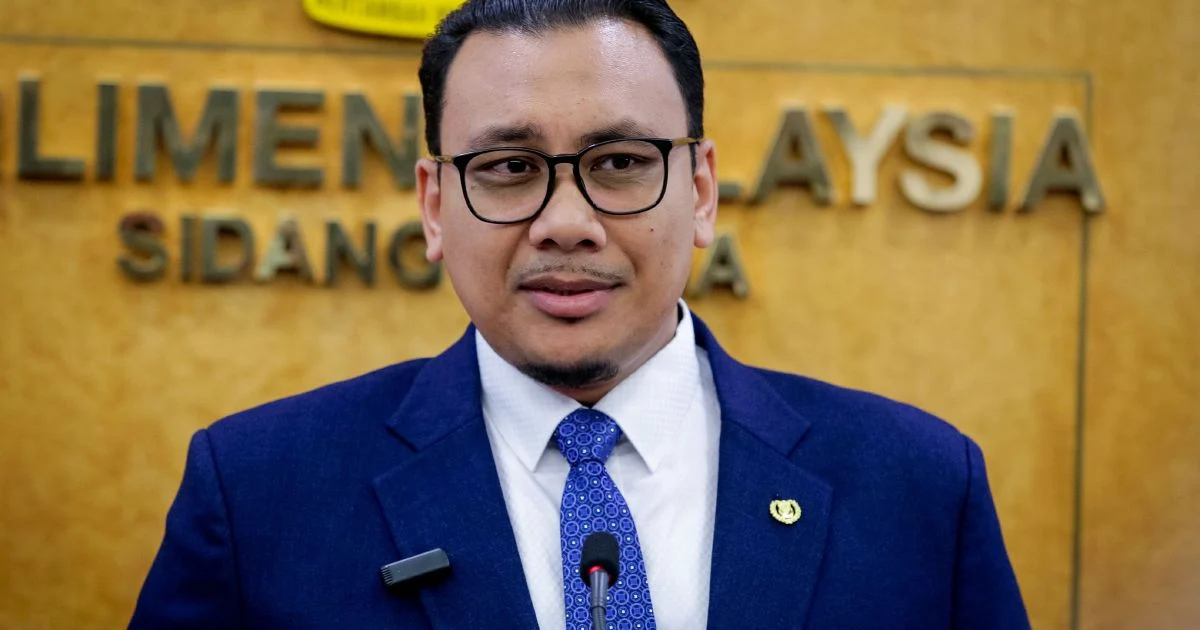
The youth wing leader of Parti Islam Se-Malaysia (PAS) has moved to escalate a political dispute into the courts, engaging legal representatives to address what he characterises as defamatory statements made online. Afnan Hamimi Taib Azamudden took this step following the circulation of a Facebook post purportedly authored by a senior Bersatu Pribumi Bersatu Malaysia figure, which he contends contained derogatory remarks directed at his father and other family members. The decision to pursue formal legal remedies marks a notable hardening of position amid Malaysia's increasingly contentious political environment, where personal attacks on social media have become a recurring flashpoint between rival coalition partners.
The move underscores persistent tensions within Malaysia's political ecosystem, particularly among parties that have undergone significant realignments in recent years. PAS has consolidated its position as a dominant force in several states, while its coalition dynamics with other Malay-Muslim parties remain fluid and occasionally fraught. When political disputes migrate from parliamentary chambers and party forums into personal territory, involving family members and character assassination, they frequently cross from conventional political contestation into legal territory. The instruction to lawyers suggests Afnan Hamimi views the alleged insult as sufficiently serious to warrant remedies beyond public denial or political rebuke.
Social media has fundamentally altered the landscape of Malaysian political discourse, collapsing the boundaries between official and unofficial communications. Politicians and their associates increasingly use Facebook, Twitter, and Instagram to reach constituents directly, bypass traditional media filters, and mobilise support. Yet this directness comes with attendant risks, as posts can be rapidly screenshot, shared, and weaponised by opponents. For younger political figures like Afnan Hamimi, whose generation came of age alongside digital platforms, navigating the intersection of personal reputation and public political standing has become considerably more complicated than for their predecessors.
Bersatu's involvement in this dispute carries particular significance given the party's recent trajectory. Formed in 2016 by former Prime Minister Mahathir Mohamad and others who departed UMNO, Bersatu has occupied an unusual position as a party that bridges Malay-Muslim and multi-ethnic political spaces, though not always comfortably. The alleged insulting post, if confirmed to have originated from a party member, could become another episode in a series of damaging intramural conflicts that have characterised Malaysian coalitional politics. Such incidents, whether genuine expressions of political disagreement or manufactured provocations, invariably consume political oxygen and distract from substantive policy discussions.
The decision to pursue legal action represents a calculated gambit with multiple potential consequences. Successfully establishing defamation or criminal libel—statutes that remain in Malaysia's legal arsenal—could set precedent regarding the limits of acceptable political speech. However, litigation also carries risks, including the unwanted exposure of personal matters during legal discovery, the lengthy timelines associated with Malaysian court proceedings, and the potential to amplify the original insult's reach beyond its initial audience. The calculus for younger political figures differs from that facing established leaders, for whom legal action might signal strength, but who also possess greater tolerance for ongoing public disputation.
Family-oriented attacks represent a particularly sensitive category in Malaysian political culture, where concepts of respect, hierarchy, and kinship remain deeply ingrained across communities. When political disputes extend to attacking someone's father or relatives, they are frequently perceived as crossing an unwritten line of acceptable conduct. This cultural dimension may explain why Afnan Hamimi has chosen to elevate the matter beyond internal party channels or public statements. In the Malay-Muslim political context especially, where deference to elders carries significant weight, accusations that strike at familial honour carry particular sting and demand particularly serious response.
The timing and mechanics of how this alleged post emerged also merit consideration. In Malaysian politics, screenshots of controversial social media content frequently circulate through WhatsApp groups, party communication channels, and sympathetic media outlets before entering public awareness. The decision about when and how to reveal such content, and subsequently whether to pursue legal action, involves careful calculation about political advantage and reputational management. Afnan Hamimi's move suggests either that the content had become sufficiently widespread to require forceful response, or that strategic considerations made a public legal challenge advantageous at this particular moment.
The unfolding of this dispute will likely occupy attention across Malaysian news media and political commentary platforms. Opposition politicians and civil society observers will scrutinise whether legal action constitutes appropriate response to online speech, or whether it exemplifies attempts to use defamation law as a tool for silencing political criticism—a concern that Malaysian bar associations and press freedom advocates have raised repeatedly. The specific content of the alleged post, once more widely documented, will become subject to intense interpretation regarding whether it crosses the threshold from harsh political language into actionable defamation.
For younger politicians across Malaysia's political spectrum, this episode carries instructive value regarding the permanence of digital communications and the consequences of unguarded online expression. Unlike statements made in parliamentary sessions, which carry legal immunity, social media posts enjoy no such protection. Bersatu representatives will face pressure to explain whether the post genuinely originated from their ranks, and if so, to account for its nature and justify or distance themselves from its contents. The internal party investigation that will likely follow may reveal deeper grievances or coordination that extends beyond a single objectionable post.
The broader implications for Malaysian political culture depend partly on how the legal system handles this matter. Should courts sustain Afnan Hamimi's case, the precedent may encourage other politicians to pursue similar remedies when subjected to online insult, potentially leading to a proliferation of defamation cases that consume judicial resources. Conversely, should courts dismiss the case or find insufficient grounds for conviction, the decision might reinforce the notion that online political attacks, however virulent, constitute protected speech within Malaysia's legal framework. Either outcome will reverberate through an already fractious political environment where coalitions remain unstable and personal animosities frequently disrupt institutional relationships.