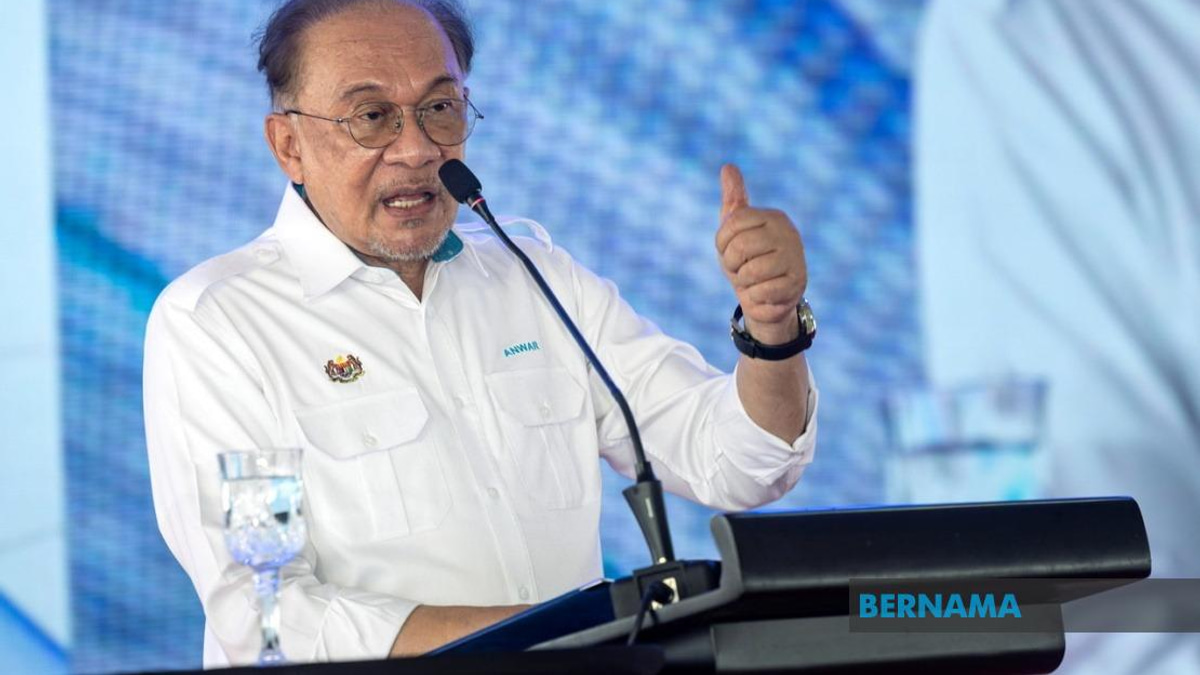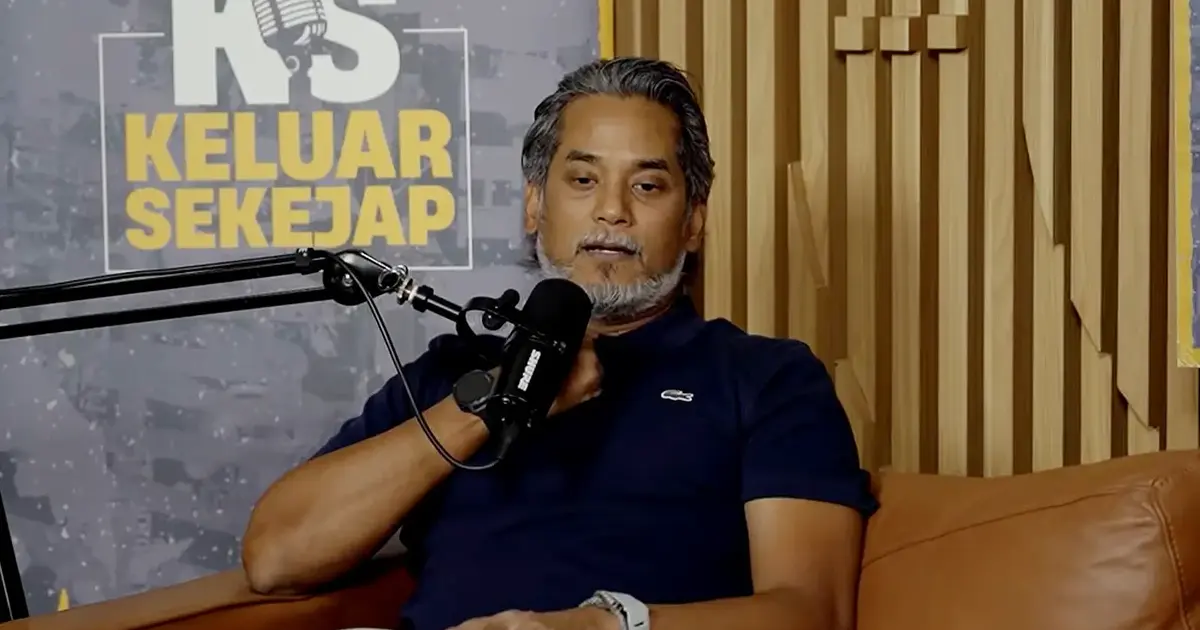
Khairy Jamaluddin, the former Umno Youth chief, has assessed that Parti Islam Se-Malaysia (PAS) faces a critical juncture in its political trajectory, with growth prospects constrained by the limits of its established voter demographic. According to Khairy's analysis, the Islamist party has saturated its core support base and must pursue strategic partnerships with more centrist figures and organisations to achieve meaningful electoral expansion.
The observation carries particular weight given Khairy's long tenure in mainstream Umno politics and his familiarity with the competitive dynamics within Malaysia's Malay-Muslim political landscape. His assessment suggests that PAS, despite its recent electoral gains and governing control in several states, confronts an arithmetic problem: the religious and socially conservative constituencies that historically comprise its voter coalition are insufficient to sustain significantly higher levels of support without broadening appeal to more moderate demographics.
Central to Khairy's argument is the strategic importance of Hamzah Zainudin, the current Deputy Prime Minister and Umno politician, alongside Parti Wawasan Negara, a newer political vehicle, as potential bridges to wider audiences. These alliances, Khairy suggests, serve a dual purpose for PAS: they provide pathways to voters who might find PAS too ideologically rigid in isolation, whilst simultaneously allowing PAS to present a more inclusive political face without abandoning its religious agenda.
Hamzah Zainudin's role in this calculation is particularly instructive for understanding contemporary Malaysian coalition politics. As a senior Umno figure who has maintained working relationships across factional divides within the party and beyond, his association with PAS-led initiatives signals a form of credibility transfer—allowing PAS to access circles within the Malay political establishment that might otherwise regard the party with suspicion or distance. This dynamic reflects a broader pattern in Malaysian politics whereby personal relationships and individual politicians often transcend formal party boundaries.
Parti Wawasan Negara, meanwhile, represents a different strategic dimension. As a relative newcomer to the political arena, the party potentially attracts voters seeking alternatives to established powerhouses, including those dissatisfied with both Umno's governance record and PAS's ideological positioning. For PAS, partnership with such entities allows the party to participate in this emerging space without directly absorbing the reputational risks associated with launching entirely new political vehicles.
Kairy's prognosis carries implications that extend beyond PAS's immediate electoral calculus. The Malaysian political system has long been characterised by coalition-building and inter-party accommodation, particularly within the Malay-Muslim political sphere where competition and cooperation often coexist in unexpected combinations. If Khairy's assessment is accurate, it suggests that the previously dominant Umno is beginning to accept, however reluctantly, that fragmentation within Malay politics may be permanent, necessitating pragmatic engagement rather than attempts at hegemonic reassertion.
For PAS itself, the challenge involves maintaining ideological coherence whilst pursuing alliances with actors whose platforms do not necessarily centre Islam as the primary political organizing principle. This has historically proven a delicate balance for the party, generating internal tensions between purists who emphasise Islamisation and pragmatists focused on electoral viability and governance competence. Partnerships with moderate-leaning figures and centrist parties necessarily require compromises that can provoke such internal disagreements.
The broader Malaysian context further complicates this picture. Voter sentiment has become increasingly volatile in recent election cycles, with large segments of the electorate demonstrating willingness to shift support between coalitions. Economic pressures, governance concerns, and shifting demographics all influence electoral outcomes in ways that transcend traditional communal or ideological boundaries. For PAS to achieve significantly higher levels of support, the party would need to appeal to increasingly diverse voter groups, including urban professionals, younger voters, and constituencies that prioritise economic performance and administrative competence alongside—or sometimes instead of—religious considerations.
Khairy's comments also reflect ongoing repositioning within Umno itself. By acknowledging that PAS requires partnership with moderates, he implicitly recognises that Umno no longer enjoys the monopoly over Malay-Muslim political representation that it possessed historically. This shift in the underlying structure of political competition marks a fundamental change in Malaysian politics, even if parties and politicians continue employing familiar rhetoric and organisational frameworks.
The strategic imperative that Khairy identifies—PAS needing broader alliances—will likely shape political developments across the coming electoral cycle. Whether through Hamzah Zainudin, Parti Wawasan Negara, or other potential partners, PAS leadership will face pressure to demonstrate that religious governance can accommodate diverse interests and perspectives. How successfully the party navigates this challenge could determine not only its electoral ceiling but also its ability to function effectively as a governing force in states and potentially at the federal level, thereby significantly influencing Malaysia's political trajectory.

%22%2F%3E%3C%2Fpattern%3E%3C%2Fdefs%3E%3Crect%20width%3D%22100%25%22%20height%3D%22100%25%22%20fill%3D%22url(%23ph523ndg)%22%2F%3E%3Crect%20width%3D%22100%25%22%20height%3D%22100%25%22%20fill%3D%22url(%23ph523ndp)%22%2F%3E%3Ctext%20x%3D%2250%25%22%20y%3D%2250%25%22%20text-anchor%3D%22middle%22%20dominant-baseline%3D%22central%22%20fill%3D%22rgba(255%2C255%2C255%2C0.95)%22%20font-family%3D%22Georgia%2C%20'Times%20New%20Roman'%2C%20serif%22%20font-weight%3D%22700%22%20font-size%3D%22272%22%20letter-spacing%3D%22-0.02em%22%3EAnwar%3C%2Ftext%3E%3C%2Fsvg%3E)