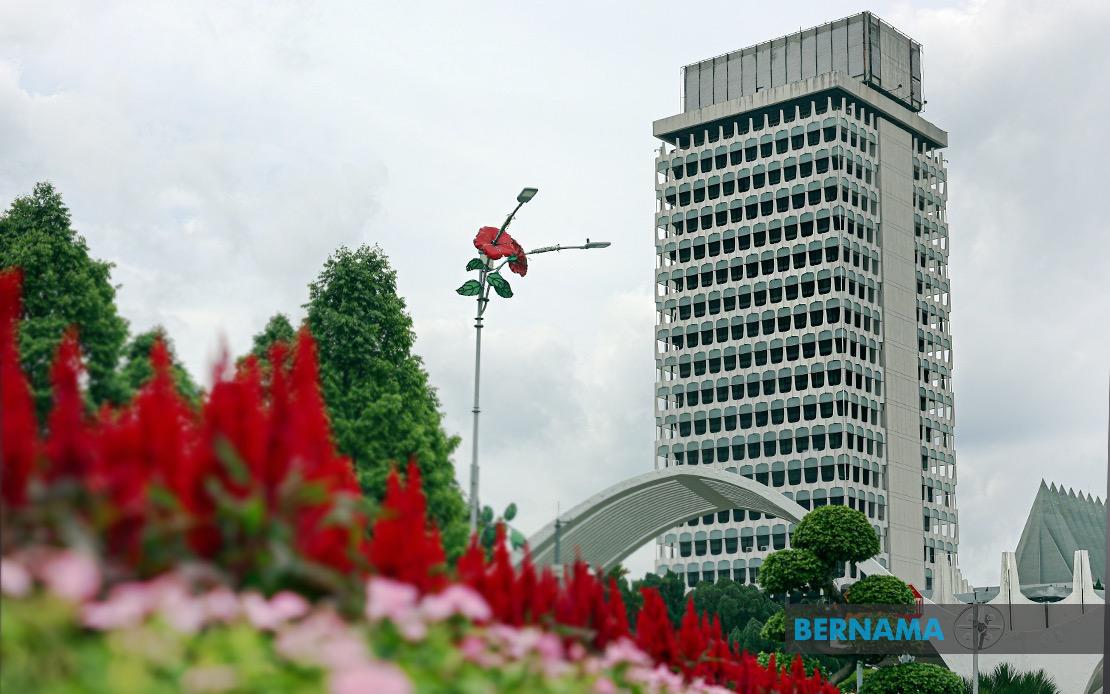
Parliament resumes sitting on Monday for a 16-day session running through July 16, with multiple significant legislative proposals returning to the floor following previous setbacks. The agenda brings renewed attention to constitutional matters that have generated substantial political debate, alongside practical reforms aimed at enhancing public safety on Malaysian roads. The convergence of parliamentary business with the concurrent Johor state election has prompted parliamentary leadership to emphasise the critical importance of maintaining legislative focus and procedural discipline.
Two constitutional amendment bills will be re-tabled after failing to advance in earlier proceedings. The Constitution (Amendment) Bill 2026 proposes limiting prime ministerial tenure to a maximum of 10 years, a measure designed to prevent indefinite executive power concentration. This proposal carries significant implications for Malaysia's political structure and institutional checks and balances. The bill previously could not secure the necessary two-thirds majority support in the lower house, indicating substantial disagreement across the political spectrum regarding optimal constitutional arrangements. The reintroduction suggests sustained commitment from government leadership to pursue this institutional reform despite the numerical challenge.
Equally significant is the Constitution (Amendment) Bill (No. 2) 2026, which seeks to disentangle the historically unified positions of Attorney General and Public Prosecutor. This separation would establish independent oversight mechanisms within Malaysia's justice system, potentially reducing concentration of prosecutorial authority. The bill's earlier referral to a Parliamentary Special Select Committee for detailed examination indicates recognition of the proposal's constitutional complexity and the need for thorough technical scrutiny before parliament votes. The committee process may generate refinements addressing concerns from different political quarters.
Beyond constitutional territory, the Road Transport Act 1987 (Amendment) Bill commands prominent attention, addressing a persistent public safety challenge. Transport Minister Anthony Loke indicated the amendments span 11 substantive areas across 42 clauses, targeting the endemic problem of illegal street racing that continues endangering road users nationwide. The proposed modifications represent a comprehensive legislative response to organised racing activities that authorities have struggled to suppress through existing enforcement frameworks. The amendments introduce stricter penalties and enhanced compliance mechanisms specifically designed to dismantle 'tonto' syndicate operations driving illegal racing culture.
The government's approach reflects growing concern that traditional enforcement strategies have proven insufficient against well-organised racing networks. Strengthening legal tools available to traffic and police authorities becomes essential as Malaysia seeks to reduce road fatalities and serious injuries attributable to uncontrolled high-speed driving. The bill, scheduled for tabling on the opening day with debate following immediately, suggests the government prioritises legislative advancement on this safety agenda. Implementation of these amendments could meaningfully improve enforcement outcomes and create meaningful consequences for participants in illegal racing activities.
Parliamentary proceedings will also examine the Cybercrime Bill 2026, addressing digital security challenges in an increasingly connected society. This legislation arrives amid evolving online threats facing Malaysian citizens and institutions. The timing reflects governmental recognition that cybersecurity legislative frameworks require regular updating to address emerging threats and international best practices. Meanwhile, broader parliamentary discussion is expected regarding the global energy supply crisis affecting Malaysia's economic stability and long-term development planning, particularly reflecting disruptions stemming from West Asian geopolitical tensions.
Dewan Rakyat Speaker Tan Sri Johari Abdul has issued a carefully calibrated reminder to all parliamentarians emphasising their fundamental responsibility to constituents and the legislative process. His statement reflects awareness that concurrent political commitments, particularly the Johor state election campaign underway simultaneously, may distract MPs from parliamentary duties. The Speaker has called explicitly for orderly debate grounded in factual evidence and constructive analysis rather than rhetorical positioning or partisan grandstanding. This guidance acknowledges underlying tension between the demands of electoral politics and the institutional requirements of serious legislative deliberation.
Johari's emphasis on high-quality debate reflects concern that parliament has sometimes become a venue for theatre rather than substantive policy development. He has directed attention toward bread-and-butter issues—cost of living pressures, education quality, healthcare access, employment generation, and community development—that most directly affect Malaysian citizens' daily lives. This framing encourages parliamentarians to evaluate legislative proposals through practical impact lenses rather than narrow partisan advantage. It represents an appeal to elevated standards of parliamentary conduct at a moment when political temperatures run high.
The Speaker's reminder that parliament constitutes Malaysia's highest legislative institution carries particular weight given current political dynamics. By explicitly cautioning against misusing parliamentary procedures for electoral advantage, he signals the importance of maintaining institutional integrity separate from campaign exigencies. His statement acknowledges that MPs face competing pressures but emphasises that parliamentary attendance and substantive participation cannot be compromised by external political commitments. This position reflects broader concerns about maintaining respect for democratic institutions amid intensifying electoral competition.
The concurrent Johor state election presents a significant attendance challenge. Multiple MPs from the state will simultaneously campaign for state assembly positions while maintaining parliamentary responsibilities. The Speaker's emphasis on this dual commitment reflects practical awareness that electoral pressures can reduce parliamentary engagement precisely when major legislation requires careful consideration. The 16-day session provides limited time for thorough debate on complex constitutional and safety matters, making consistent attendance and focused participation particularly valuable.
Parallel to Dewan Rakyat proceedings, the Senate will commence a separate 10-day sitting from July 20 through August 4, allowing the upper house to address its own legislative agenda. This staggered scheduling enables division of labour between chambers while maintaining forward momentum on government priorities. The constitutional amendments and other bills must navigate both chambers to become law, adding layers of procedural complexity and providing additional opportunities for refinement and scrutiny.
For Malaysian citizens following parliamentary developments, the session represents a critical juncture in legislative governance. Constitutional changes carry long-term institutional implications extending beyond immediate political circumstances. Road safety reforms address tangible threats to public welfare. The emphasis on serious, evidence-based debate serves broader democratic interests regardless of which parties control parliamentary arithmetic. Whether legislators can sustain focus on these substantive matters while navigating concurrent electoral pressures will significantly influence both the quality of legislative output and public confidence in parliamentary institutions.

%22%2F%3E%3C%2Fpattern%3E%3C%2Fdefs%3E%3Crect%20width%3D%22100%25%22%20height%3D%22100%25%22%20fill%3D%22url(%23ph523ndg)%22%2F%3E%3Crect%20width%3D%22100%25%22%20height%3D%22100%25%22%20fill%3D%22url(%23ph523ndp)%22%2F%3E%3Ctext%20x%3D%2250%25%22%20y%3D%2250%25%22%20text-anchor%3D%22middle%22%20dominant-baseline%3D%22central%22%20fill%3D%22rgba(255%2C255%2C255%2C0.95)%22%20font-family%3D%22Georgia%2C%20'Times%20New%20Roman'%2C%20serif%22%20font-weight%3D%22700%22%20font-size%3D%22272%22%20letter-spacing%3D%22-0.02em%22%3EAnwar%3C%2Ftext%3E%3C%2Fsvg%3E)