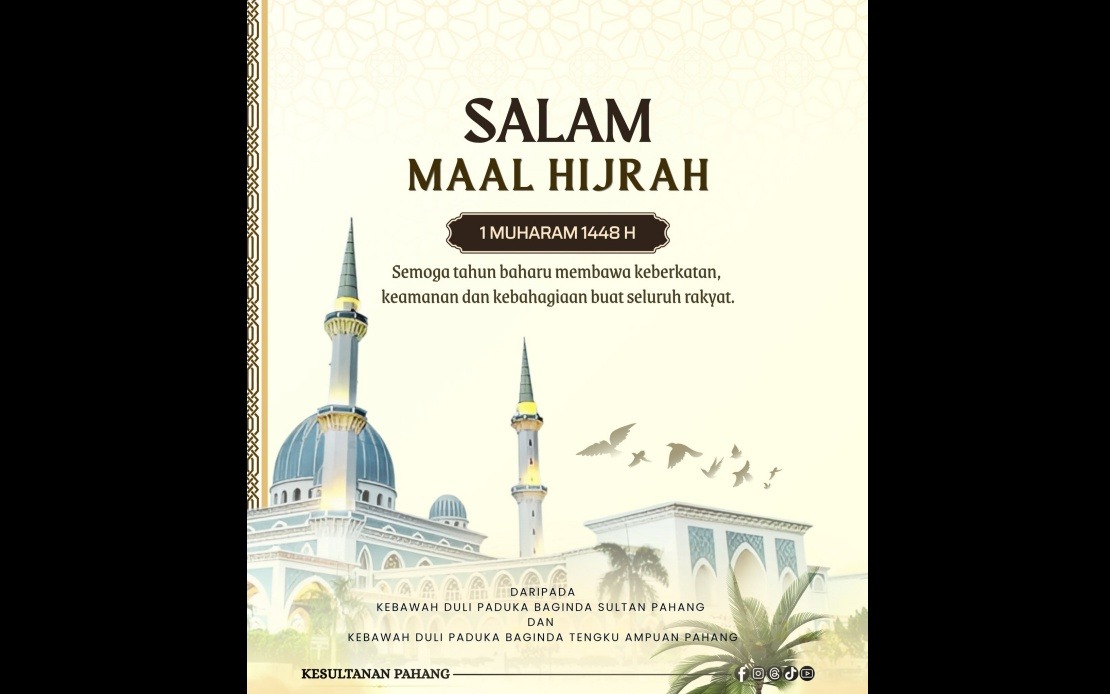
The Sultan of Pahang, Al-Sultan Abdullah Ri'ayatuddin Al-Mustafa Billah Shah, and the Tengku Ampuan of Pahang, Tunku Azizah Aminah Maimunah Iskandariah, have marked the occasion of Maal Hijrah 1448H by extending their best wishes to all Muslims residing in the state. The royal message, shared through the official Kesultanan Pahang social media channels, underscores the significance of the Islamic new year as a moment for collective spiritual reflection across Pahang's diverse communities.
In their address, Their Royal Highnesses emphasised the hope that this significant Islamic calendar milestone will usher in a period marked by divine blessings, lasting peace, and genuine happiness for all residents of the state, regardless of their background. This sentiment resonates deeply within Malaysia's constitutional monarchy framework, where the Sultan plays a ceremonial and symbolic role in upholding Islamic values while fostering national unity.
The Maal Hijrah observance carries particular cultural weight in Pahang, one of Malaysia's largest states with a substantial Muslim population. The Islamic new year, marking the Prophet Muhammad's migration from Mecca to Medina, traditionally prompts Muslims to reassess their spiritual commitments and community obligations. By publicly extending these greetings, the royal household reinforces the state's cultural identity and religious heritage while demonstrating the Crown's active engagement with the people's spiritual wellbeing.
Pahang Menteri Besar Datuk Seri Wan Rosdy Wan Ismail amplified this message through a separate statement, positioning the new Islamic year as an opportune moment for the Muslim community to recalibrate their personal and collective objectives. His remarks suggest that Maal Hijrah should serve as more than a ceremonial date—rather, it represents a turning point where individuals can strengthen their religious devotion and expand their commitment to charitable and community service initiatives.
The Menteri Besar's commentary particularly emphasises the spiritual dimensions of renewal, encouraging Muslims to deepen their faith and channel increased energy toward helping others. This approach aligns with Islamic teaching that positions the new year as a period for introspection, moral improvement, and recommitment to core principles of integrity and social responsibility. Within the Malaysian context, such public statements from state leadership reinforce the integration of Islamic values into civic governance and community development frameworks.
Wan Rosdy's reference to emulating the spirit of Prophet Muhammad's Hijrah carries profound implications for Pahang's development trajectory. He explicitly linked this historical Islamic event to contemporary challenges, urging residents to embrace positive transformation, reinvigorate communal bonds, and uphold ethical standards in their professional and personal conduct. This framing suggests that spiritual renewal should translate into tangible improvements in how individuals contribute to state development initiatives and social cohesion.
The emphasis on strengthening unity holds particular relevance in Malaysia's multicultural landscape, where religious observances by state leadership often serve as opportunities to reaffirm commitment to national harmony. By encouraging Muslims to embody values of integrity and mutual cooperation, both the Sultan and Menteri Besar implicitly promoted a vision of Pahang where religious devotion complements rather than conflicts with the state's plural society.
The invocation of divine mercy and protection in the Menteri Besar's message reflects a traditional approach to Islamic leadership communication, blending spiritual aspirations with practical governance concerns. By asking Allah's blessings upon collective efforts and individual sacrifices, Wan Rosdy positioned state development as inherently connected to spiritual commitment. This theological perspective suggests that Pahang's progress depends not merely on economic initiatives or infrastructure projects, but on the moral foundation and faith-driven dedication of its people.
These Maal Hijrah greetings from Pahang's leadership arrive during a period when states across Malaysia employ religious and cultural observances to strengthen institutional credibility and community engagement. The public nature of these messages, disseminated through social media platforms, reflects how modern Malaysian governance integrates traditional Islamic calendar events with contemporary communication strategies. This approach allows state leadership to reach broader audiences while maintaining the gravitas of ceremonial traditions.
For Malaysian readers, particularly those in Pahang and neighbouring states, these official statements carry significance beyond their immediate religious content. They reflect how state institutions acknowledge and validate the spiritual dimensions of their constituents' lives while calling for specific behavioral and attitudinal changes aligned with Islamic principles. The Menteri Besar's specific mention of developing the state and improving public wellbeing suggests that religious observance is being explicitly linked to administrative performance and development outcomes.
The coordination between the Sultan's message and the Menteri Besar's elaboration demonstrates how Pahang's leadership structures operate in complementary fashion, with royalty setting the ceremonial and moral tone while elected officials translate these sentiments into policy implications. This division of roles reflects Malaysia's constitutional arrangement, where sultanates maintain symbolic primacy in religious matters while state administrations focus on implementation and resource allocation.
Looking forward, these Maal Hijrah pronouncements establish a baseline of expectations for Pahang's Muslim community during the new Islamic year. By publicly articulating hopes for spiritual renewal, community strength, and ethical conduct, the state's leadership creates accountability mechanisms and normative frameworks that residents can reference when evaluating their own behavior and their government's performance. The messages thus function simultaneously as inspirational guidance, institutional commitment statements, and implicit social contracts between leadership and constituents.