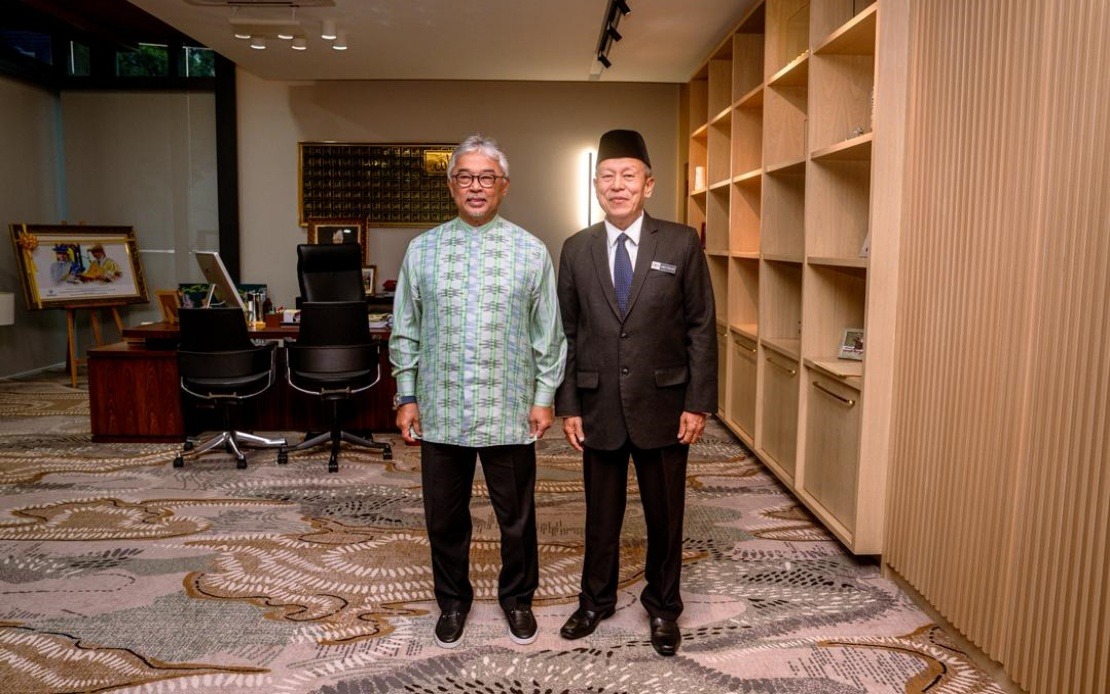
The Sultan of Pahang, Al-Sultan Abdullah Ri'ayatuddin Al-Mustafa Billah Shah, received Malaysian Anti-Corruption Commission (MACC) chief commissioner Datuk Seri Abd Halim Aman during a formal audience at Shahzan House in Ampang yesterday. The hour-long engagement underscored the royal institution's continued engagement with Malaysia's principal anti-corruption enforcement body at a time when governance and public trust remain central concerns for policymakers and the public alike.
During the meeting, the MACC chief provided His Royal Highness with a comprehensive briefing on the commission's operational progress and recent accomplishments. The discussion reflected an effort to keep the Palace informed of developments within the anti-corruption agency, signalling the importance of maintaining dialogue between institutional actors responsible for upholding standards of integrity in public administration.
The agenda extended beyond routine operational updates. The commission highlighted several initiatives aimed at bolstering the country's integrity framework, demonstrating a multifaceted approach to corruption prevention that goes beyond reactive enforcement. These initiatives represent attempts to shift focus toward systemic strengthening rather than purely prosecutorial responses to misconduct.
Current governance challenges formed another substantive component of the discussion. Malaysia continues to grapple with perceptions of corruption and institutional accountability, issues that affect investor confidence, public service delivery, and democratic legitimacy. The Sultan's willingness to engage directly with the MACC chief signals royal recognition of these governance matters and the importance of institutional coordination in addressing them.
The meeting also explored how the MACC might enhance public perception and confidence in its work. Building trust in anti-corruption institutions remains crucial for their effectiveness, as public cooperation, reporting, and acceptance of enforcement outcomes depend significantly on perceived legitimacy and competence. This aspect of the discussion reflects broader concerns about institutional credibility in Southeast Asia's governance landscape.
For Malaysia specifically, the intersection of royal patronage and anti-corruption efforts carries particular significance. The Sultan's institutional role as constitutional head of state gives his engagement with the MACC symbolic weight, potentially reinforcing messages about the importance of integrity in public life. In the Malaysian context, where the monarchy holds considerable cultural and constitutional authority, such audiences can amplify institutional messaging.
Datuk Seri Abd Halim expressed considerable appreciation for the opportunity to brief the Sultan, emphasising both gratitude for the royal audience and recognition of the Palace's support for the MACC's mandate. His remarks stressed the commission's commitment to advancing transparent and accountable governance, core principles that resonate with ongoing discussions about strengthening institutional frameworks across the region.
The Sultan's demonstrated interest in anti-corruption work also reflects evolving expectations regarding royal engagement with governance issues. Modern constitutional monarchies increasingly signal commitment to institutional effectiveness and public accountability through direct interaction with relevant agencies. This audience illustrates how Malaysia's Palace navigates its constitutional role while remaining engaged with contemporary governance challenges.
For MACC operationally, such high-level engagement provides institutional validation and potentially facilitates dialogue about resource requirements, legislative support, or coordination with other agencies. Corruption prevention cannot succeed in isolation; effective anti-corruption work requires coordination across government, the judiciary, law enforcement, and oversight bodies. Royal acknowledgment of the MACC's work may strengthen its position within this institutional ecosystem.
The discussion's focus on corruption prevention initiatives rather than purely on completed investigations suggests a forward-looking orientation. Rather than dwelling on past enforcement actions, the briefing emphasised constructive approaches to building integrity frameworks. This distinction matters because systemic prevention, though less visible than high-profile prosecutions, ultimately proves more effective at reducing corruption's incidence and scope.
In the broader Southeast Asian context, Malaysia's institutional mechanisms for combating corruption remain relatively developed compared to several neighbouring countries. The MACC's existence and operational capacity reflect regional efforts to establish dedicated anti-corruption institutions. However, challenges persist regarding institutional independence, adequate funding, and coordination with other agencies—issues that likely surfaced during the Sultan's briefing.
The timing of this audience, while not explicitly detailed in available information, occurs amid ongoing discussions about governance reforms and institutional strengthening across Malaysian society. Public discourse on transparency, accountability, and integrity remains elevated, creating an environment where senior officials across institutions increasingly demonstrate commitment to these principles through visible engagement.
Looking ahead, such interactions between royal institutions and enforcement agencies may establish precedent for sustained high-level dialogue on governance matters. For Malaysia and the region, strengthening anti-corruption institutional capacity while maintaining public confidence depends on coordinated effort across multiple actors. The Sultan's receptiveness to briefings from the MACC chief suggests recognition that contemporary governance challenges require active engagement from constitutional institutions beyond day-to-day executive operations.

%22%2F%3E%3C%2Fpattern%3E%3C%2Fdefs%3E%3Crect%20width%3D%22100%25%22%20height%3D%22100%25%22%20fill%3D%22url(%23ph523ndg)%22%2F%3E%3Crect%20width%3D%22100%25%22%20height%3D%22100%25%22%20fill%3D%22url(%23ph523ndp)%22%2F%3E%3Ctext%20x%3D%2250%25%22%20y%3D%2250%25%22%20text-anchor%3D%22middle%22%20dominant-baseline%3D%22central%22%20fill%3D%22rgba(255%2C255%2C255%2C0.95)%22%20font-family%3D%22Georgia%2C%20'Times%20New%20Roman'%2C%20serif%22%20font-weight%3D%22700%22%20font-size%3D%22272%22%20letter-spacing%3D%22-0.02em%22%3EAnwar%3C%2Ftext%3E%3C%2Fsvg%3E)