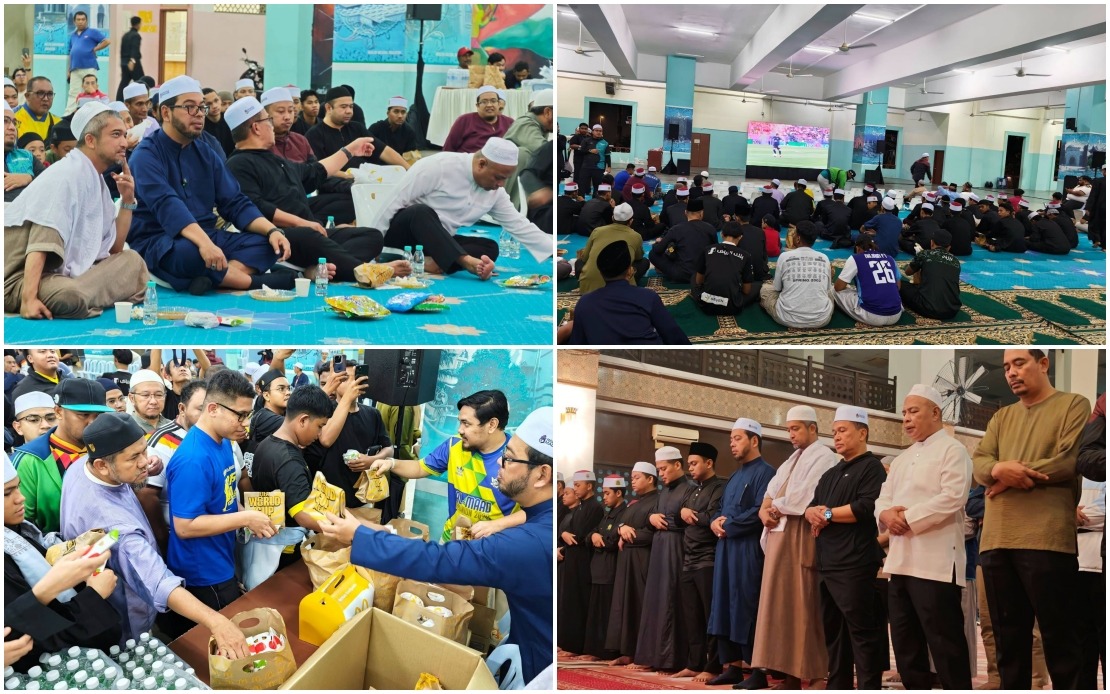
A mosque in Kuala Lumpur's Wangsa Maju neighbourhood hosted an unusual but increasingly common convergence of religious observance and popular entertainment on June 21, when more than 300 worshippers—predominantly young people—arrived before dawn to participate in Qiyamullail prayers followed by a screening of the 2026 World Cup match between Germany and Ivory Coast. The event at Masjid Usamah bin Zaid exemplified a strategic shift in how religious authorities across Malaysia are approaching engagement with younger demographics, leveraging their existing cultural interests to create gateways toward deeper spiritual participation.
Minister in the Prime Minister's Department (Religious Affairs) Dr Zulkifli Hassan attended the gathering and emphasised how the programme demonstrated the potential to harness football's immense appeal among youth as a vehicle for promoting what he characterised as wisdom-based dakwah. Rather than viewing secular entertainment and religious practice as mutually exclusive spheres, the initiative treated them as complementary elements within a holistic framework for attracting young people to mosque-centred activities. This pragmatic approach reflects broader recognition within Malaysia's Islamic establishment that traditional methods of youth engagement have become insufficient in an era where young Malaysians navigate competing demands on their attention and time.
The morning began with Qiyamullail, the voluntary night prayers performed during Ramadan or other occasions, which commenced at 4am to accommodate the early hour. Once the prayers concluded, participants transitioned seamlessly into the communal viewing experience, collapsing the temporal boundary between spiritual devotion and leisure activity. This sequencing proved deliberately purposeful: by anchoring the day's activities in religious observance, organisers sought to frame the subsequent entertainment not as an isolated pursuit but as one element within a larger meaningful experience.
Germany's 2-1 victory over Ivory Coast in the Group E fixture provided the backdrop for what became an educational component as well. During the match's half-time interval, national football legend Shahril Arsat and former Selangor FA President's Cup player Khushairi Aizad provided tactical analysis to the gathered worshippers, breaking down each team's playing styles and strategic approaches. This infusion of expert commentary elevated the screening beyond passive consumption, introducing an analytical dimension that engaged participants' intellectual faculties while maintaining the social atmosphere.
Breakfast service formed another integral component of the programme's design. Federal Territories Islamic Religious Council (MAIWP) chief executive officer Datuk Nizam Yahya and Malaysian Islamic Development Department (JAKIM) deputy director-general Datuk Ajib Ismail joined Dr Zulkifli and the Federal Territories Mufti in preparing roti canai for the assembled worshippers. This collaborative effort by senior religious officials in food preparation carried symbolic weight, visibly demonstrating institutional commitment to the initiative and normalising the presence of leadership figures within informal congregational spaces.
The programme's realisation required coordination across an extensive network of Islamic and community organisations operating in the Federal Territories and nationally. The Federal Territories Mufti Department, JAKIM, MAIWP, and the Federal Territories Islamic Religious Department (JAWI) provided institutional frameworks and religious oversight. Malaysian Islamic Development Department subsidiaries including the Malaysian Islamic Dakwah Foundation (YADIM) and Malaysian Islamic Economic Development Foundation (YAPEIM) contributed specialist resources aligned with their respective mandates. Community youth organisations such as Angkatan Belia Islam Malaysia (ABIM) and Persatuan Menembak Agama (PMA) mobilised their memberships, while commercial food sponsors ensured the logistics of feeding several hundred people could proceed smoothly.
This multi-institutional approach signals how contemporary dakwah strategies in Malaysia have evolved from the domain of individual religious teachers or small organised groups into coordinated national campaigns involving government bodies, statutory authorities, and civil society actors. The convergence reflects recognition that attracting and retaining youth engagement requires resources and coordination capacities that only institutional networks can provide. Furthermore, the diversity of participating organisations suggests that promoting Islamic values among younger populations has become a shared priority across Malaysia's religious bureaucracy, transcending traditional rivalries or jurisdictional divisions.
For Malaysia's wider youth demographic, particularly urban residents navigating secular cultural currents while maintaining religious identities, such initiatives offer a practical model for integration rather than compartmentalisation. The Wangsa Maju mosque event demonstrates that religious practice need not exist in perpetual tension with popular culture or entertainment preferences. Instead, spaces can be created where spiritual obligations and contemporary leisure coexist within deliberately structured environments that accord meaning and purpose to both dimensions.
The 2026 World Cup screening itself remains culturally significant for Malaysian audiences given the nation's longstanding passion for football at both club and international levels. By situating this global sporting spectacle within a mosque setting preceded by pre-dawn prayers, organisers transformed what might otherwise constitute a secular recreational activity into an occasion for community bonding centred on Islamic practice. This reframing has implications for how Malaysian religious institutions may increasingly engage with popular culture as a substrate for dakwah rather than as an opponent to be resisted.
Looking forward, the success of this particular gathering—measured both in the participation numbers and in the apparent enthusiasm of attendees—may encourage similar initiatives at other mosques across Malaysia. The template proves replicable across different regions and seasons, adaptable to whatever sporting events or entertainment properties capture youth attention at any given moment. However, sustainability will depend on whether such programmes translate temporary enthusiasm into sustained engagement with mosque communities and deeper religious education beyond the initial draw of entertainment spectacles.