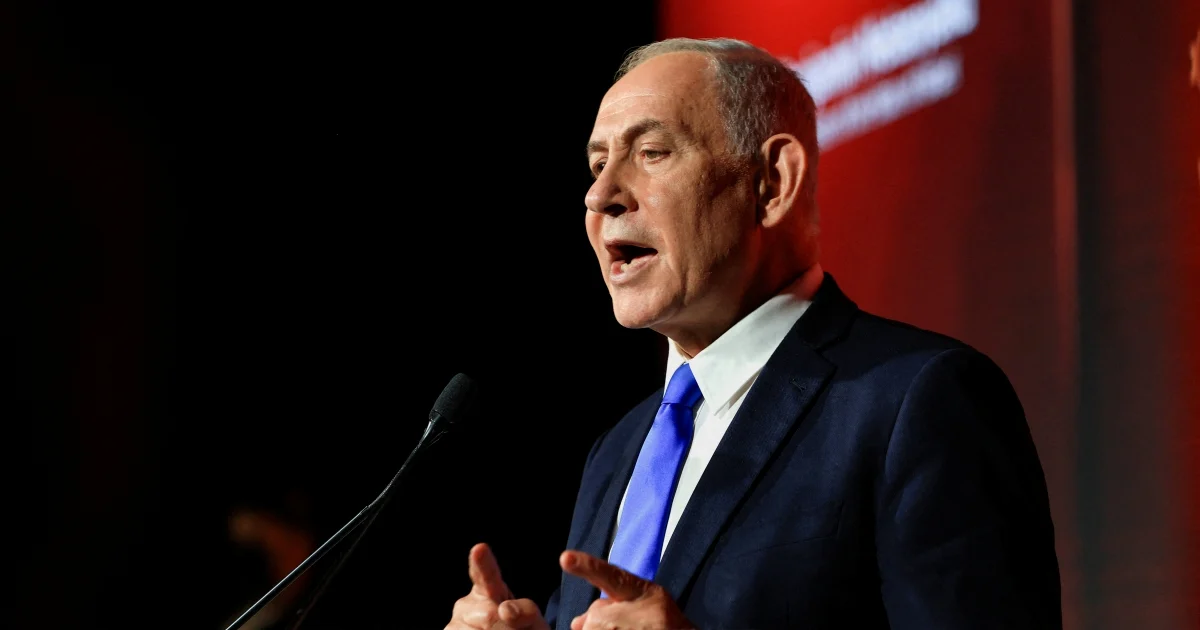
Israeli Prime Minister Benjamin Netanyahu has signalled that his country's military deployment in southern Lebanon will extend indefinitely, with no fixed timeline for withdrawal announced. The declaration came on Sunday as the Israeli leadership continues to navigate complex security considerations across its northern frontier, where the Israel-Hezbollah conflict has created significant regional instability.
Netanyahu's statement reflects the broader strategic calculus underpinning Israel's military operations in Lebanon. Rather than committing to a specific exit date, the Prime Minister framed the duration of the Israeli presence as contingent on security conditions and operational objectives. This open-ended commitment underscores the depth of Israel's concerns regarding militant activity in southern Lebanon and the threat posed by armed groups operating in the region.
The positioning of Israeli forces in Lebanese territory has become a central issue in Middle Eastern geopolitics, with ramifications extending across the Levant and beyond. The deployment emerged following heightened cross-border tensions and represents one of the most significant Israeli military commitments in that particular theatre in recent years. For Malaysia and other Southeast Asian nations with interests in regional stability, such developments carry implications for international commerce, diplomatic relationships, and broader conflict dynamics in the Middle East.
Netanyahu simultaneously reiterated Israel's unwavering determination to thwart Iranian nuclear weapons development. This dual messaging—combining military assertiveness in Lebanon with a hardline stance on Iran's nuclear programme—encapsulates the interconnected security challenges that shape Israeli policy. The Prime Minister's emphasis on preventing Iranian nuclear advancement reflects longstanding Israeli security doctrine, which views a nuclear-armed Iran as an existential threat requiring active deterrence and diplomatic pressure.
The interconnection between Israeli operations in Lebanon and broader Middle Eastern power rivalries involving Iran cannot be overlooked. Regional observers note that Israeli actions in southern Lebanon occur against the backdrop of wider strategic competition between Israel and Iranian-aligned forces throughout the Levant. Hezbollah, the Lebanese militant organisation with documented Iranian backing, represents a key node in this broader network of Iranian influence in the region.
The indefinite nature of Netanyahu's commitment raises questions about the broader trajectory of Israeli military involvement in Lebanon. Unlike previous Israeli incursions in Lebanese territory, which were often framed as temporary security operations, this deployment appears designed to address long-term strategic objectives. The absence of a withdrawal timeline suggests that Israeli military planners anticipate a protracted engagement rather than a limited intervention.
For international observers, including those in Southeast Asia monitoring Middle Eastern developments, Netanyahu's statement signals that Israel intends to maintain substantial military resources committed to its northern border management. This deployment could influence regional military balances and potentially affect international shipping lanes and commerce in the Mediterranean and eastern regions, areas critical to global trade networks including Malaysian commerce.
The Prime Minister's dual focus—emphasising both the Lebanese military presence and nuclear deterrence against Iran—reflects the complexity of contemporary Israeli security challenges. These are not separate concerns but rather interconnected elements of a comprehensive strategic vision that Netanyahu believes necessary to protect Israeli citizens and national interests. The formulation suggests that Israeli strategic thinking increasingly views Lebanon and Iran as linked elements within a broader security architecture.
Regional analysts suggest that Netanyahu's statement may also serve domestic political purposes, reassuring Israeli constituencies concerned about security along the northern frontier while simultaneously addressing longstanding concerns about Iranian nuclear ambitions. The timing and framing of such declarations often respond to both immediate operational needs and domestic political calculations within Israel itself.
The implications for Lebanon itself warrant consideration, as the country faces severe economic difficulties, political fragmentation, and humanitarian challenges. Continued Israeli military presence compounds these existing problems and complicates Lebanon's path toward reconstruction and stability. International humanitarian organisations have expressed concern regarding the impact on civilian populations caught between military forces and armed groups.
For Malaysia and the broader international community, Netanyahu's pronouncement underscores the persistent volatility characterising the Middle East. The absence of diplomatic resolution mechanisms and reliance on military deterrence suggest that regional conflicts will likely endure without meaningful political settlements addressing underlying grievances and security concerns. This reality shapes global geopolitics and international relations frameworks that Southeast Asian nations must navigate.
Looking forward, Netanyahu's commitment to maintaining Israeli forces in southern Lebanon appears durable absent significant shifts in regional security dynamics or international diplomatic breakthrough. The open-ended timeframe suggests preparation for a lengthy engagement, which could have ripple effects throughout the Middle East and beyond.

%22%2F%3E%3C%2Fpattern%3E%3C%2Fdefs%3E%3Crect%20width%3D%22100%25%22%20height%3D%22100%25%22%20fill%3D%22url(%23ph25js3g)%22%2F%3E%3Crect%20width%3D%22100%25%22%20height%3D%22100%25%22%20fill%3D%22url(%23ph25js3p)%22%2F%3E%3Ctext%20x%3D%2250%25%22%20y%3D%2250%25%22%20text-anchor%3D%22middle%22%20dominant-baseline%3D%22central%22%20fill%3D%22rgba(255%2C255%2C255%2C0.95)%22%20font-family%3D%22Georgia%2C%20'Times%20New%20Roman'%2C%20serif%22%20font-weight%3D%22700%22%20font-size%3D%22151%22%20letter-spacing%3D%22-0.02em%22%3EPerikatan%3C%2Ftext%3E%3C%2Fsvg%3E)