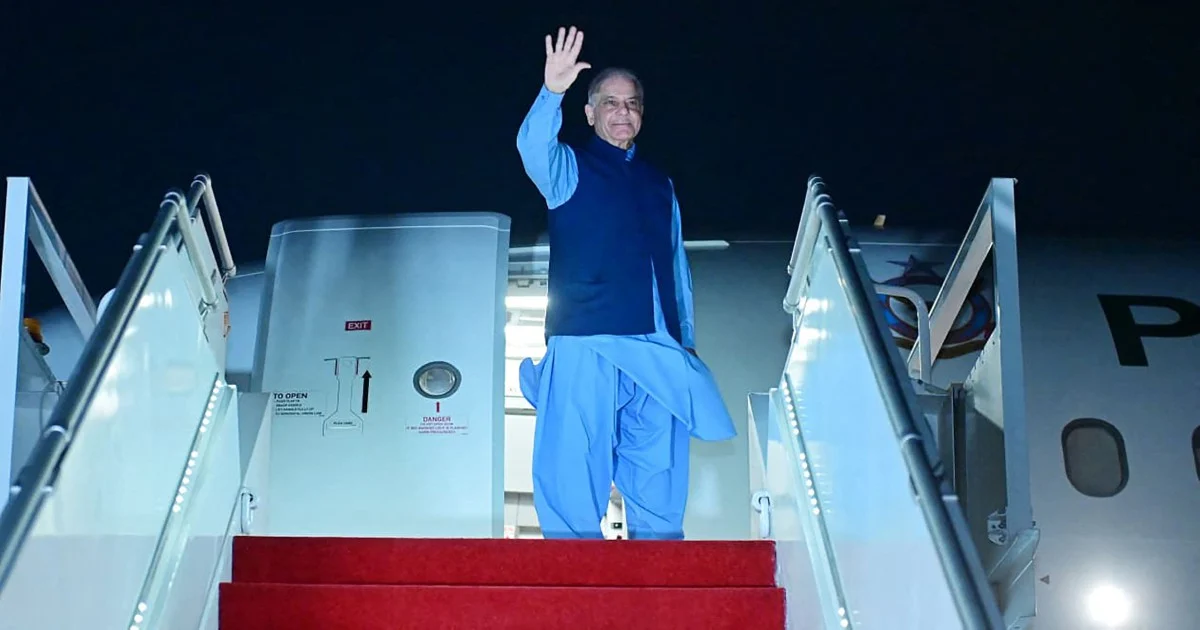
Pakistani Prime Minister Shehbaz Sharif touched down in Switzerland on Sunday morning, embarking on a diplomatic mission centred on technical-level discussions between Washington and Tehran. The visit underscores Pakistan's emerging role as a potential mediator in one of the world's most entrenched geopolitical standoffs, as international actors increasingly recognise the need for quiet diplomacy to ease tensions between the two regional heavyweights.
The timing of Sharif's arrival reflects the urgency surrounding efforts to contain the escalating military posturing in the Middle East. Technical-level talks, as opposed to higher-level diplomatic engagements, typically involve experts and negotiators who focus on specific, implementable solutions rather than grand political statements. By dispatching Sharif to participate in these discussions, Pakistan signals its willingness to engage constructively and position itself as a voice capable of bridging deep ideological and strategic divides.
Pakistan's involvement in Middle Eastern diplomatic affairs carries particular significance given its geographic position, substantial Muslim population, and historical ties spanning decades. As an Islamic Republic with established relationships across the region, Islamabad possesses credibility with multiple stakeholders that some Western nations lack. The country has long navigated complex relationships with both Iran and the United States, making its participation potentially valuable in shuttle diplomacy or behind-the-scenes coordination efforts.
The armed conflict referenced in these talks encompasses multiple dimensions of US-Iran rivalry, from direct military confrontations to proxy warfare, economic sanctions, and nuclear proliferation concerns. The Middle East has witnessed intensifying hostilities over recent months, with strikes on shipping lanes, military installations, and escalating rhetoric from both capitals. Regional powers have grown increasingly alarmed at the trajectory, recognising that unbridled confrontation could destabilise the entire area and trigger wider conflagration.
Technical experts often prove more nimble in finding compromise language and identifying areas of mutual interest than senior political figures bound by domestic political constraints. These negotiations likely focus on mechanisms for de-escalation, verification protocols, and confidence-building measures that could eventually pave the way for higher-level talks. The Swiss setting—traditionally neutral ground hosting numerous international organisations—provides an appropriate venue for such sensitive discussions away from domestic political pressures.
For Malaysia and the broader Southeast Asian region, developments in Middle Eastern stability carry economic and security ramifications. Disruptions to shipping lanes through the Strait of Hormuz, where a significant portion of global oil supplies transit, directly affect energy prices and supply chains affecting ASEAN nations. Heightened regional instability also increases terrorism risks and could drive refugee flows that eventually reach Southeast Asian shores, as witnessed during previous conflicts in Afghanistan and Iraq.
Pakistan's diplomatic engagement reflects broader international recognition that the current trajectory is unsustainable. Multiple countries have attempted mediation, but Islamabad's unique positioning allows it to operate with less baggage than Washington's traditional allies or Tehran's closest partners. The visit demonstrates that even amid competing geopolitical interests, there exists consensus that technical pathways toward de-escalation merit serious exploration.
The success of these talks remains uncertain, given the profound structural differences between American and Iranian interests. However, the willingness of both sides to engage at technical levels suggests space exists for dialogue, however narrow. These discussions may not resolve fundamental disagreements over Iran's nuclear programme, regional influence, or American military presence, but they might establish ground rules reducing miscalculation risks and creating space for future engagement.
Sharif's involvement also reflects Pakistan's broader strategic recalibration in recent years. After decades of primary focus on India and domestic stability challenges, Pakistani leadership has increasingly engaged with Middle Eastern affairs and international diplomatic initiatives. This shift indicates confidence in the country's diplomatic corps and recognition that regional stabilisation efforts enhance Islamabad's strategic standing.
The technical discussions represent one piece of a larger diplomatic puzzle involving multiple stakeholders with divergent interests. European powers, Arab states, and others maintain their own engagement channels and preferences regarding any eventual settlement. Pakistan's role sits within this crowded diplomatic landscape, neither controlling outcomes nor irrelevant to them, but potentially influential in shaping the conversations occurring behind closed doors.
Observers will closely watch whether these Switzerland talks produce concrete outcomes or serve primarily as confidence-building measures. Even incremental progress toward reduced tensions would represent a significant achievement given recent escalatory patterns. For a region experiencing economic strain, security challenges, and humanitarian crises, any movement toward de-escalation carries outsized importance.
%22%2F%3E%3C%2Fpattern%3E%3C%2Fdefs%3E%3Crect%20width%3D%22100%25%22%20height%3D%22100%25%22%20fill%3D%22url(%23ph1rv6vg)%22%2F%3E%3Crect%20width%3D%22100%25%22%20height%3D%22100%25%22%20fill%3D%22url(%23ph1rv6vp)%22%2F%3E%3Ctext%20x%3D%2250%25%22%20y%3D%2250%25%22%20text-anchor%3D%22middle%22%20dominant-baseline%3D%22central%22%20fill%3D%22rgba(255%2C255%2C255%2C0.95)%22%20font-family%3D%22Georgia%2C%20'Times%20New%20Roman'%2C%20serif%22%20font-weight%3D%22700%22%20font-size%3D%22170%22%20letter-spacing%3D%22-0.02em%22%3ETambirat%3C%2Ftext%3E%3C%2Fsvg%3E)
%22%2F%3E%3C%2Fpattern%3E%3C%2Fdefs%3E%3Crect%20width%3D%22100%25%22%20height%3D%22100%25%22%20fill%3D%22url(%23ph36iv1g)%22%2F%3E%3Crect%20width%3D%22100%25%22%20height%3D%22100%25%22%20fill%3D%22url(%23ph36iv1p)%22%2F%3E%3Ctext%20x%3D%2250%25%22%20y%3D%2250%25%22%20text-anchor%3D%22middle%22%20dominant-baseline%3D%22central%22%20fill%3D%22rgba(255%2C255%2C255%2C0.95)%22%20font-family%3D%22Georgia%2C%20'Times%20New%20Roman'%2C%20serif%22%20font-weight%3D%22700%22%20font-size%3D%22194%22%20letter-spacing%3D%22-0.02em%22%3EBintulu%3C%2Ftext%3E%3C%2Fsvg%3E)