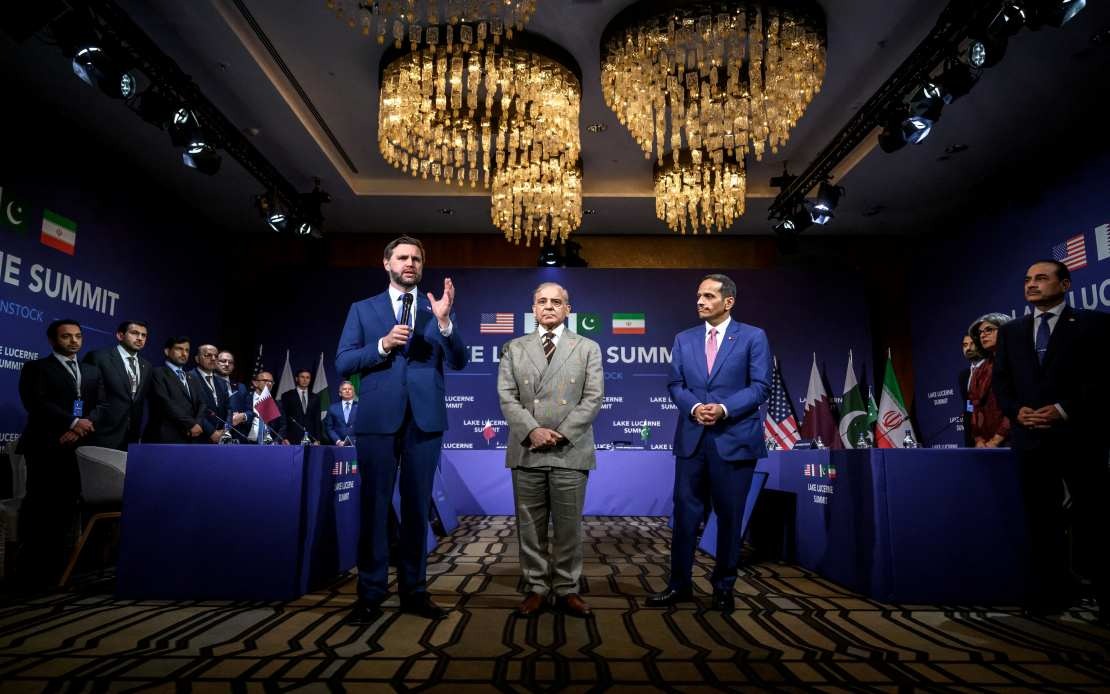
Diplomatic efforts between Iran and the United States have progressed to active negotiations following a historic breakthrough. The first round of talks, held in Switzerland and mediated jointly by Qatar and Pakistan, concluded on Sunday after approximately 80 minutes of substantive discussion. The engagement represents a significant diplomatic development in efforts to de-escalate tensions that have gripped the broader West Asian region for months.
The negotiations, hosted in Bürgenstock, bring together high-level delegations from both sides committed to operationalising an interim accord signed earlier in the week. The US delegation is led by Vice President JD Vance, while Iran's team is headed by Parliament Speaker Mohammad Bagher Qalibaf and Foreign Minister Abbas Araghchi. The involvement of such senior figures underscores the gravity both governments attach to achieving tangible progress on regional stability and maritime security.
At the heart of these discussions lies an agreement signed on Wednesday that aims to terminate an extended conflict affecting West Asia and restore navigational freedom through the Strait of Hormuz, one of the world's most critical shipping chokepoints. The interim understanding provides the framework within which both parties are now working to address implementation details—a phase typically fraught with technical complexities and competing interpretations of commitments made at the broader political level.
The mediating role of Qatar and Pakistan reflects the delicate diplomacy required to bridge deep-seated divisions between Washington and Tehran. Qatar has long positioned itself as a neutral interlocutor in regional disputes, maintaining channels with diverse stakeholders across the Gulf. Pakistan's involvement adds another dimension, given its own strategic interests in regional stability and the free flow of maritime commerce. Their participation signals international backing for the negotiation process and provides both sides with trusted intermediaries capable of facilitating candid exchanges.
For Malaysian readers and Southeast Asian observers, these developments carry immediate relevance. The Strait of Hormuz remains essential to regional trade flows, with substantial volumes of crude oil and liquefied natural gas passing through its narrow waters destined for East Asian markets. Extended conflict in West Asia directly threatens energy security and supply chains throughout Southeast Asia, affecting manufacturing costs, inflation, and economic growth. Any diplomatic breakthrough that reduces the prospect of escalation thus carries direct implications for the region's economic trajectory.
The suspension of talks after 80 minutes to permit internal consultations is a standard diplomatic practice, allowing each delegation space to evaluate proposals, align their positions internally, and recalibrate strategies. Both the Iranian Foreign Ministry and the US State Department have indicated commitment to continued engagement, though neither has disclosed specific negotiating positions or timeline for subsequent rounds. The absence of detailed announcements at this stage reflects the understanding that premature disclosures can undermine ongoing diplomatic momentum.
The technical nature of implementing interim agreements typically involves addressing verification mechanisms, timeline for compliance, and provisions for monitoring adherence. Iran and the United States have historically struggled to trust each other's intentions, making these implementation details critically important. Qatari and Pakistani mediators will likely focus on identifying common ground on procedural matters while helping each side understand the other's red lines and non-negotiable positions.
Regional actors including Saudi Arabia, the United Arab Emirates, and other Gulf Cooperation Council members will be monitoring these talks closely. The outcome carries implications for their own security calculations and foreign policy orientations. A successful Iran-US rapprochement could reshape Middle Eastern geopolitics in ways that either reduce or heighten tensions, depending on how the interim agreement addresses concerns of other regional powers.
The broader international community, including European nations and Asian powers, has strong interests in the success of these negotiations. Prolonged conflict in West Asia risks further disruption to global energy markets, exacerbating inflationary pressures and complicating the post-pandemic economic recovery globally. The participation of Qatar and Pakistan as mediators, while not formal members of the major power frameworks, demonstrates the inclusive approach that both Iran and the United States are pursuing.
As negotiations proceed to subsequent rounds, the focus will likely shift toward concrete verification measures, compliance schedules, and mechanisms for dispute resolution should disagreements emerge during implementation. Both sides face domestic political pressures that will influence their flexibility at the negotiating table. The Vance-led American delegation must address concerns from Congress and regional allies, while Iran's delegation must balance demands from hardline factions at home with the benefits of international reintegration.
The timeline for these talks remains undefined, with participants maintaining strategic ambiguity about next steps. This measured approach reflects lessons learned from previous failed negotiation attempts where premature optimism proved counterproductive. The focus for now is on establishing working relationships among negotiators and developing preliminary understandings on implementation frameworks that both sides can carry back to their capitals for broader strategic review.
For Malaysia and the wider Southeast Asian region, the successful conclusion of these talks would represent welcome news for energy security and maritime stability. Conversely, any breakdown in negotiations would necessitate regional contingency planning for sustained disruptions to energy supplies and shipping routes. The coming weeks will be critical in determining whether this diplomatic opening can be translated into durable agreements that genuinely reduce tensions and restore predictability to one of the world's most strategically vital regions.

%22%2F%3E%3C%2Fpattern%3E%3C%2Fdefs%3E%3Crect%20width%3D%22100%25%22%20height%3D%22100%25%22%20fill%3D%22url(%23ph25js3g)%22%2F%3E%3Crect%20width%3D%22100%25%22%20height%3D%22100%25%22%20fill%3D%22url(%23ph25js3p)%22%2F%3E%3Ctext%20x%3D%2250%25%22%20y%3D%2250%25%22%20text-anchor%3D%22middle%22%20dominant-baseline%3D%22central%22%20fill%3D%22rgba(255%2C255%2C255%2C0.95)%22%20font-family%3D%22Georgia%2C%20'Times%20New%20Roman'%2C%20serif%22%20font-weight%3D%22700%22%20font-size%3D%22151%22%20letter-spacing%3D%22-0.02em%22%3EPerikatan%3C%2Ftext%3E%3C%2Fsvg%3E)