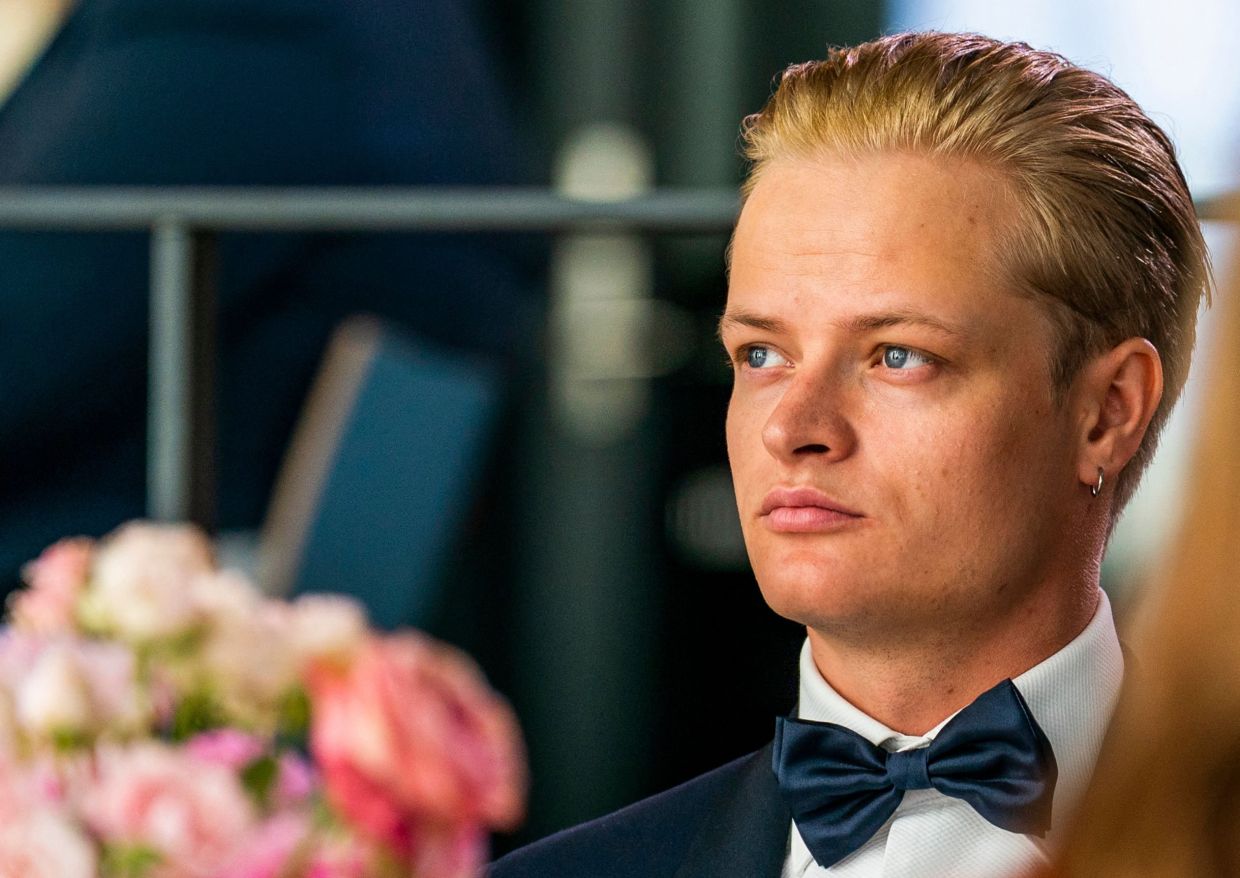
The eldest son of Norway's Crown Princess Mette-Marit has been handed a four-year prison sentence following his conviction on multiple sexual assault charges, marking a significant judicial conclusion to a case that has captivated international attention owing to his proximity to Scandinavia's most prominent royal household. Marius Borg Høiby, 29, was found guilty on two of four rape charges levelled against him in Oslo District Court on Monday, while acquittals were handed down on the remaining pair of rape allegations. Beyond the rape convictions, the court also determined that Høiby had committed assault and engaged in abuse within intimate relationships, circumstances that factored into his overall sentence and an accompanying restitution order to his victims.
The criminal proceedings against Høiby encompassed an expansive array of allegations spanning six years, with prosecutors contending that he sexually assaulted four women between 2018 and 2024 in circumstances where they were sleeping or otherwise unable to offer resistance. The breadth of the investigation extended well beyond the rape allegations, with authorities pursuing approximately 40 distinct criminal charges encompassing lesser offences such as assault, drug-related transgressions, and breaches of a court-issued restraining order. Høiby's defence team advanced markedly different arguments to the court, urging acquittal on all rape-related counts and suggesting that any custodial period should be confined to a maximum of 18 months for the lesser offences to which he had tendered admissions.
Prosecutors had sought substantially harsher punishment, requesting the Oslo District Court impose a sentence of seven years and seven months, reflecting the severity with which the state viewed the accumulation of charges. The judicial determination thus positioned itself between these competing positions, neither fully accepting the prosecution's maximalist demands nor embracing the defence strategy of near-complete exoneration. The sentence remains open to legal challenge, as Høiby possesses the right to appeal the verdict and the imposed custodial term through Norway's appellate system.
The trial process extended across six weeks before concluding in March, during which multiple women offered testimony regarding their experiences and presented detailed evidence compiled from Høiby's digital communications. The evidentiary record included messages, photographic material, and video content extracted from Høiby's mobile device, providing the court with comprehensive documentation of his conduct during the relevant period. While Høiby contested the rape allegations with vigour, he acknowledged culpability in relation to several of the lesser charges, a posture that likely influenced judicial calculations regarding sentencing severity.
Høiby's absence from the courtroom during the verdict announcement reflected medical considerations, with prison health authorities determining that his attendance would be inadvisable. Instead, the defendant received the judicial determination remotely, observing the reading of the verdict through a video connection established from his place of detention. This arrangement, while unusual, underscores the practical complexities that can arise when high-profile figures navigate the criminal justice system.
The prominence accorded to this case in international media circles stems fundamentally from Høiby's familial connection to Norway's reigning royal structure. Though he carries no formal royal designation and maintains no constitutionally defined duties within the state, his circumstances as the son of Crown Princess Mette-Marit from a pre-marital relationship confer upon him an elevated public profile that few defendants enjoy. The crown princess subsequently married Crown Prince Haakon, the presumptive heir to the Norwegian throne, creating a household arrangement in which Høiby grew up alongside the future monarch, a biographical detail that has magnified public and media interest substantially.
The judicial timeline has coincided with deteriorating health circumstances affecting the crown princess herself, adding a layer of personal complexity to the legal proceedings. Mette-Marit is living with pulmonary fibrosis, a progressive and serious lung condition, and is currently positioned on waiting lists for a lung transplant—a development that has prompted substantial media scrutiny and public concern across Norway. The crown princess's medical situation generated subsidiary legal disputes concerning whether her son should receive temporary release from custody pending the verdict announcement, though appellate authorities consistently ruled that he should remain detained throughout the adjudicative process.
Additionally, the trial's progression has occurred amid broader examination of the royal family's historical associations, particularly regarding disclosed contacts between Mette-Marit and Jeffrey Epstein, the American financier who faced extensive allegations and convictions related to sexual exploitation before his death in custody. The crown princess has publicly acknowledged these connections, expressing regret for maintaining contact with Epstein and accepting responsibility for exercising poor judgment in this regard. She has unambiguously stated that she engaged in no wrongdoing herself and holds no criminal culpability, positioning her statement as a clarification rather than a legal defence.
For Malaysian and Southeast Asian observers, this case illuminates several significant dimensions of Nordic legal systems and royal governance. Norway's approach to prosecuting serious sexual offences, even when involving individuals connected to the highest echelons of the state, demonstrates an institutional commitment to legal equality that contrasts with patterns observable in certain other jurisdictions. The separation between Høiby's lack of official royal status and his de facto prominence reveals how modern constitutional monarchies navigate questions of access and privilege within formal legal frameworks. Furthermore, the case exemplifies how even wealthy, well-resourced defendants connected to powerful institutions face substantial consequences when sexual assault allegations are substantiated through judicial proceedings, a principle that carries particular relevance in regional contexts where such accountability sometimes remains incomplete.