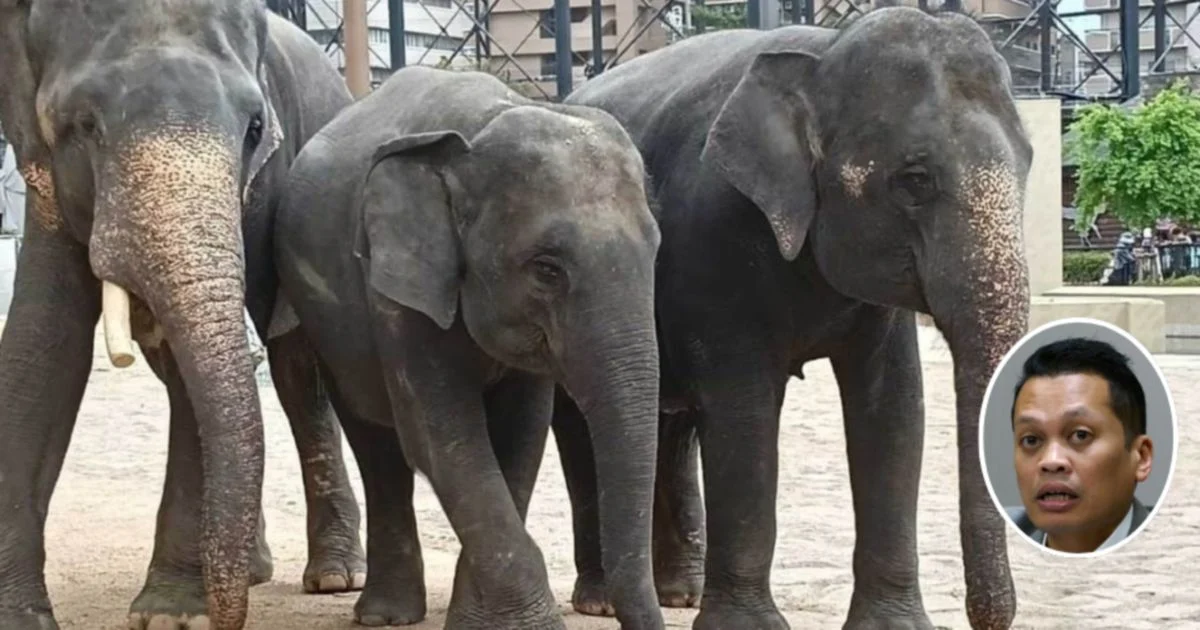
The controversy surrounding Nik Nazmi Nik Ahmad, who previously served as Malaysia's Natural Resources and Environmental Sustainability minister, has intensified as allegations emerge of irregularities totalling RM53 million in connection with the relocation of three elephants to a zoological facility in Japan. Facing mounting pressure over his alleged role in the transaction, the former minister has moved to distance himself from any wrongdoing, categorically denying involvement in the suspected corrupt arrangement.
The elephant transfer arrangement has come under intense scrutiny from watchdog organisations and lawmakers, who have raised fundamental questions about the legitimacy of the payments and the decision-making process that facilitated the international wildlife shipment. The scale of the alleged financial irregularities—over RM53 million—has triggered broader concerns about government accountability in wildlife management operations and whether proper oversight mechanisms were bypassed during the transaction.
Nik Nazmi's denial represents a significant moment in ongoing investigations into high-level governance failures within Malaysia's environmental sector. The former minister's office released a statement asserting his complete non-involvement in any corrupt practices related to the elephant transfer, suggesting instead that the matter may have involved other officials or that the allegations themselves warrant closer examination. His defence strategy appears to focus on separating his ministerial tenure from direct responsibility for the specific financial arrangements in question.
The elephant transfer has emerged as a focal point for broader discussions about corruption in Malaysia's wildlife and conservation bureaucracy. Animal welfare advocates and environmental groups have voiced concerns not only about the financial irregularities but also about whether proper protocols were followed in assessing the suitability of the Japanese facility, the well-being of the animals during transit, and the transparency of decision-making at the ministerial level.
For Malaysian policymakers and Southeast Asian governments more broadly, this incident underscores the vulnerability of wildlife management programmes to financial manipulation and the importance of establishing robust oversight mechanisms. The case highlights how even critical conservation activities can become vehicles for corruption if adequate checks and balances are not in place. Regional governments managing similar wildlife transfer agreements may need to review their own regulatory frameworks in response to the Malaysian experience.
The allegations have implications that extend beyond the immediate parties involved. The case raises questions about Malaysia's international obligations regarding wildlife protection and what role government officials played in sanctioning the transaction with Japan. Transparency International and similar bodies have called for a comprehensive investigation to determine whether Malaysian taxpayer funds were misappropriated and whether the decision served legitimate conservation objectives or primarily benefited connected individuals.
Nik Nazmi's ministerial track record becomes relevant to these discussions, as his predecessor and successor in the portfolio may come under secondary scrutiny regarding environmental management decisions during their respective tenures. The case exemplifies how environmental portfolios in Southeast Asian countries can sometimes lack the rigorous financial oversight applied to other government departments, creating opportunities for corrupt officials to operate with limited immediate detection.
The timing of the allegations raises additional questions about why the irregularities in the elephant transfer took considerable time to surface. Whether the delay resulted from insufficient initial investigation, institutional resistance to scrutiny, or deliberate concealment remains unclear. These procedural questions are crucial for understanding systemic vulnerabilities in Malaysia's governance architecture and may prompt legislative responses aimed at strengthening accountability.
From a regional perspective, the incident provides a cautionary example for other Southeast Asian nations managing valuable wildlife assets and international transfers. Countries such as Thailand, Indonesia, and the Philippines, which possess significant elephant populations, will likely review their own transfer protocols to prevent similar allegations from arising. The Malaysian case demonstrates that corruption in wildlife management can occur at senior ministerial levels and requires multi-stakeholder oversight involving not just government agencies but also international wildlife organisations.
The investigation into the alleged payments represents a test case for Malaysia's anti-corruption institutions. The speed and thoroughness with which authorities pursue the matter may signal whether serious financial crimes involving environmental portfolios receive equivalent priority to corruption in other sectors. This will have broader implications for public confidence in government integrity and Malaysia's standing internationally as a country serious about combating high-level corruption.
Looking forward, the case may catalyse reform within Malaysia's natural resources ministry, including enhanced financial controls, mandatory independent audits of large wildlife-related transactions, and clearer chains of accountability. The public disclosure of Nik Nazmi's denial suggests that other parties may also face questions, potentially leading to a more comprehensive examination of how the RM53 million transfer was authorised and executed. Wildlife conservationists argue that such reforms, while potentially burdensome administratively, are essential for ensuring that environmental initiatives serve genuine conservation goals rather than becoming opportunities for financial malfeasance.

%22%2F%3E%3C%2Fpattern%3E%3C%2Fdefs%3E%3Crect%20width%3D%22100%25%22%20height%3D%22100%25%22%20fill%3D%22url(%23ph523ndg)%22%2F%3E%3Crect%20width%3D%22100%25%22%20height%3D%22100%25%22%20fill%3D%22url(%23ph523ndp)%22%2F%3E%3Ctext%20x%3D%2250%25%22%20y%3D%2250%25%22%20text-anchor%3D%22middle%22%20dominant-baseline%3D%22central%22%20fill%3D%22rgba(255%2C255%2C255%2C0.95)%22%20font-family%3D%22Georgia%2C%20'Times%20New%20Roman'%2C%20serif%22%20font-weight%3D%22700%22%20font-size%3D%22272%22%20letter-spacing%3D%22-0.02em%22%3EAnwar%3C%2Ftext%3E%3C%2Fsvg%3E)