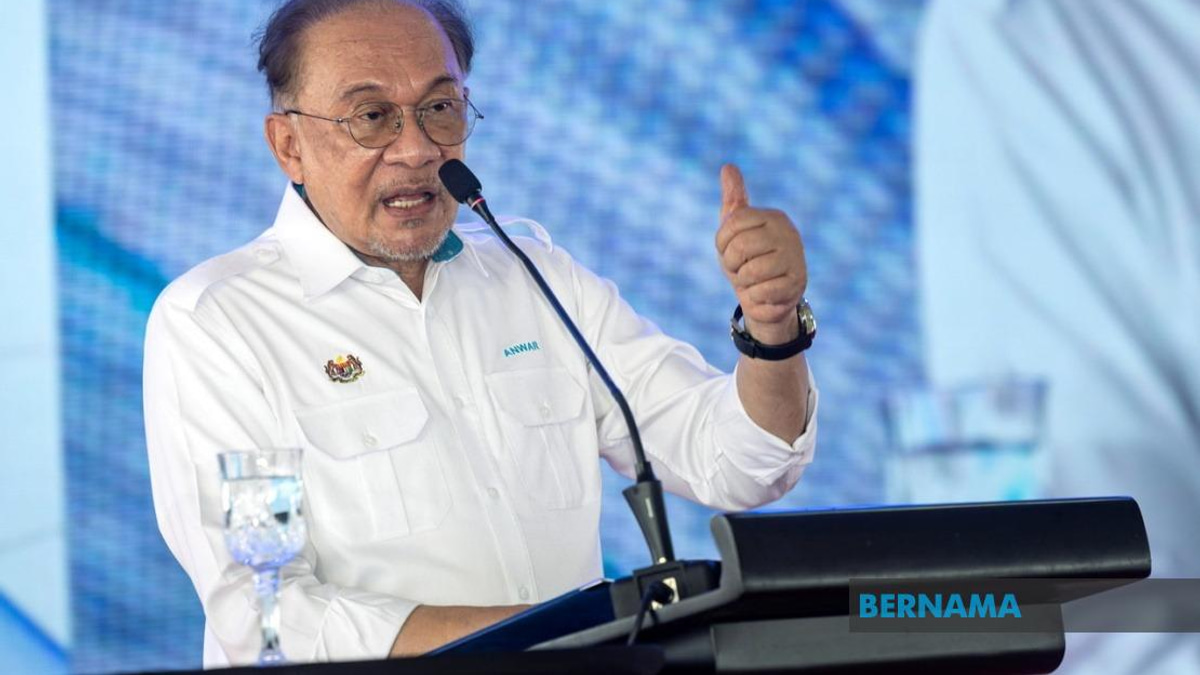
Malaysia's emerging political landscape is taking shape with the formation of Wawasan, a new party that analysts predict will replicate much of the electoral positioning that has defined Bersatu's strategy since its inception. Rather than attempting to chart entirely novel territory, the party appears positioned to compete for a specific demographic segment that has grown increasingly visible in Malaysian politics over recent years.
According to prominent political analyst James Chin, Wawasan's core appeal will centre on attracting urban Malay and Muslim voters who harbour reservations about supporting explicitly religious-based parties. This constituency represents a meaningful portion of Malaysia's electorate—individuals who identify strongly with their faith and cultural heritage yet seek political representation unburdened by the rigid ideological framework that characterises organisations like PAS. The distinction is subtle but consequential: these voters desire political voices rooted in Malay-Muslim identity without necessarily embracing the theocratic dimensions that religious parties emphasise.
The strategic calculation underlying this approach reflects a broader fragmentation within Malaysia's Malay-Muslim political base. For decades, UMNO held near-monopolistic appeal among this demographic, but the emergence of Bersatu demonstrated that alternative parties could successfully mobilise significant support from the same community. Bersatu's subsequent electoral performance, particularly during pivotal moments when urban centres showed openness to new options, validated the viability of this market segment. Wawasan appears to be constructing its platform based on these empirical lessons.
What distinguishes this emerging model from traditional religious-party politics is its implicit acceptance that ethnicity and faith remain important anchors for Malay-Muslim political identity, yet they need not be weaponised through puritanical religious discourse. Urban Malays, increasingly educated and internationally exposed through digital connectivity, often chafe against what they perceive as paternalistic or overly fundamentalist messaging. They may value cultural continuity and Islamic principles while simultaneously embracing pluralistic governance approaches and secular institutional frameworks. Wawasan seems calibrated to occupy this middle ground.
The parallel with Bersatu is instructive for understanding Malaysian political evolution. Bersatu carved out substantial support by positioning itself as a Malay-Muslim party without the historical baggage of UMNO or the theological rigidity of PAS. This strategy proved potent enough to reshape coalition mathematics during the 2020-2022 period, demonstrating that Malaysian voters would shift allegiances when offered viable alternatives aligned with their identity preferences but unburdened by organisational complications. Wawasan's architects have clearly noted this precedent.
However, the political terrain that Wawasan enters differs meaningfully from the landscape Bersatu confronted. Malaysia's electorate has experienced multiple significant political realignments within a compressed timeframe, generating both volatility and voter fatigue. The novelty factor that benefited Bersatu's emergence has diminished somewhat, forcing newer entrants to articulate compelling rationales for their existence beyond mere positioning. Additionally, existing parties have adapted their messaging in response to the challenges posed by newer competitors, making straightforward replication of successful formulas considerably more difficult.
The implications for Malaysia's broader political architecture merit careful consideration. If Wawasan successfully implements the Malay-centric, urban-focused strategy analysts anticipate, it would further splinter what remains of monolithic Malay-Muslim political bloc voting. This fragmentation creates both opportunities and vulnerabilities: it offers voters meaningful choice and forces existing parties toward policy responsiveness, yet it simultaneously complicates coalition-building and may produce governing instability. The 2024 electoral environment has already demonstrated how dispersed Malay-Muslim support across multiple parties can create unexpected outcomes in vote distribution and seat allocation.
South-east Asian observers note that Malaysia's political experimentation with identity-based party formation and realignment offers insights into broader regional dynamics. As middle-income nations in the region undergo economic development and educational advancement, voter bases become increasingly sophisticated in their political demands. They seek parties capable of articulating ethnic and religious identity while simultaneously delivering effective governance and institutional accountability. Wawasan's positioning suggests Malaysia's political entrepreneurs have internalised this lesson, recognising that simplistic appeals to religious doctrine alone no longer command automatic allegiance from educated, urban constituencies.
The sustainability of this model ultimately hinges on whether Wawasan can translate electoral appeal into substantive governance outcomes. Voters drawn from the demographic Chin identifies may prove less forgiving of institutional dysfunction or perceived corruption than traditional voter bases motivated primarily by identity loyalty. This creates performance pressure that could either invigorate institutional reform or generate disappointment if expectations exceed capacity. The coming electoral cycles will reveal whether Wawasan's carefully calibrated positioning yields durable support or becomes another ephemeral entry in Malaysia's expanding catalogue of political parties.

%22%2F%3E%3C%2Fpattern%3E%3C%2Fdefs%3E%3Crect%20width%3D%22100%25%22%20height%3D%22100%25%22%20fill%3D%22url(%23ph523ndg)%22%2F%3E%3Crect%20width%3D%22100%25%22%20height%3D%22100%25%22%20fill%3D%22url(%23ph523ndp)%22%2F%3E%3Ctext%20x%3D%2250%25%22%20y%3D%2250%25%22%20text-anchor%3D%22middle%22%20dominant-baseline%3D%22central%22%20fill%3D%22rgba(255%2C255%2C255%2C0.95)%22%20font-family%3D%22Georgia%2C%20'Times%20New%20Roman'%2C%20serif%22%20font-weight%3D%22700%22%20font-size%3D%22272%22%20letter-spacing%3D%22-0.02em%22%3EAnwar%3C%2Ftext%3E%3C%2Fsvg%3E)