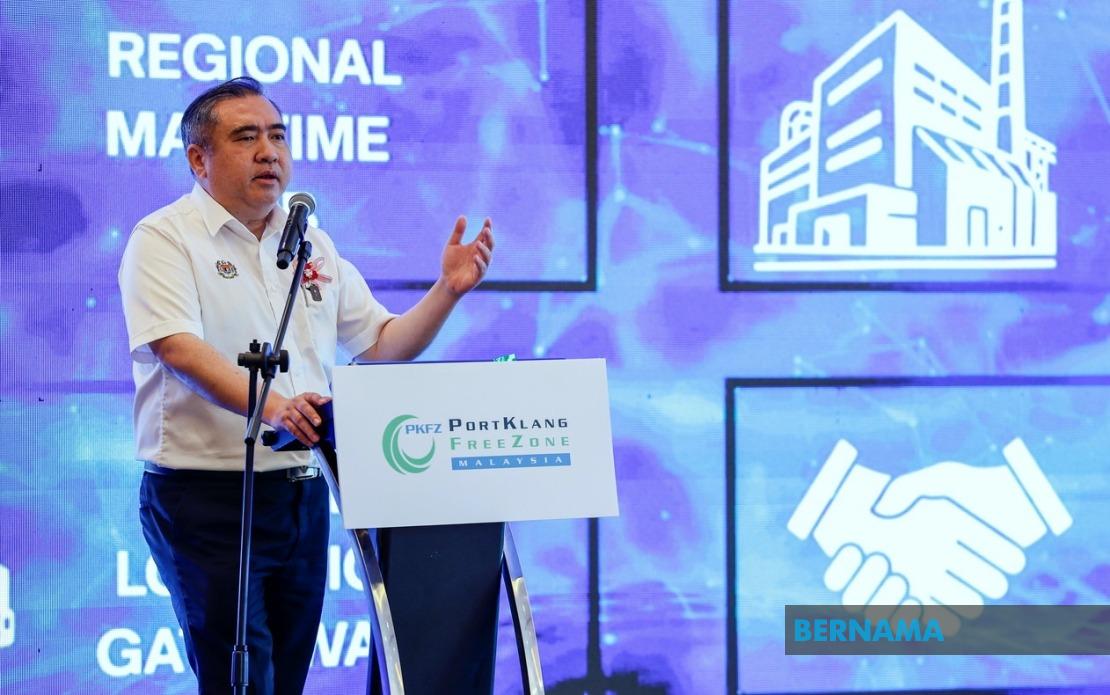
Malaysia's Transport Minister Anthony Loke announced that the Road Transport (Amendment) Bill 2025 will proceed to its first reading in the Dewan Rakyat on Monday, marking a significant step in the government's push to overhaul road safety legislation. The comprehensive bill encompasses 11 distinct areas of amendment spread across 42 clauses, reflecting the breadth of legal reforms intended to address longstanding traffic and public safety concerns. Following its introduction, the legislation is scheduled for second reading debate on Tuesday, with parliamentary passage expected on the same day, indicating strong political momentum behind the initiative.
The rapid progression of the bill through Parliament demonstrates cross-party consensus on road safety matters. Loke noted that opposition Members of Parliament sitting on the Parliamentary Special Select Committee have thrown their support behind the proposed amendments, a rare show of unity on a government-backed measure. This bipartisan backing suggests that the concerns driving the legislation resonate across the political divide, with lawmakers recognising that road safety transcends typical partisan divisions and affects all Malaysian communities equally.
At the heart of the amendments lies a determined effort to suppress illegal street racing, which continues to pose a significant and persistent danger to motorists and pedestrians throughout Malaysia. These unauthorised racing activities, particularly concentrated during weekend hours, have spawned a dedicated subculture and attracted considerable numbers of participants and spectators despite existing legal prohibitions. The escalating nature and frequency of such incidents has prompted transport authorities to pursue stronger legislative teeth to deter would-be racers and impose more severe consequences for offenders.
Beyond street racing, the bill specifically targets the operations of "tonto" syndicates, organised criminal networks that profit from illegal vehicle-related activities including unlicensed transportation, smuggling, and extortion. These groups have become increasingly entrenched in certain communities, particularly in urban and peri-urban areas where enforcement resources are stretched thin. The tonto phenomenon represents a form of organised crime that intersects with road safety concerns, as vehicles operated by such syndicates often lack proper maintenance, insurance, and regulatory compliance, putting public safety at serious risk.
The amendment package is designed to strengthen enforcement mechanisms across Malaysia's road transport sector, moving beyond incremental adjustments to create a more robust legal framework. Improved enforcement capabilities will enable traffic authorities and law enforcement agencies to detect violations more efficiently, prosecute offenders more effectively, and impose penalties that serve as genuine deterrents rather than minor inconveniences. This systemic approach acknowledges that stricter laws alone have limited impact without corresponding improvements in detection, investigation, and prosecution capacity.
For Malaysia's motoring public, the implications are substantial. Stricter measures against illegal racing and tonto operations should theoretically reduce the prevalence of dangerous driving behaviours and organised crime activity on Malaysian roads. Commuters and weekend travellers may experience fewer encounters with street racers, uninsured vehicles, and other high-risk road users. The enhanced legal framework signals government determination to reclaim Malaysian roads from elements that have exploited regulatory gaps and enforcement weaknesses.
The timing of the bill reflects growing public concern about road safety in Malaysia, where annual fatalities and serious injuries have remained stubbornly high despite previous reform efforts. Street racing, in particular, has become emblematic of a broader culture of reckless driving that authorities struggle to contain. By targeting both the street racing phenomenon and the organised criminal syndicates profiting from illegal transportation, the government is attempting to address both symptoms and underlying causes of road disorder.
International experience suggests that comprehensive legal reform must be accompanied by sustained enforcement commitment and public education campaigns to achieve meaningful impact. Jurisdictions that have successfully reduced illegal street racing have typically combined stricter penalties with high-visibility enforcement operations and community engagement initiatives that create social pressure against participation. Malaysia's transport authorities will need to demonstrate equivalent commitment beyond the passage of legislation.
The bill's prospects for successful implementation will partly depend on resource allocation to enforcement agencies. Training, equipment, and personnel must be sufficient to handle the expanded investigative and prosecutorial workload that stricter laws inevitably create. Without adequate resourcing, the amendments risk becoming symbolic gestures without practical effect, frustrating public expectations and undermining the cross-party consensus that made rapid parliamentary passage possible.
Regionally, Malaysia's proactive stance on road safety legislation positions it ahead of several neighbouring countries still grappling with similar challenges. The framework established by the Road Transport Amendment Bill 2025 may serve as a model for other Southeast Asian nations seeking to balance enforcement, deterrence, and rehabilitation in road safety policy. The bill's focus on organised crime elements within the transportation sector also addresses concerns that extend beyond traditional traffic management into public security and criminal justice domains.
As implementation approaches, the true measure of the bill's success will emerge not from its passage but from its translation into tangible improvements in road safety outcomes. Stakeholders including vehicle operators, transport industry associations, and safety advocacy groups will be watching closely to assess whether the new legal tools translate into reduced incidents, lower fatality rates, and improved compliance with transport regulations across Malaysian highways and urban streets.

%22%2F%3E%3C%2Fpattern%3E%3C%2Fdefs%3E%3Crect%20width%3D%22100%25%22%20height%3D%22100%25%22%20fill%3D%22url(%23ph523ndg)%22%2F%3E%3Crect%20width%3D%22100%25%22%20height%3D%22100%25%22%20fill%3D%22url(%23ph523ndp)%22%2F%3E%3Ctext%20x%3D%2250%25%22%20y%3D%2250%25%22%20text-anchor%3D%22middle%22%20dominant-baseline%3D%22central%22%20fill%3D%22rgba(255%2C255%2C255%2C0.95)%22%20font-family%3D%22Georgia%2C%20'Times%20New%20Roman'%2C%20serif%22%20font-weight%3D%22700%22%20font-size%3D%22272%22%20letter-spacing%3D%22-0.02em%22%3EAnwar%3C%2Ftext%3E%3C%2Fsvg%3E)