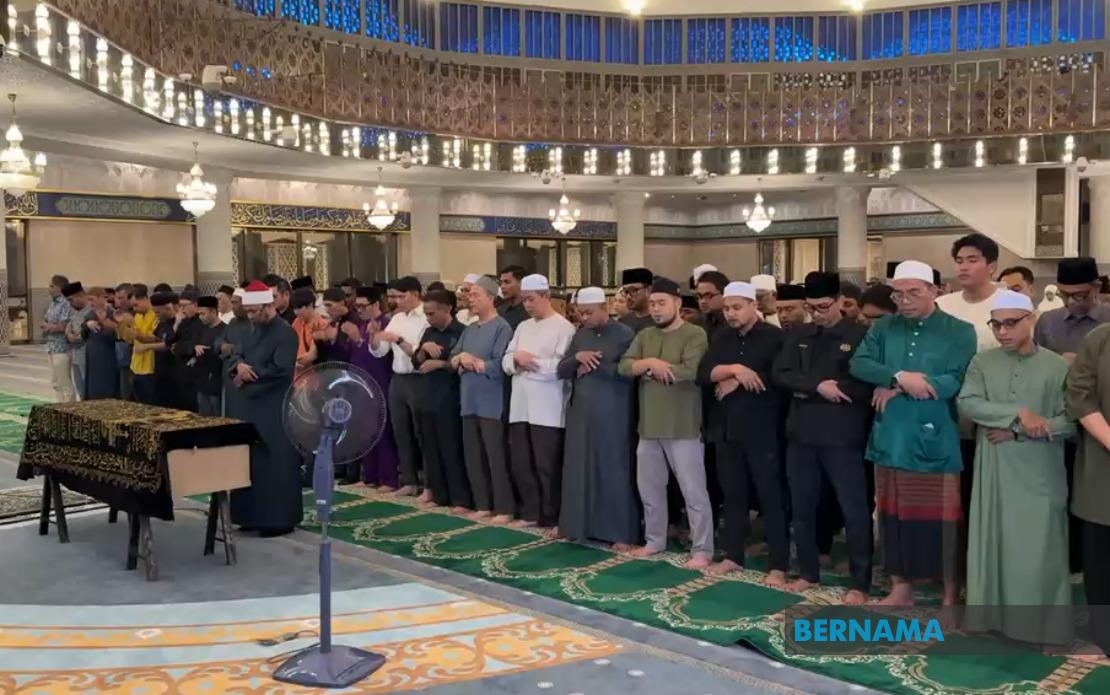
The husband of Women, Family and Community Development Minister Datuk Seri Nancy Shukri was laid to rest with Islamic funeral rites at the National Mosque in Kuala Lumpur on the evening of June 18, marking the beginning of final farewell ceremonies before his repatriation to Sarawak. Datuk Kamil Misuari's remains underwent ritual bathing at Ampang Hospital starting at 9 pm, a fundamental practice in Islamic funeral traditions that precedes the formal prayer service. The carefully coordinated sequence of events demonstrated the ministerial office's commitment to ensuring his passage honoured both family wishes and religious observance during what would be a solemn night for all involved.
Family members and close associates began gathering at the hospital during the preparation phase, creating a space for private reflection as loved ones paid respects to the deceased in the early evening hours. The presence of Education Minister Fadhlina Sidek among those assembled underscored the significance of the occasion within government circles, highlighting the cross-cabinet support extended to the grieving minister at this difficult time. Relatives who had travelled from Lahad Datu in Sabah were present to participate in the farewell proceedings, demonstrating how the loss drew extended family across state boundaries to gather in the capital.
The remains were transported to the National Mosque at 10 pm, where the institution's facilities were made available for the funeral service. This mosque, as Malaysia's premier Islamic religious establishment located in the federal capital, regularly hosts state and high-profile ceremonies reflecting its ceremonial role in the nation's religious life. The timing allowed family members and associates to complete their final respects before the scheduled funeral prayers, which were arranged to commence at 10.50 pm. This structured approach ensured an orderly progression through each stage of the funeral ritual, respecting both the emotional needs of mourners and the religious requirements of the Islamic ceremony.
Following the completion of prayers, the remains were scheduled for immediate transportation to Kuala Lumpur International Airport at 11.20 pm for a flight to Sarawak, where burial would take place according to family arrangements. The logistical coordination required to accomplish this schedule—moving the deceased from hospital to mosque to airport within a compressed timeframe—reflected the careful planning undertaken by the minister's office in consultation with relevant authorities. This sequence exemplified how Malaysia's government machinery mobilizes to facilitate dignified passage for families of senior officials during bereavement, ensuring that practical arrangements do not impede spiritual observance.
Datuk Kamil had been hospitalized at Ampang Hospital since the previous Friday, with his condition experiencing a sharp decline during the afternoon of June 18. The deterioration came after more than a week of medical care, indicating a period during which he had been receiving treatment before the situation became critical. His passing represented a profound personal loss for Minister Nancy Shukri, who holds significant responsibility in the federal cabinet overseeing women, family, and community development matters. The timing of his death, arriving in the early evening hours, triggered the rapid activation of funeral protocols that his family and the ministerial office had presumably prepared.
The participation of cabinet-level colleagues in the hospital gathering reflected the collegial bonds within Malaysia's political establishment, where mutual support during personal tragedy transcends normal official interactions. These moments of solidarity, expressed through attendance at funeral proceedings, represent significant cultural practices within Malaysian governance circles. The Minister of Education's presence signalled that such losses are recognized not merely as private matters but as occasions where the broader government family acknowledges shared vulnerability and demonstrates human compassion beneath formal roles.
The repatriation to Sarawak for burial represented the final journey of the deceased, returning him to his home state where family roots and community ties provided the appropriate setting for his final resting place. This movement across Malaysian states—from federal hospital to national religious institution to international airport to Sarawak—traced the trajectory of a life spent in public service and family responsibility, concluding with return to ancestral soil. The decision to conduct funeral prayers in Kuala Lumpur before repatriation reflected respect for both the minister's position in the federal capital and the family's connection to Sarawak.
The coordination between Ampang Hospital, the National Mosque, the ministerial office, and airport authorities demonstrated the seamless functioning of institutional support systems available to government officials during crises. While such privileges accompany high office, they also serve practical purposes in enabling grieving families to focus on mourning rather than navigating bureaucratic obstacles during emotionally demanding periods. The Minister's office functioned as the primary communicator throughout the process, issuing timely statements to the press that allowed the public and interested parties to understand the schedule and express condolences appropriately.
For Malaysian society more broadly, the passing of Datuk Kamil and the public nature of his funeral rites offered a reminder of universal human mortality that transcends rank and position. The ceremonies conducted at the National Mosque, carried out according to Islamic law and custom, represented the enduring values and spiritual practices that anchor Malaysian national identity. As Minister Nancy Shukri faced the intersection of personal grief and continued ministerial responsibilities, the nation's institutions mobilized to support both her family's needs and the continuation of government functions.

%22%2F%3E%3C%2Fpattern%3E%3C%2Fdefs%3E%3Crect%20width%3D%22100%25%22%20height%3D%22100%25%22%20fill%3D%22url(%23ph523ndg)%22%2F%3E%3Crect%20width%3D%22100%25%22%20height%3D%22100%25%22%20fill%3D%22url(%23ph523ndp)%22%2F%3E%3Ctext%20x%3D%2250%25%22%20y%3D%2250%25%22%20text-anchor%3D%22middle%22%20dominant-baseline%3D%22central%22%20fill%3D%22rgba(255%2C255%2C255%2C0.95)%22%20font-family%3D%22Georgia%2C%20'Times%20New%20Roman'%2C%20serif%22%20font-weight%3D%22700%22%20font-size%3D%22272%22%20letter-spacing%3D%22-0.02em%22%3EAnwar%3C%2Ftext%3E%3C%2Fsvg%3E)