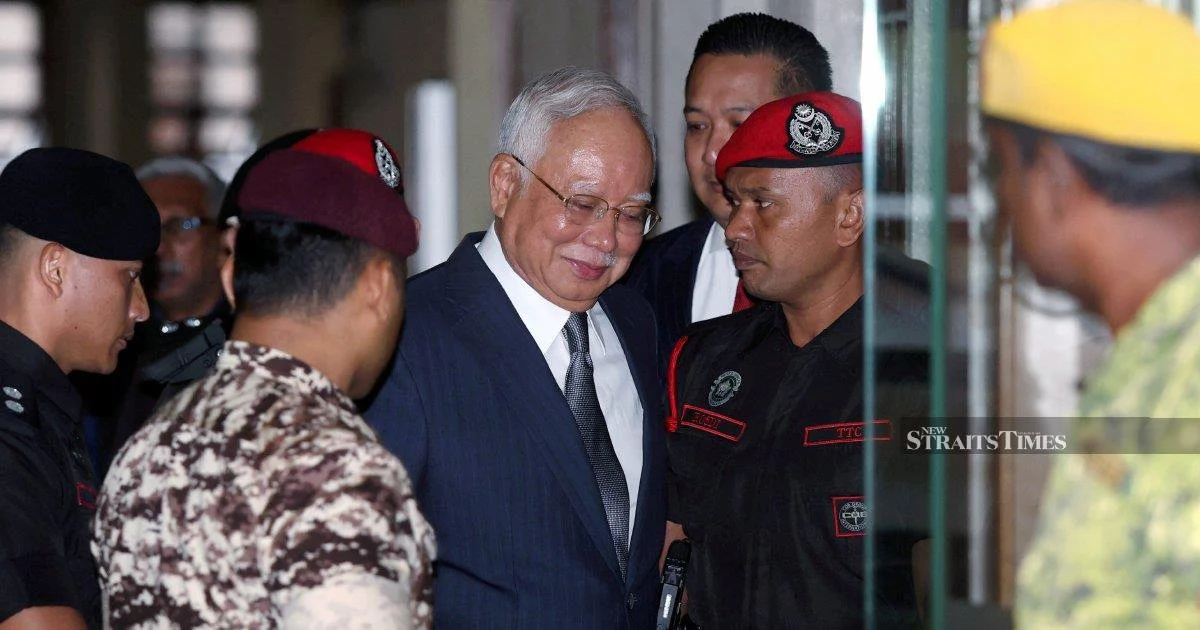
A Malaysian court has found that former Prime Minister Datuk Seri Najib Razak and fugitive businessman Low Taek Jho functioned as deliberate collaborators in orchestrating the systematic theft of billions of ringgit from 1Malaysia Development Bhd (1MDB). The judicial determination represents a significant moment in the long-running legal proceedings surrounding one of the world's most significant sovereign wealth fund scandals, establishing through court evidence that the two figures operated in concert rather than independently.
The court's conclusions establish that Najib's position as Prime Minister and Finance Minister during the critical period when 1MDB was formed and operated provided the political cover and decision-making authority necessary for the scheme to function. Jho Low, operating as the practical intermediary and facilitator, leveraged his business connections and financial sophistication to execute the actual transfers and investments while maintaining the appearance of legitimate transactions. The coordination between them was not sporadic or incidental but rather formed the foundation of a deliberate strategy to systematically extract value from the development fund.
This judicial finding carries substantial implications for Malaysia's reputation in the international financial community. The 1MDB scandal has cast a long shadow over the nation's governance standards and financial oversight mechanisms. Foreign investment communities have watched Malaysian legal proceedings closely, viewing the outcomes as indicators of whether the country's institutions can effectively address high-level financial crimes. The court's determination that sitting leadership actively conspired to plunder state assets presents a sobering picture of institutional capture at the highest levels during that period.
For Malaysian citizens, the judgment underscores how concentrated executive power without adequate checks can facilitate grand theft from national resources. The scheme diverted funds that were ostensibly designated for national development projects into private accounts and luxury acquisitions across global financial centers. These were not technical violations or accounting irregularities but rather deliberate, large-scale criminal transfers that enriched individuals at the nation's expense. Understanding the mechanisms through which this occurred—particularly the coordination between political authority and financial operators—becomes essential for strengthening institutional safeguards.
The continued fugitive status of Jho Low presents an ongoing frustration in achieving complete accountability. While Najib faces the Malaysian legal system, Low remains beyond the reach of Malaysian courts, having fled to jurisdictions without extradition agreements. This asymmetry in accountability highlights the challenges posed by globalized financial crime, where perpetrators can leverage international mobility to evade prosecution even as their co-conspirators face domestic courts. Malaysian authorities have pursued Interpol mechanisms and bilateral cooperation requests, but these efforts have yielded limited practical results in securing his return.
The judgment also reflects evolving understanding within Malaysia's legal system regarding how development finance schemes can be weaponized for personal enrichment. 1MDB was established with ostensibly legitimate objectives—facilitating Malaysia's economic development through strategic investments and infrastructure projects. The corruption mechanism operated by disguising personal transfers as fund investments, legitimate business transactions, and international financial arrangements. Courts reviewing this scheme have had to grapple with complex financial structures, international banking practices, and sophisticated document falsification that obscured the underlying criminal intent.
For Southeast Asian observers, the 1MDB case serves as a cautionary lesson about governance vulnerability. Several nations in the region have attempted comparable sovereign wealth fund initiatives or development finance schemes. The mechanisms through which 1MDB was compromised—inadequate oversight of fund managers, limited transparency in investment decisions, concentration of approval authority in political leadership, and insufficient international financial monitoring—represent risks that persist across developing economies. The Malaysian experience provides concrete evidence of how these vulnerabilities can be exploited at catastrophic scale.
The relationship between Najib's subsequent electoral defeat in 2018 and these legal developments reflects how financial scandals can eventually force political reckoning. During his tenure, Najib employed various mechanisms to deflect scrutiny of 1MDB's operations, including management restructuring and public relations campaigns. However, accumulating evidence of misappropriation ultimately contributed to electoral outcomes that brought reform-minded leadership to power, which in turn enabled more aggressive prosecution of suspected wrongdoing. This sequence illustrates how democratic processes, however imperfect, can eventually respond to institutional failure.
The court's specific determination that Najib and Jho Low worked "hand-in-hand" establishes intentionality and conspiracy rather than mere negligent oversight or incompetent management. This finding justifies more severe legal consequences than might apply to passive or incidental involvement in financial irregularities. Malaysian jurisprudence on high-level corruption cases continues to develop as courts confront cases involving sophisticated financial crimes, and judgments like this one contribute to precedent regarding evidentiary standards and liability frameworks for officials accused of state asset misappropriation.
Going forward, the implications extend to institutional reforms aimed at preventing comparable schemes. Malaysia has implemented various financial oversight enhancements, including strengthened roles for independent auditors, enhanced parliamentary scrutiny of development funds, and clearer separation between executive discretion and fiduciary obligations. Whether these reforms prove sufficient remains uncertain, particularly given how previous governance structures failed to contain the 1MDB scheme despite existing regulatory frameworks. The court's findings suggest that intentional deception by determined actors at the highest levels can overcome inadequate institutional safeguards—a reality that should inform future reform discussions.