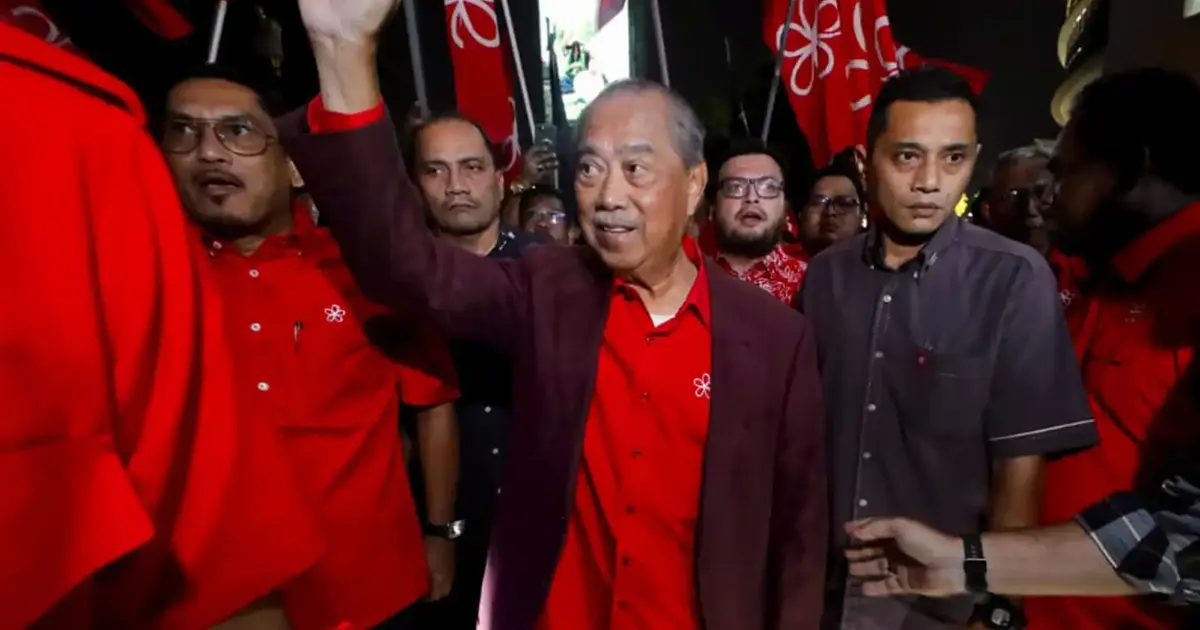
Bersatu held a significant rally demonstrating substantial backing for party president Muhyiddin Yassin, with over 200 supporters mobilising ahead of a crucial party assembly. The gathering signals internal party consolidation within the Malay-Muslim coalition, which has undergone considerable repositioning following recent political shifts and electoral pressures across peninsular Malaysia.
The rally served as a show of strength within Bersatu's rank-and-file membership at a particularly sensitive juncture for the party's political standing. Having navigated considerable turbulence in recent years, including leadership contests and coalition realignments, the party leadership sought to demonstrate unified support through the visible turnout of party cadres and loyalists. The event reflects Muhyiddin's continued grip on party machinery despite ongoing internal tensions that periodically surface within Bersatu's organisational structure.
The gathering immediately precedes a more formal party meeting where Bersatu's leadership will deliberate on several interrelated strategic issues. The upcoming Johor state election and Negeri Sembilan state election represent critical tests of the party's electoral viability and organisational capacity in two distinct political theatres. Johor, long considered a stronghold for component parties within governing coalitions, holds particular significance given its economic importance and demographic weight in national politics. Negeri Sembilan, meanwhile, presents a different electoral dynamic that requires tailored campaign strategies and candidate selection processes.
Preparations for these state elections extend beyond merely selecting candidates and planning campaign itineraries. They involve substantive deliberations about resource allocation, coalition positioning, and whether Bersatu should contest these elections as the primary Malay-Muslim alternative or in subordinate roles within broader coalitions. The party's electoral strategy in both states will significantly influence its positioning heading into the next general election and determine whether Bersatu consolidates or loses ground within Malaysia's increasingly fluid political landscape.
Equally consequential is the question of Bersatu's relationship with PAS, which has emerged as one of the most significant issues confronting Malaysia's Malay-Muslim political bloc. The two parties have historical ties but also considerable organisational rivalry, competing for overlapping voter demographics and party membership. In recent years, their relationship has oscillated between periods of close coordination and sharp public disagreements over policy priorities, coalition strategy, and ideological direction. Managing this relationship remains essential for Bersatu's political survival, as excessive friction with PAS could marginalise Bersatu within Malaysia's Malay-majority constituencies.
PAS has itself undergone considerable evolution, shifting from its previous positioning and expanding its organisational reach across peninsular Malaysia. The party's electoral performance in recent contests has demonstrated its capacity to mobilise support independently and influence broader coalition outcomes. For Bersatu, therefore, determining the appropriate level of coordination, competition, and strategic partnership with PAS represents an urgent priority that cannot be deferred without risking further erosion of the party's political relevance. The party meeting will likely explore mechanisms for managing both cooperation and competition in these state elections.
Bersatu's current political positioning reflects the broader restructuring of Malaysia's coalition landscape. The party emerged from UMNO and has sought to establish itself as a credible alternative capable of leading Malay-Muslim political movements while maintaining broader coalition partnerships. However, its inability to escape its UMNO origins entirely has complicated its image and contributed to ongoing organisational instability. The rally of over 200 supporters demonstrates that core party loyalists remain committed to Muhyiddin's leadership despite these challenges, though sustaining this commitment through challenging electoral periods requires demonstrable political progress and policy implementation.
The timing of this rally and the subsequent party meeting coincides with broader electoral cycles affecting multiple states and the federal polity. Bersatu's performance in Johor and Negeri Sembilan will significantly influence political calculations nationally, as these results will provide crucial data about the party's capacity to mobilise voters independently and contribute meaningfully to coalition victories. Poor electoral results could trigger internal leadership challenges and force strategic reorientation, while strong performances would strengthen Muhyiddin's position and validate the party's current strategic direction.
For Malaysian political observers and analysts, this gathering underscores the continued significance of party-level organisation and internal cohesion in determining electoral outcomes. While national political narratives often focus on coalition dynamics and prime ministerial politics, the granular work of mobilising party members, managing intra-party factions, and building grassroots momentum remains decisive in converting strategic plans into actual electoral support. Bersatu's ability to maintain this internal momentum will substantially influence its trajectory over the coming years as Malaysia approaches its next general election cycle.
The broader implications extend beyond Bersatu itself. The party's strategic decisions regarding state elections and its relationship with PAS will ripple across the entire Malay-Muslim political landscape, affecting how other parties position themselves and pursue their own electoral strategies. Bersatu remains one of several parties competing within this crucial political space, and its moves will prompt reactions from UMNO, PAS, and other political actors seeking to advance their own interests. The deliberations emerging from this party meeting will therefore warrant close attention from Malaysian political stakeholders and will likely shape coalition configurations and electoral calculations for months to come.