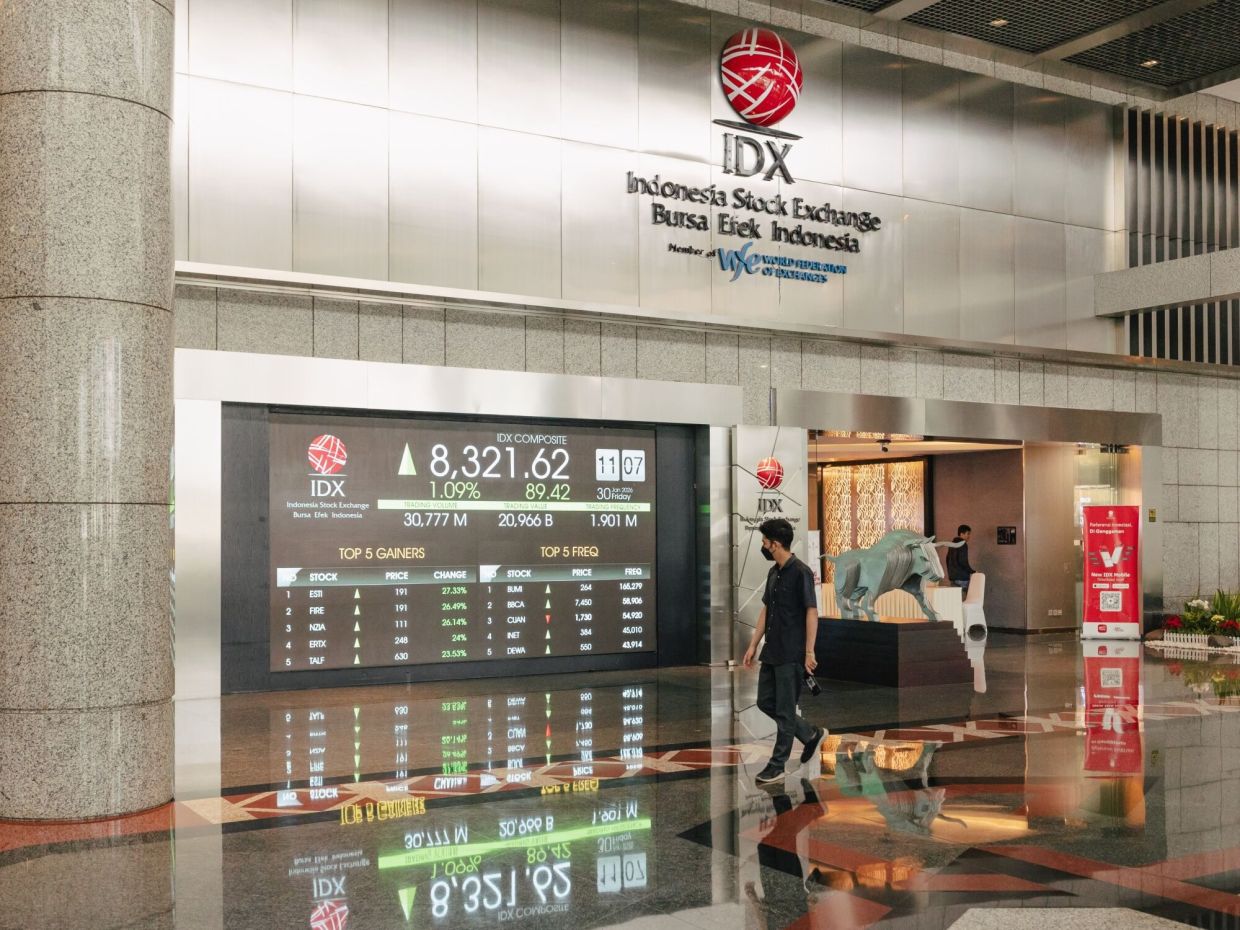
Index provider MSCI has escalated its scrutiny of Indonesia's investment environment, releasing a fresh warning about opacity in shareholder disclosures and coordinated trading activities that undermine confidence in the market's integrity. The assessment comes at a critical juncture as MSCI prepares to announce next week whether it will strip Indonesia of its emerging market designation and relegate it to frontier status—a downgrade that analysts warn could trigger forced selling and capital outflows potentially reaching $13 billion from passive investment funds globally.
The Indonesian capital markets have absorbed significant damage since MSCI first flagged governance concerns in January, prompting authorities to launch a series of defensive reforms. These measures included raising the minimum free-float requirement for listed companies from 7.5 percent to 15 percent, a threshold designed to improve market dispersion and reduce concentration risk. The urgency of these reforms was underscored when the head of Indonesia's stock exchange and the financial services regulator both resigned on the same day in January, signalling the gravity with which policymakers regarded the index provider's warnings.
In its latest market accessibility review released on Thursday, MSCI downgraded Indonesia's information flow criterion to negative status, citing inadequate transparency around beneficial ownership structures and market trading patterns. This deterioration reflects genuine obstacles facing foreign institutional investors attempting to verify the true free-float availability of Indonesian-listed companies and assess whether trading volumes genuinely reflect market-driven price discovery or reflect coordinated activity by connected parties. Such information asymmetries create friction for global asset managers trying to fulfil fiduciary duties to their own clients.
Not all observers interpret MSCI's latest assessment as uniformly damaging to Indonesia's prospects. Mohit Mirpuri, a fund manager at SGMC Capital in Singapore, cautioned against reading too much into the headline concern, noting that only one accessibility criterion deteriorated in the comprehensive review. He highlighted that Indonesia maintains competitive standing against major regional peers including South Korea, China and India across several important metrics that MSCI evaluates. On this reading, the latest review presents a more textured picture than market headlines might suggest.
Mirpuri's base case assumption remains that Indonesia will retain its emerging market status when MSCI announces its decision, though he acknowledged market participants are likely to engage in close textual analysis of the report searching for clues about the likely outcome. The reality is that MSCI's decisions carry outsized influence over global capital allocation: as one of the world's most widely tracked index families, decisions made by the New York-based provider automatically translate into mechanical buying and selling by the trillions of dollars in passive funds that benchmark to its methodologies.
The Indonesian stock exchange and financial services authority have not yet commented publicly on the latest MSCI assessment. However, the regulatory response to January's initial warning demonstrates that policymakers are taking the prospect of a downgrade seriously. Beyond the free-float requirement increase, authorities have signalled commitment to enhancing disclosure standards and market supervision practices. Yet the pace of institutional reform may struggle to keep up with investor sentiment, which has deteriorated sharply as Indonesia confronts broader macroeconomic challenges.
MSCI's April decision to extend its Indonesia review period and subsequent May action removing six companies from its indexes—most connected to prominent Indonesian business tycoons—triggered additional market turmoil. These removals were framed as addressing concentration and related-party transaction concerns, but the cumulative effect of multiple enforcement actions and warning letters has rattled confidence among both domestic and international market participants. The cascading nature of MSCI's interventions has created a feedback loop where each new action seems to validate earlier concerns rather than demonstrate incremental improvement.
The broader investment climate surrounding Indonesia has deteriorated substantially beyond the technical governance questions MSCI raises. President Prabowo Subianto's administration has pursued populist economic policies that have unnerved international investors regarding fiscal sustainability and policy predictability. The Indonesian rupiah has plummeted to record lows against the US dollar, forcing Bank Indonesia to implement aggressive interest rate increases in recent weeks to defend the currency. These currency pressures reflect genuine anxiety about capital preservation in an environment where political risk premiums are rising.
International credit rating agencies have amplified these concerns. Both Moody's and Fitch downgraded their outlooks on Indonesian sovereign debt to negative during 2024, explicitly citing erosion in policymaking credibility as the government balances development ambitions against mounting fiscal pressures. For a $1.4 trillion economy that was once considered a structural growth story, this reassessment marks a significant loss of standing in global investor deliberations. The shift in sentiment underscores how quickly confidence can evaporate when governance frameworks appear brittle.
Currency market dysfunction represents another layer of the accessibility challenge MSCI identified. The index provider specifically noted the absence of an efficient offshore currency hedging market while simultaneously highlighting constraints within the onshore market. This leaves international investors with limited ability to manage their rupiah exposure efficiently, creating a structural drag on capital inflows. For foreign portfolio investors managing global mandates, restricted ability to hedge currency risk effectively translates into uncompensated risk, pricing them out of Indonesian investments relative to less constrained markets.
The financial damage to Indonesia's capital markets has already materialised regardless of MSCI's next decision. The Jakarta Composite Index has contracted 29 percent year-to-date, representing one of the worst performances among major global equity markets. Foreign investor outflows have reached approximately $3.65 billion in 2024 alone, consistent with broader deterioration in sentiment toward emerging market assets experiencing governance or macroeconomic stress. This selling pressure has compressed valuations and raised funding costs for Indonesian corporations.
The upcoming MSCI decision represents a pivotal moment for Indonesia's financial markets, but the deeper issue involves rebuilding institutional confidence in policy coherence and market integrity. Technical reforms to free-float requirements and disclosure standards address genuine problems but cannot overcome broader political economy challenges now preoccupying global investors. Whether policymakers can stabilise the currency, rebuild fiscal credibility, and demonstrate meaningful progress on governance issues will ultimately determine whether the frontier market designation becomes self-fulfilling or merely a temporary setback.

%22%2F%3E%3C%2Fpattern%3E%3C%2Fdefs%3E%3Crect%20width%3D%22100%25%22%20height%3D%22100%25%22%20fill%3D%22url(%23ph523ndg)%22%2F%3E%3Crect%20width%3D%22100%25%22%20height%3D%22100%25%22%20fill%3D%22url(%23ph523ndp)%22%2F%3E%3Ctext%20x%3D%2250%25%22%20y%3D%2250%25%22%20text-anchor%3D%22middle%22%20dominant-baseline%3D%22central%22%20fill%3D%22rgba(255%2C255%2C255%2C0.95)%22%20font-family%3D%22Georgia%2C%20'Times%20New%20Roman'%2C%20serif%22%20font-weight%3D%22700%22%20font-size%3D%22272%22%20letter-spacing%3D%22-0.02em%22%3EAnwar%3C%2Ftext%3E%3C%2Fsvg%3E)