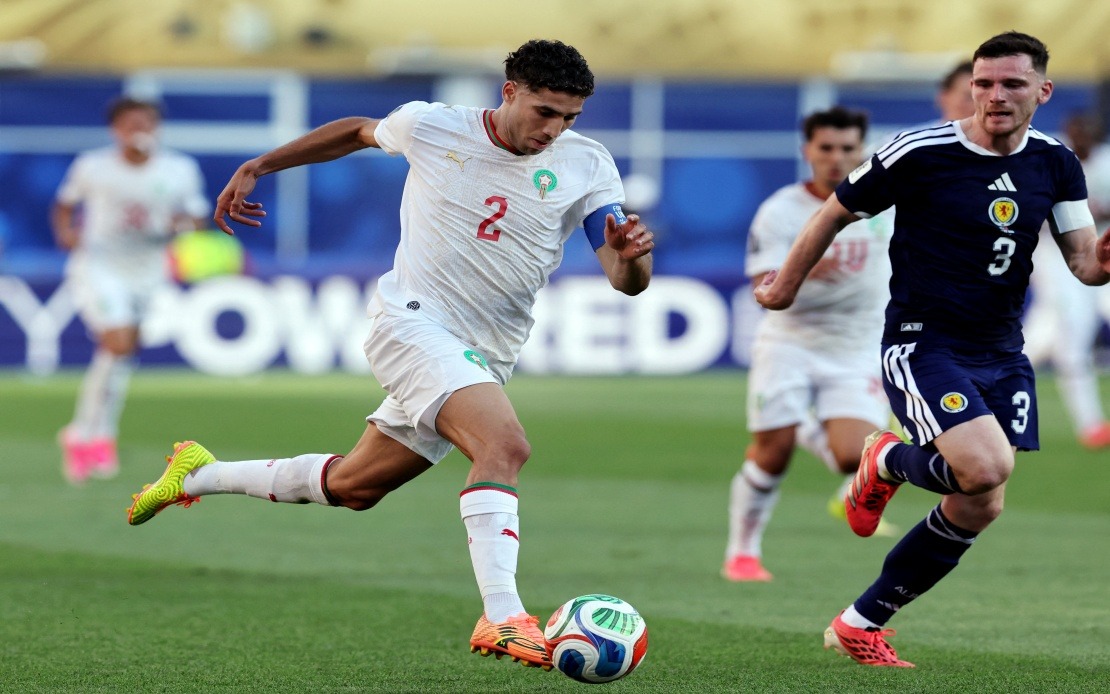
Morocco's football programme faced an uncomfortable spotlight at Foxborough when captain Achraf Hakimi took the field against Scotland on Friday, with sections of the crowd subjecting the Paris Saint-Germain defender to sustained booing and jeering throughout the World Cup encounter that Morocco won 1-0. The hostile reception became impossible to ignore, punctuated by whistles each time Hakimi engaged with the ball, creating an unusually fractious atmosphere around a player of considerable technical standing in international football.
The timing of the crowd's reaction was particularly charged. Just hours before kickoff, a court in Versailles had announced that Hakimi must stand trial on rape charges related to allegations involving a 24-year-old woman at his home in 2023. The judicial pronouncement, delivered on the same day as the match, ensured that the legal proceedings would dominate pre-match narratives and likely influence spectator sentiment during the encounter itself.
Morocco's coaching staff moved swiftly to protect their key player from the distraction and potential psychological impact. Coach Mohamed Ouahbi publicly backed Hakimi in measured but resolute terms, framing the narrative around sporting performance rather than the legal complications engulfing his captain. "We didn't talk about it and we don't have to," Ouahbi stated, signalling an institutional decision to compartmentalise the off-field challenges from on-field matters.
Ouahbi's words carried particular weight given the magnitude of the moment. Rather than distance the coaching staff from their embattled captain, the coach chose solidarity, declaring that the Morocco camp stood united behind Hakimi regardless of external pressures. "We are behind him. Hopefully he will show at this World Cup that he is the best right back in the world," Ouahbi said, pivoting discussion toward Hakimi's professional credentials and potential tournament contribution.
The coach's assessment of Hakimi's actual performance on the pitch offered reassurance that the defensive midfielder's mental fortitude remained intact despite the upheaval. "Hakimi was very strong. We are very relaxed, he is also relaxed and playing well," Ouahbi observed, suggesting that Hakimi had managed to maintain composure and tactical focus throughout the match despite the hostile crowd environment. This was a significant indication that neither the legal uncertainty nor the crowd hostility had visibly unravelled the player's professional composure.
Throughout the incident, Morocco's broader squad maintained strategic silence regarding the legal dimensions of their captain's situation. Ouahbi similarly opted not to engage substantively with the judicial process or the accusations themselves, preferring instead to concentrate exclusively on the footballing side of Hakimi's involvement in Morocco's World Cup campaign. This disciplined messaging strategy reflected an institutional understanding that team unity required maintaining focus on sporting objectives.
The Versailles appeal court's decision on Friday formalised the requirement for Hakimi to face trial proceedings, following his appeal against an earlier investigative judge's ruling. The development represented a significant escalation in legal terms, moving the matter from investigative phases into courtroom proceedings where substantive testimony and evidence would be examined. Hakimi has consistently denied the allegations, and the player posted on social media following the court's announcement, expressing that the trial opportunity would finally permit him to present his account publicly: "at last, I will be able to speak."
From a regional sporting perspective, the incident raises broader questions about how international football manages intersections between athlete reputation, crowd conduct, and legal proceedings. For Malaysian and Southeast Asian football enthusiasts, the episode offers complex reflections on player protection mechanisms, fan responsibility, and institutional governance in world sport. The situation demonstrates how judicial processes in European jurisdictions can materially impact player welfare and team environments during major tournaments, creating genuine management challenges for national football programmes.
Hakimi's pedigree as one of international football's elite right-backs was never in question before Friday's match. His credentials at Paris Saint-Germain and previous stints at elite European clubs have established him as a fixture in global football's upper echelon. The crowd's reaction reflected societal judgments about the allegations rather than assessments of footballing quality, complicating the typical relationship between player status and supporter reception.
For Morocco's World Cup prospects, Ouahbi's unwavering public backing of Hakimi signals that the team intends to preserve squad cohesion through a difficult period. The coach's refusal to allow external pressures to fracture team unity represents strategic leadership, though the question remains whether sustained crowd hostility across multiple fixtures could eventually impact both individual player morale and collective team dynamics. The balance between defending an accused player and acknowledging legitimate public concerns about serious allegations creates genuine organisational tension that few international coaches must navigate simultaneously during tournament competition.
Moving forward, the extent to which Hakimi's involvement in legal proceedings influences his international availability, mental resilience under match conditions, and standing within the squad will merit close observation. Morocco's coaching staff has clearly committed to providing protective institutional support, yet the resolution of French legal processes remains independent of football administrative decisions, creating inherent uncertainty about the player's position as the tournament progresses.