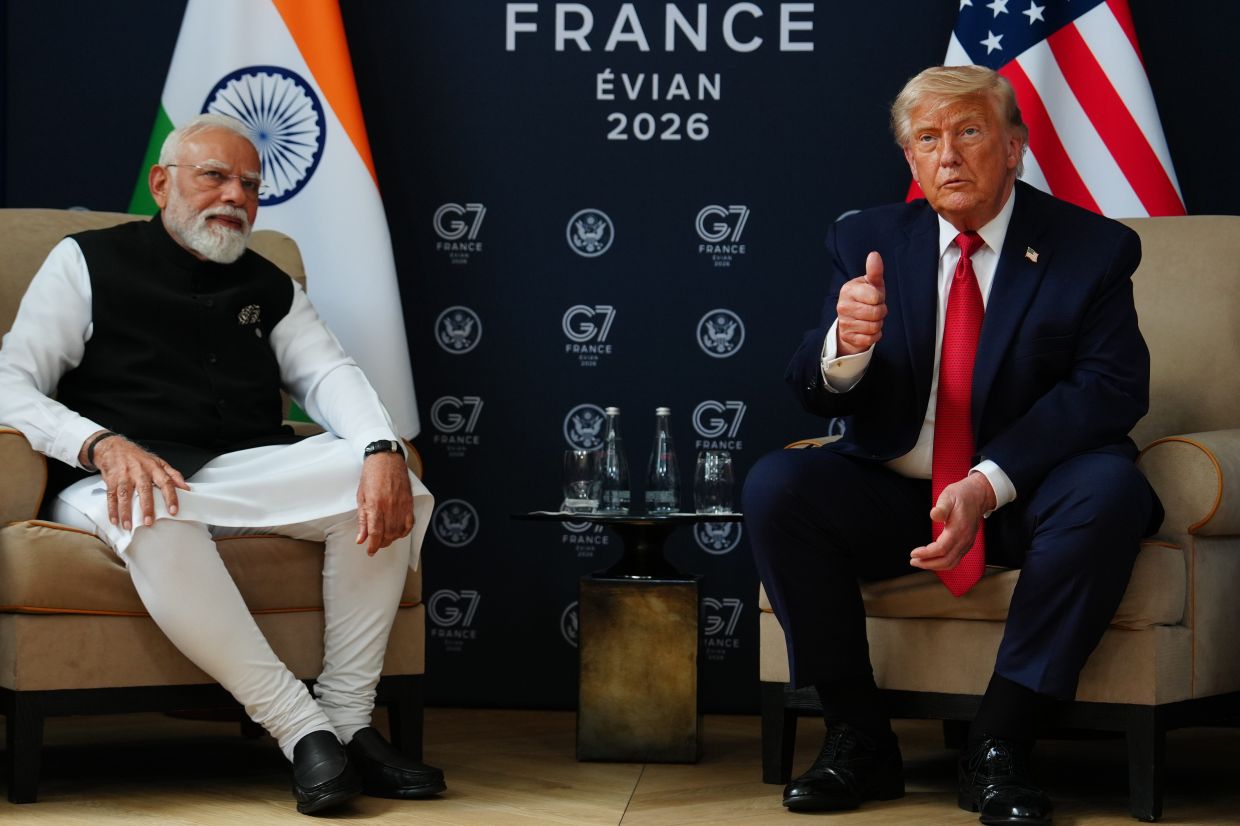
Indian Prime Minister Narendra Modi has indicated that long-stalled negotiations between New Delhi and Washington are approaching a critical juncture, announcing significant headway in talks aimed at finalizing a bilateral trade agreement. The announcement came following Modi's meeting with US President Donald Trump on the sidelines of the G7 summit in Evian, France on Wednesday, marking the two leaders' first in-person engagement since their February 2025 visit to Washington. India's foreign ministry released a formal statement noting that both leaders expressed particular satisfaction with the momentum achieved in negotiations toward an interim bilateral trade pact, underscoring the political momentum behind what has become one of the region's most consequential trade discussions.
Trump's characteristically colorful assessment of his Indian counterpart reflected the growing warmth between the two capitals, with the US president telling reporters in Evian that the two nations stood "very close" to sealing an agreement. The American leader's effusive praise for Modi—describing him as "the most beautiful looking man" while simultaneously acknowledging his toughness as a negotiator—captured the diplomatic calculus underlying the negotiations. This theatricality masks a substantive push by both governments to achieve what has become a priority for their respective administrations, with officials now tasked with accelerating timelines to produce what New Delhi has characterized as a "commercially meaningful agreement at the earliest."
The ambitious bilateral trade target of US$500 billion by 2030 has become a focal point for economic cooperation between the world's two largest democracies, representing a more than threefold increase from current levels. This aspiration reflects broader strategic calculations in both capitals—Washington seeking to deepen economic ties with India as part of its Indo-Pacific strategy, while New Delhi views deepened trade relations with the United States as crucial to its manufacturing ambitions and technological advancement. Multiple negotiating rounds have tackled thorny issues surrounding market access and tariff regimes, technical barriers to trade, and sectoral protection measures that have historically divided the two trading partners.
Progress toward a preliminary understanding in February generated optimism, but momentum stalled following a significant judicial setback for the Trump administration. The US Supreme Court's invalidation of Trump's broad tariff measures created uncertainty about the administration's trade authority, prompting a strategic pivot toward investigating alleged unfair trade practices by various countries, including India, while simultaneously imposing a blanket 10 percent tariff. This legal and policy turbulence threatened to derail the nascent trade partnership, as Indian negotiators contended with an unpredictable regulatory environment and heightened tariff exposure. The complexity was further amplified by the administration's simultaneous pursuit of multiple trade investigations, creating cascading uncertainties for Indian exporters and manufacturers.
India's Commerce Minister Piyush Goyal provided the most concrete indication of negotiating progress in early June, asserting that the countries had completed approximately 99 percent of the first tranche of the trade agreement. This assessment suggests that most sticking points have been resolved, with remaining differences likely confined to technical refinements and implementation mechanisms rather than fundamental economic disagreements. The incoming visit by US Trade Representative Jamieson Greer next week signals that the negotiating process has entered its final phase, with high-level officials positioned to resolve any outstanding disputes and potentially initiate formal legal documentation.
Beyond commercial matters, Modi used his engagement with Trump to address a pressing security concern affecting Indian interests in the Middle East. The Indian Prime Minister raised the safety of Indian seafarers operating in regional waters, particularly following the June 10 incident in which three Indian sailors perished in a US military strike on a commercial vessel off Oman. This tragedy highlighted the dangers confronting Indian maritime workers amid the escalating Middle East conflict, an issue that resonates powerfully in India given the substantial number of citizens employed in international shipping and maritime services. Modi's appeal to Trump reflected the diplomatic tightrope that New Delhi must walk—maintaining strategic partnership with Washington while protecting the lives and livelihoods of its citizens caught in regional conflicts.
The Middle East conflict has imposed tangible economic costs on India that extend well beyond maritime safety concerns. Iran's closure of the Strait of Hormuz, a waterway through which approximately one-third of global seaborne oil exports transit, has constrained energy supplies and driven up import costs for a nation heavily dependent on external energy sources. Fertilizer supply chains have similarly suffered disruption, threatening agricultural productivity in a country where farming remains economically vital for hundreds of millions of people. Food supply chain disturbances compound these pressures, creating inflationary dynamics that burden Indian consumers and policymakers alike.
Modi's warning that the regional conflict's economic consequences would persist for an extended period reflected New Delhi's assessment that the geopolitical situation will not rapidly stabilize. His particular emphasis on the disproportionate impact on the Global South underscored India's role as a leading voice for developing economies that lack the financial buffers of wealthy nations to absorb supply chain disruptions and commodity price volatility. This framing positioned India's trade negotiations with the United States within a broader context of economic vulnerability and interdependence that characterizes the contemporary global system.
For Malaysian policymakers and businesses, the Modi-Trump trade momentum carries significant implications. A strengthened India-US economic partnership could reshape regional trade patterns and investment flows in Southeast Asia, potentially altering competitive dynamics in sectors from electronics manufacturing to pharmaceutical production. India's economic trajectory and its integration into global value chains directly affect ASEAN's own positioning in Indo-Pacific trade architectures. Additionally, India's experience navigating tariff uncertainty under the Trump administration provides relevant lessons for Malaysia and other regional economies assessing their own trade exposure to American policy volatility.
The negotiating progress also reflects broader geopolitical trends shaping the region's economic architecture. A durable India-US trade framework could strengthen democratic alignments in the Indo-Pacific while providing counterweight to other major trade blocs. For ASEAN nations balancing relationships between the United States and rising powers, India's deepening American economic ties represent both an opportunity for triangular cooperation and a potential source of competitive pressure. The successful conclusion of negotiations would signal that high-level political commitment can overcome substantive trade disagreements, offering a model that other regional partners might reference in their own bilateral negotiations.
The trajectory of these negotiations also carries implications for the global trading system's future direction. A substantial India-US trade deal negotiated amid heightened protectionist sentiment and judicial constraints on executive authority could demonstrate whether major democracies can craft reciprocal trade arrangements that balance domestic political pressures with open market principles. India's willingness to engage productively despite American tariff actions and investigations suggests that relationship-building and strategic patience can progress trade conversations even amid turbulent policy environments. As both nations work toward finalizing their agreement, observers across Southeast Asia and beyond will assess whether this represents a sustainable model for deepening bilateral economic ties or merely a temporary convergence of political interests.