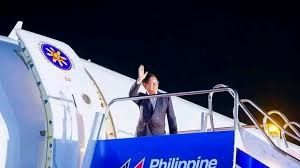
Philippine President Ferdinand R. Marcos Jr departed Manila late Tuesday bound for Kazan, Russia, to chair his nation's involvement in an Asean-Russia Commemorative Summit and conduct bilateral negotiations with Russian President Vladimir Putin centred on energy and food security matters. The presidential aircraft lifted off from Villamor Airbase in Pasay City shortly after 11.55 pm, carrying Marcos and his delegation on what would be the chief executive's inaugural visit to Russian territory.
The timing of this diplomatic mission carries considerable symbolic weight for Manila's engagement with Moscow. The summit itself commemorates three and a half decades of institutional relations between Asean and Russia, while simultaneously marking fifty years since the Philippines and Russia formally established diplomatic ties on June 2, 1976. For Marcos, the journey represents a significant milestone in his presidency, allowing him to personally engage with one of the world's most consequential powers during a period when regional stability and resource security dominate Southeast Asian policy considerations.
In his pre-departure remarks, Marcos emphasised the broader strategic objectives underpinning the summit. He positioned the gathering as an opportunity for Asean leaders collectively to assess the trajectory of cooperation with Russia across three decades and chart pathways toward more substantive partnership arrangements moving forward. This framing reflects Manila's strategic vision for balancing regional autonomy with practical engagement with major powers, a delicate equilibrium that increasingly defines Southeast Asian diplomacy.
The agenda encompasses a deliberately expansive range of sectors reflecting contemporary challenges facing both Asean and individual member states. Beyond the headline focus on energy and food security, discussions encompass peace and security frameworks, trade and investment architecture, scientific and technological collaboration, digital infrastructure advancement, educational exchange programmes, tourism promotion, and mechanisms for fostering people-to-people connectivity. This comprehensive approach suggests both parties recognise the necessity of multifaceted engagement rather than narrow bilateral transactionalism.
Marcos invoked the Philippines' current chairmanship of Asean, underscoring Manila's commitment to ensuring the summit produces outcomes that simultaneously deepen the regional bloc's strategic partnership with Russia while contributing measurably to broader regional peace, stability, and prosperity objectives. His articulation of the "Navigating Our Future, Together" theme reflects how the Philippine presidency is attempting to position Asean as a proactive agent in regional architecture rather than a passive object of great power competition. This rhetorical positioning carries particular significance given contemporary tensions involving major powers and competing visions for regional order in Asia.
The bilateral component of Marcos's visit addresses immediate mutual interests with particular urgency. Both nations face significant pressures regarding energy availability and pricing stability, challenges complicated by prevailing geopolitical tensions that have disrupted conventional supply chains and elevated cost structures globally. The Philippines, as an archipelago dependent on energy imports for industrial activity and electricity generation, confronts genuine vulnerabilities in securing reliable, affordable energy supplies. Similarly, food security concerns resonate acutely across Southeast Asia, where population growth, climate variability, and supply chain fragilities create persistent anxieties about nutritional sufficiency and agricultural stability.
The convergence of these security concerns explains why both Manila and Moscow have prioritised these specific dimensions of cooperation. Russia possesses significant energy reserves and agricultural productive capacity, while the Philippines represents a substantial market and strategic location within Southeast Asia. However, transacting such partnerships requires navigating complex geopolitical sensitivities, as Asean members maintain relationships with multiple powers holding competing regional interests.
First Lady Liza Araneta-Marcos's observations regarding the trip's brevity underscored the administrative intensity required for such diplomatic engagements. Despite consuming approximately 26 hours in combined flight time, Marcos would spend merely 38 hours in Russia, a compressed schedule that nonetheless accommodates the summit's two-day formal programme. Her emphasis on how energy and food security directly affect Filipino households reflected the domestic political dimensions underlying this international engagement—concerns about fuel prices and grocery costs resonate powerfully with ordinary citizens far more than abstract diplomatic achievements.
The Kazan summit's formal proceedings on June 17 and 18 are anticipated to produce substantive agreements establishing frameworks for future cooperation. The anticipated adoption of key documents signals that both Asean and Russia view this moment as significant enough to warrant formalising joint commitments and cooperative mechanisms. Such documentation provides structure and accountability mechanisms that distinguish genuine partnership commitments from rhetorical flourishes.
For Malaysian observers and policymakers, this Philippine diplomatic initiative carries important implications. Malaysia, as an Asean member and significant energy consumer, maintains its own interests in regional energy stability and food security. The outcomes and frameworks emerging from the Kazan summit will likely influence broader regional discussions about resource cooperation and strategic partnerships. Furthermore, the manner in which the Philippines navigates balancing Asean centrality with bilateral engagement with Russia offers instructive lessons about managing contemporary Southeast Asian diplomacy amid great power competition.
The summit represents a moment when Asean collectively engages with Russia at the summit level, a relatively rare occurrence that underscores both parties' desire to reset or reinvigorate bilateral relationships. The participation of multiple Asean leaders simultaneously prevents any single member from appearing to subordinate itself excessively to Russian interests while providing Moscow with multilateral legitimacy.
Marcos's emphasis on rules-based architecture and international law reflects persistent Southeast Asian anxieties about maintaining a predictable operating environment amid great power competition. The Philippines has championed these principles through various forums, and their reiteration in the context of Russian engagement suggests Manila seeks to anchor cooperation within frameworks that prevent regional instability.
Ultimately, this mission illustrates how contemporary Southeast Asian statecraft requires simultaneous engagement with multiple major powers while maintaining organisational coherence and regional solidarity. The Philippines' ability to lead Asean while conducting substantive bilateral negotiations with Russia demonstrates the diplomatic sophistication required of regional leaders navigating the complex multipolar environment characterising twenty-first century Asian geopolitics.