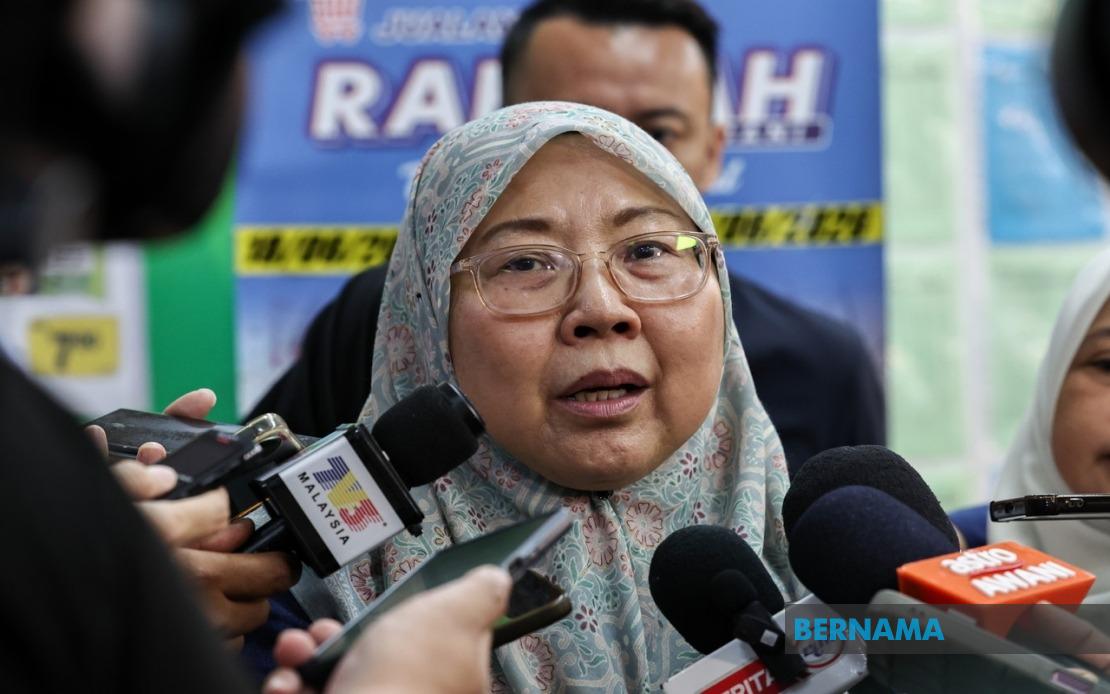
Malaysia's Ministry of Domestic Trade and Cost of Living (KPDN) has moved to allay concerns about potential supply disruptions in Johor and Negeri Sembilan as voters prepare for state elections, acknowledging that geopolitical tensions in West Asia have pushed global logistics costs higher but insisting that domestic supplies remain robust. Deputy Minister Datuk Dr Fuziah Salleh briefed journalists in Johor Bahru on June 19, outlining a comprehensive strategy designed to maintain uninterrupted availability of household staples and subsidised goods during the heightened demand period typically associated with electoral campaigns.
The ministry's approach centres on a restructured distribution mechanism for subsidised packet cooking oil, a politically sensitive commodity in Malaysia given its importance to household budgets and cost-of-living sentiment. Under the new arrangement, cooking oil moves directly from repackers to retail points of sale, bypassing the traditional wholesaler tier that historically introduces delays and inefficiencies. This streamlined pathway aims to reduce bottlenecks while ensuring that supply chains remain transparent and controllable, a critical consideration when subsidised goods are involved.
Johor's monthly cooking oil allocation has remained steady at over 3,000 metric tonnes, managed through a network of 18 repackers and distributed to 95 points of sale nationwide. This distributed model includes major supermarket chains such as Econsave, where ministry officials conducted an inspection to verify stock levels. The deputy minister reported observing approximately 100 cartons of subsidised cooking oil available daily at the Taman Daya outlet, suggesting that retail availability is meeting ordinary demand without strain.
Beyond logistics, the ministry has implemented stringent verification protocols at retail checkouts to ensure that subsidised goods benefit only eligible Malaysian citizens. App-based scanning and MyKad identity card verification create a two-layer screening mechanism designed to prevent leakages to non-citizens or unauthorized resellers. Such measures reflect growing awareness that subsidised commodity schemes can become targets for arbitrage or smuggling if oversight is insufficient, particularly during periods when demand surges and enforcement attention may be diverted.
The scale of the Rahmah MADANI Sales Programme (PJRM), a broader government initiative to support household affordability, illustrates the administration's commitment to cost-of-living interventions. Between January 1 and June 13, 2026, the programme has staged 13,692 events nationally, with Johor accounting for 920 sessions distributed across all 56 state constituencies. These events have attracted 2.3 million visitors within the state and generated more than 1.46 million transactions, figures that underscore public demand for discounted essential goods and the political salience of affordability messaging during electoral periods.
The timing of these supply-chain assurances is not coincidental. Johor's state election has been scheduled for July 11, with early voting set for July 7 and candidate nominations falling on June 27. This compressed timeline means that the state will experience overlapping cycles of electoral activity, campaign travel, and government business, all of which historically increase demand for subsidised goods and can create perception of shortages if communication about availability is poor. By positioning the ministry as proactive and well-prepared, KPDN aims to prevent panic buying or social media narratives of scarcity.
The geopolitical context adds a further dimension. Escalating logistics costs stemming from the West Asia conflict have affected shipping rates and freight charges across global supply chains, pressures that Malaysia's open, import-dependent economy cannot fully insulate against. The ministry's acknowledgement of these headwinds demonstrates candour about external constraints while simultaneously affirming that domestic strategic reserves and partnerships with local repackers have provided sufficient buffer against international price volatility. This balancing act—admitting external challenges whilst projecting confidence in local resilience—serves dual audiences: consumers seeking reassurance and investors assessing macroeconomic stability.
For Malaysia's broader economic management, the emphasis on direct distribution and anti-leakage verification signals a shift towards tighter governance of subsidy programmes. Historically, cooking oil and other subsidised essentials have been vulnerable to smuggling across borders or diversion to commercial resellers, outcomes that inflate budget allocations without delivering intended benefits to households. The technological safeguards now in place—particularly app-based verification—suggest that the government is attempting to modernise its approach to targeted support, moving beyond blanket subsidies towards digitally verified distribution that can be monitored in near-real-time.
For Southeast Asian observers and policymakers, Malaysia's model of direct distribution coupled with identity verification offers a case study in how middle-income countries can sustain subsidy programmes in an era of fiscal constraints and rising commodity costs. The approach avoids the complete removal of price controls, which could provoke political backlash and hardship among lower-income households, whilst simultaneously attempting to limit fiscal leakage and unintended beneficiaries. Whether such measures will prove durable beyond the electoral cycle remains an open question, but their deployment ahead of state polls reflects a governing priority on affordability and supply security.
The ministry's public commitment to stable cooking oil supplies also carries implications for consumer confidence and inflation expectations. Messaging about sufficient stocks and robust distribution networks can moderate demand pressures and discourage hoarding, behaviours that would otherwise be self-fulfilling generators of shortage. As Malaysia navigates a complex external environment characterised by geopolitical tensions and logistics disruptions, the government's willingness to make explicit public commitments about essential good availability suggests an assessment that transparency and proactive communication will prove more effective than allowing supply concerns to fester in public discourse.

%22%2F%3E%3C%2Fpattern%3E%3C%2Fdefs%3E%3Crect%20width%3D%22100%25%22%20height%3D%22100%25%22%20fill%3D%22url(%23ph523ndg)%22%2F%3E%3Crect%20width%3D%22100%25%22%20height%3D%22100%25%22%20fill%3D%22url(%23ph523ndp)%22%2F%3E%3Ctext%20x%3D%2250%25%22%20y%3D%2250%25%22%20text-anchor%3D%22middle%22%20dominant-baseline%3D%22central%22%20fill%3D%22rgba(255%2C255%2C255%2C0.95)%22%20font-family%3D%22Georgia%2C%20'Times%20New%20Roman'%2C%20serif%22%20font-weight%3D%22700%22%20font-size%3D%22272%22%20letter-spacing%3D%22-0.02em%22%3EAnwar%3C%2Ftext%3E%3C%2Fsvg%3E)