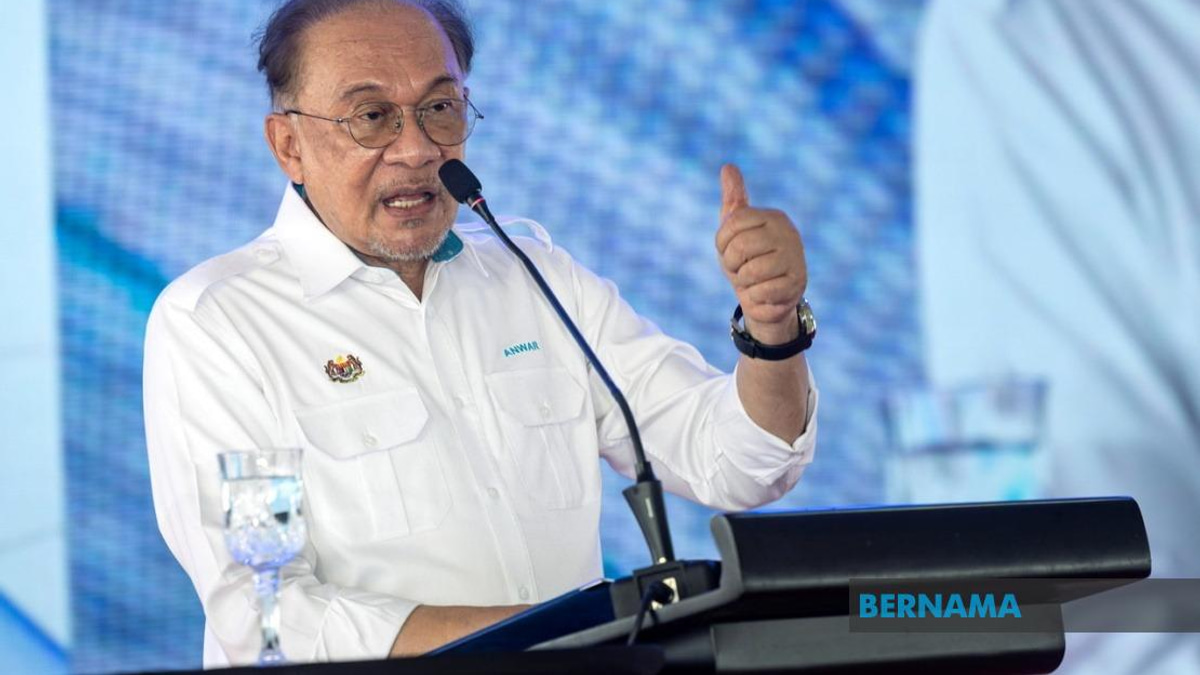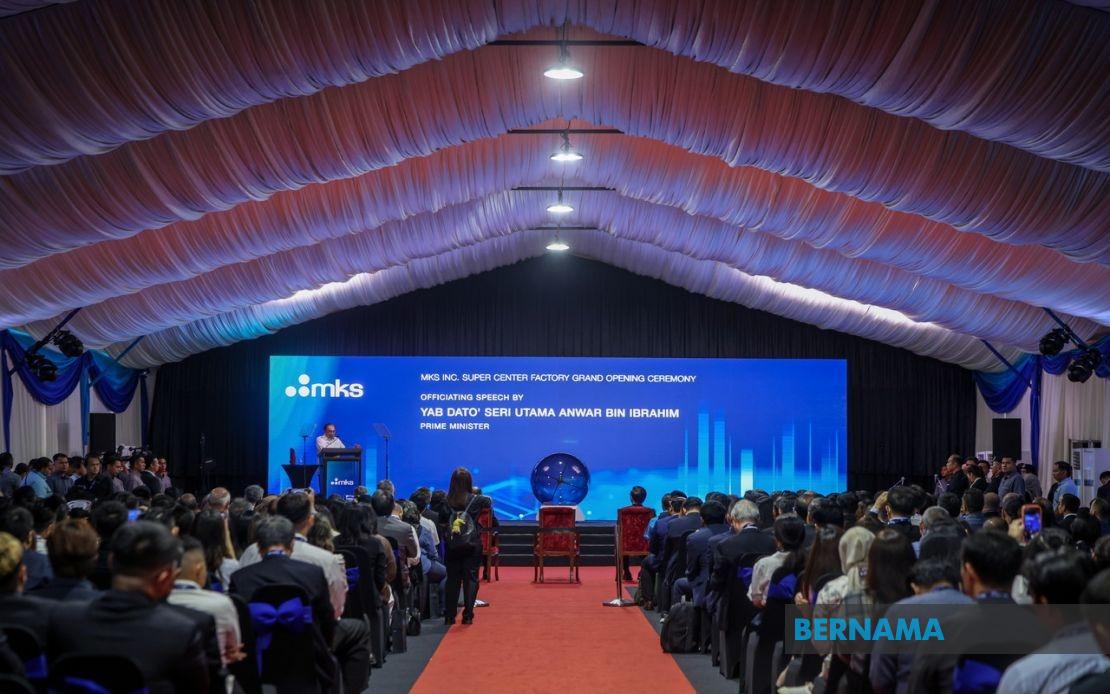
Prime Minister Datuk Seri Anwar Ibrahim has articulated a compelling case for Malaysia's middle-power diplomacy, arguing that the nation's deliberate policy of maintaining equidistance from competing global powers while staying fiercely independent has become a strategic asset in an increasingly fractious international environment. Speaking at the opening of the MKS Super Centre factory in Bandar Cassia Technology Park in Penang on June 20, Anwar underscored how this approach has translated into concrete economic gains, positioning Malaysia as a reliable and attractive partner for nations across every corner of the geopolitical compass.
The Prime Minister's remarks carry particular weight given the complex global backdrop against which Malaysia operates. Rather than being forced to choose sides in the ongoing strategic competition between major powers, Malaysia has crafted a foreign policy doctrine that permits simultaneous engagement with the United States, China, India, Russia, and others. This flexibility has proven invaluable in an era when bloc-based thinking threatens to fracture global trade and investment flows. Anwar pointed specifically to Malaysia's ability to maintain strong bilateral relationships across ideologically disparate nations as evidence that the country's centrist positioning remains not merely defensible but advantageous.
Among the tangible manifestations of this balanced approach is the recent agreement secured by Petronas, Malaysia's national oil and gas conglomerate, in Turkmenistan. This transaction exemplifies how Malaysia's non-aligned posture creates pathways for energy cooperation that might otherwise remain inaccessible to nations that have taken more pronounced geopolitical stances. For a resource-dependent economy like Malaysia, such agreements in hydrocarbon sectors are particularly significant, as they diversify revenue streams and reduce reliance on any single market or supplier relationship.
The Prime Minister's reference to significant engagements with the Trump administration—including a visit to Malaysia by the then-sitting US President—demonstrates the breadth of Malaysia's diplomatic reach. Simultaneously, maintaining robust ties with China and India, the region's two demographic and economic giants, requires sophisticated statecraft and an unwavering commitment to principles of respect and reciprocity rather than ideological alignment. Anwar's framing of Malaysia as occupying a position of "centrality" in global affairs reflects a deliberate articulation of soft power, suggesting that smaller nations which resist pressure to align can actually derive greater leverage from their independence.
This economic payoff from neutrality carries implications that extend well beyond bilateral transactions. When multinational corporations assess where to invest, manufacture, or establish regional hubs, political stability and diplomatic accessibility matter substantially. A nation perceived as stable and welcoming to business partners from all quarters becomes an attractive location for foreign direct investment. The MKS factory opening itself—with the presence of Penang Chief Minister Chow Kon Yeow and Deputy Minister of Investment, Trade and Industry Sim Tze Tzin—underscores how states and federal authorities are leveraging Malaysia's diplomatic positioning to attract manufacturing and technology ventures.
For Southeast Asia more broadly, Malaysia's approach carries instructive lessons. The region faces persistent pressure to take sides in great-power competition, yet countries that have historically derived prosperity from trade and investment thrive when they maintain their agency and refuse premature alignment. Malaysia's experience suggests that in an interconnected global economy, the capacity to mediate between interests and serve as a bridge between different systems can be economically advantageous. This is particularly relevant as Southeast Asian nations navigate the complexities of US-China relations and attempt to preserve their own development trajectories.
Anwar's emphasis on Malaysia's willingness to "express our position in some of the more contentious issues affecting the world" while simultaneously welcoming "the participation of all" reveals a subtle but important aspect of the nation's diplomatic formula. Malaysia does not remain entirely silent on global concerns; rather, it articulates clear positions on matters of principle—whether humanitarian crises, international law, or regional security—without allowing those positions to isolate it from economically significant partnerships. This represents a mature form of diplomacy that rejects false binaries between principled action and pragmatic engagement.
The economic dimension of this strategy deserves particular scrutiny. In an era when supply chains remain increasingly complex and when protectionist pressures threaten free trade arrangements, nations that can credibly position themselves as neutral, stable, and business-friendly enjoy competitive advantages. Malaysia's track record of honouring contracts, maintaining transparent legal frameworks, and avoiding unpredictable political interference in commercial matters enhances its appeal to investors who might otherwise worry about reputational or financial risk from geopolitical entanglement.
Looking forward, the sustainability of Malaysia's neutral positioning will depend on several factors. The government must continue to demonstrate that its independence is genuine rather than rhetorical, resisting pressure from any quarter to modify its foreign policy in ways that would undermine credibility with other partners. Additionally, the economic benefits of this approach must be distributed sufficiently broadly that domestic constituencies perceive tangible improvements in employment, wages, and infrastructure. When citizens see their country attracting quality investment and generating employment through wise diplomacy, support for maintaining an independent course tends to remain robust.
Anwar's articulation of Malaysia's foreign policy at a moment of factory opening—a visible symbol of economic activity and job creation—connects abstract diplomatic principles to material welfare. This linkage is essential for maintaining public support for policies that might otherwise seem obscure or distant from daily life. By demonstrating that Malaysia's approach to global relations directly translates into factories being built, technology being transferred, and opportunities being created, the Prime Minister grounds his foreign policy vision in the concerns that matter most to ordinary Malaysians: employment, income, and economic security.

%22%2F%3E%3C%2Fpattern%3E%3C%2Fdefs%3E%3Crect%20width%3D%22100%25%22%20height%3D%22100%25%22%20fill%3D%22url(%23ph523ndg)%22%2F%3E%3Crect%20width%3D%22100%25%22%20height%3D%22100%25%22%20fill%3D%22url(%23ph523ndp)%22%2F%3E%3Ctext%20x%3D%2250%25%22%20y%3D%2250%25%22%20text-anchor%3D%22middle%22%20dominant-baseline%3D%22central%22%20fill%3D%22rgba(255%2C255%2C255%2C0.95)%22%20font-family%3D%22Georgia%2C%20'Times%20New%20Roman'%2C%20serif%22%20font-weight%3D%22700%22%20font-size%3D%22272%22%20letter-spacing%3D%22-0.02em%22%3EAnwar%3C%2Ftext%3E%3C%2Fsvg%3E)