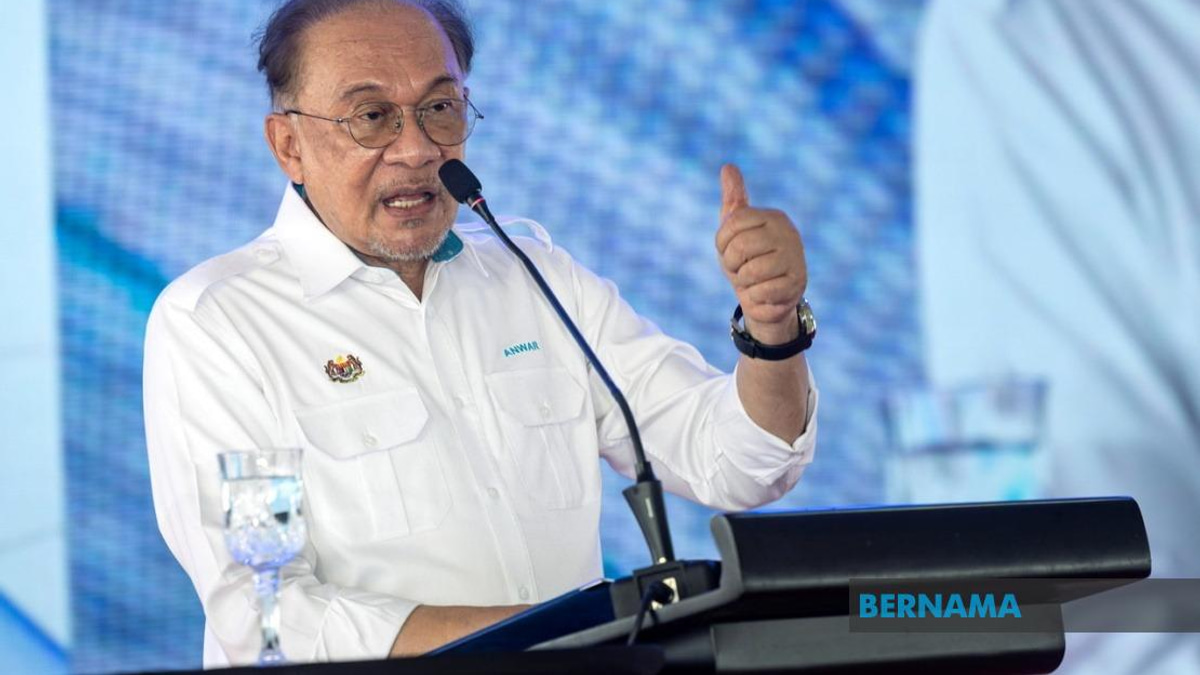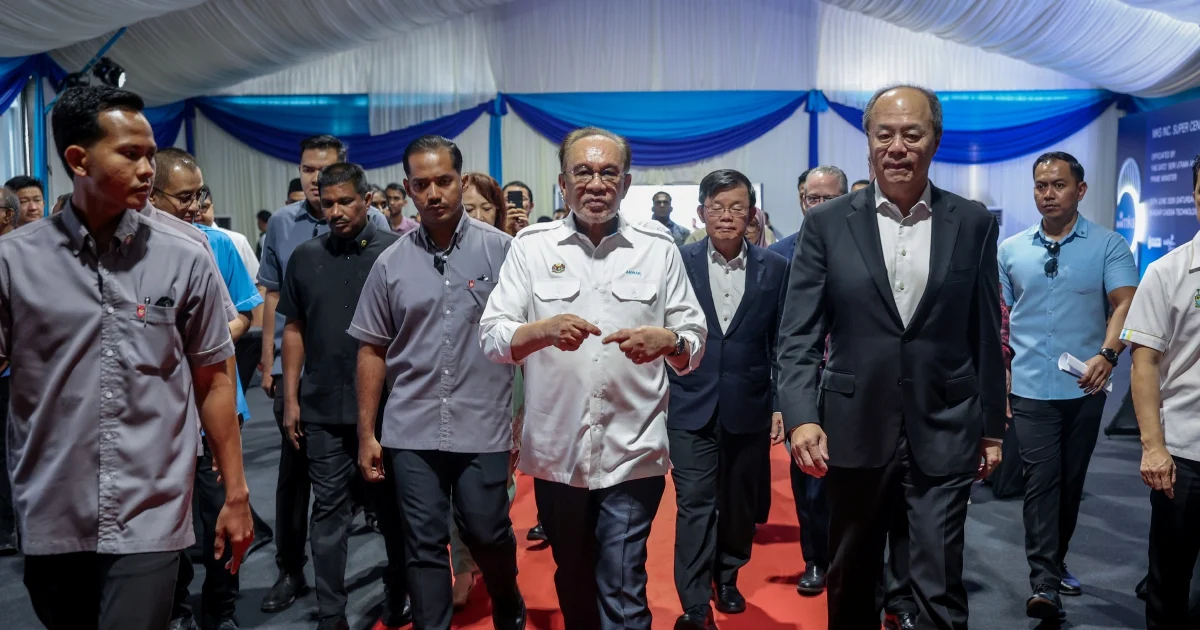
Prime Minister Datuk Seri Anwar Ibrahim has highlighted Malaysia's distinctive position as a non-aligned nation capable of maintaining constructive relationships across major global powers, asserting that this diplomatic posture is becoming an increasingly valuable asset in attracting foreign investment and sustaining economic momentum. Speaking in Batu Kawan, Anwar underscored how the country's commitment to independence and selective engagement—rather than alignment with particular blocs—creates a stable, predictable environment that multinational corporations and institutional investors find appealing when evaluating new markets and expansion opportunities.
The Prime Minister's remarks reflect a strategic shift in how Malaysia is positioning itself in the context of growing geopolitical tensions between major powers, particularly the United States and China. Rather than being forced to choose sides in escalating strategic rivalries, Malaysia is leveraging its geographic centrality within Southeast Asia and its historical track record of pragmatic, principled neutrality as competitive advantages in the investment marketplace. For regional policymakers and business leaders, this approach addresses a key concern: how to maintain economic openness and attract capital while preserving strategic autonomy.
Anwar's emphasis on investor confidence carries particular weight given Malaysia's recent economic challenges and its need to sustain growth momentum in a slowdown environment. Foreign direct investment flows have been crucial to maintaining employment, generating export revenue, and supporting technological transfer in critical sectors including semiconductors, manufacturing, and digital services. By articulating a clear diplomatic philosophy that welcomes partnership with all nations, the Malaysian government is signalling to potential investors that the country will not suddenly impose restrictions or sanctions based on external political pressures.
The credibility of Malaysia's neutrality position rests on decades of non-aligned movement history and consistent policy application. Unlike some Southeast Asian neighbours who have faced accusations of leaning toward particular powers, Malaysia has cultivated relationships across the spectrum: maintaining robust trade ties with China, deepening defence partnerships with Western allies including the United States and Australia, and strengthening economic collaboration with regional peers. This multifaceted approach has insulated Malaysia from being viewed as a proxy for any single power's interests in the region.
From a business perspective, Malaysia's diplomatic equilibrium translates into reduced geopolitical risk premiums that might otherwise discourage investment. Companies evaluating sites for manufacturing plants, regional headquarters, or research facilities typically factor in political stability, regulatory consistency, and the likelihood of sudden foreign policy shifts that could disrupt operations. Nations perceived as overly dependent on or aligned with particular superpowers face higher perceived risk, which can translate into lower valuations and more cautious capital allocation decisions. Malaysia's track record of independent decision-making mitigates these concerns.
The semiconductor industry, one of Malaysia's most valuable sectors, exemplifies the practical advantages of this balanced approach. Malaysia hosts advanced manufacturing facilities and research operations for both American and Asian chip producers, operating as a trusted hub because customers from multiple jurisdictions feel confident their technology and operations will not become collateral damage in great power competition. Disrupting this neutrality could immediately threaten jobs, supply chain integration, and Malaysia's position as a global semiconductors centre.
Anwar's messaging also addresses anxieties among Southeast Asian investors and regional partners who have watched other nations in the Indo-Pacific region face economic consequences or strategic isolation after perceived shifts in alignment. By reaffirming Malaysia's commitment to engaging all powers, the government is reassuring domestic constituencies and neighbouring countries that the nation will not become a liability or flashpoint in wider international conflicts. This reassurance supports regional stability and maintains the conditions necessary for cross-border commerce and investment flows within ASEAN.
The international business community, particularly asset managers and institutional investors evaluating emerging market exposure, has responded positively to Southeast Asian countries that maintain credible non-aligned positions. Funds managing billions in capital have explicitly cited political stability and diplomatic pluralism as investment criteria, particularly in sectors with long time horizons such as infrastructure and industrial development. Malaysia's articulation of this position therefore has measurable consequences for capital flows and the cost of borrowing for government and corporate debt.
However, maintaining genuine neutrality in an era of intensifying great power competition presents persistent challenges. Pressures from Beijing and Washington to demonstrate alignment have been increasing across Southeast Asia, and Malaysia will need to demonstrate consistent application of its principles even when facing incentives to shift. The test will come in moments of acute geopolitical tension, where neutrality becomes expensive or inconvenient. Previous Malaysian governments have successfully navigated such periods, but each new crisis requires renewed political commitment and skilled diplomacy.
Looking ahead, Malaysia's investors will be monitoring whether the government's diplomatic messaging translates into sustained policy action across trade negotiations, technology standards adoption, and security arrangements. The credibility of neutrality depends not on rhetoric alone but on demonstrable decisions that reflect the stated principles. If Malaysia can maintain this balance while gradually upgrading its technological capabilities and business environment through the next decade, the country's non-aligned position could evolve into a more valuable strategic asset as global competition intensifies and multinational investors seek refuge from binary geopolitical choices.
Anwar's emphasis on investor confidence through balanced engagement therefore represents more than diplomatic positioning; it articulates an economic strategy for a medium-sized Asian nation seeking to punch above its weight in attracting capital, talent, and technological capability in an increasingly fractured global economy.

%22%2F%3E%3C%2Fpattern%3E%3C%2Fdefs%3E%3Crect%20width%3D%22100%25%22%20height%3D%22100%25%22%20fill%3D%22url(%23ph523ndg)%22%2F%3E%3Crect%20width%3D%22100%25%22%20height%3D%22100%25%22%20fill%3D%22url(%23ph523ndp)%22%2F%3E%3Ctext%20x%3D%2250%25%22%20y%3D%2250%25%22%20text-anchor%3D%22middle%22%20dominant-baseline%3D%22central%22%20fill%3D%22rgba(255%2C255%2C255%2C0.95)%22%20font-family%3D%22Georgia%2C%20'Times%20New%20Roman'%2C%20serif%22%20font-weight%3D%22700%22%20font-size%3D%22272%22%20letter-spacing%3D%22-0.02em%22%3EAnwar%3C%2Ftext%3E%3C%2Fsvg%3E)