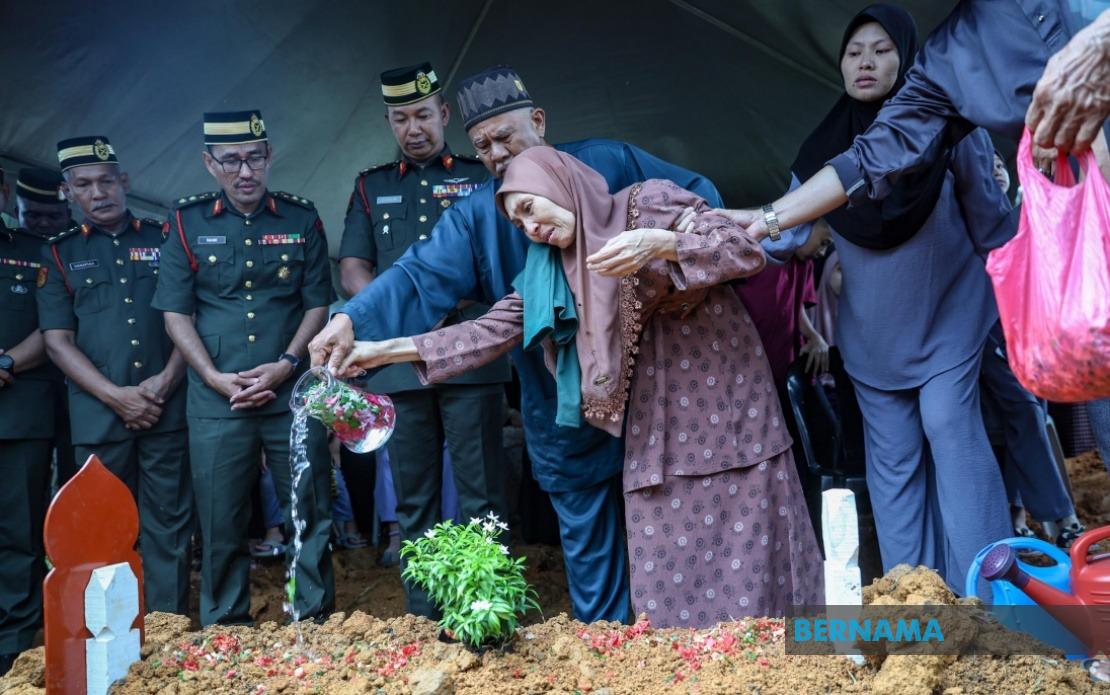
Private Siti Khadijah Sungip, 24, was laid to rest at Taman Sri Lambak Muslim Cemetery in Kluang on Wednesday afternoon, bringing a formal close to the funeral proceedings following her death during a grenade-throwing exercise at Hobart Camp in Gurun, Kedah. The burial took place at 1.15 pm, drawing military personnel, family members, and friends to pay their respects to the young soldier who lost her life in what has become a significant incident within Malaysia's armed forces.
The atmosphere at the cemetery reflected the gravity of the circumstances surrounding her death. Mourners gathered as her coffin was laid to rest, with the ceremony conducted according to Islamic rites. Among those present were representatives from the Malaysian Army and the Royal Engineer Regiment, underscoring the formal military nature of the proceedings. Her father, Sungip Jais, 65, received the symbolic handing over of the Jalur Gemilang—Malaysia's national flag—from Brigadier General Datuk Zulhelmy Masdar, Commander of the 7th Brigade at the Mahkota Camp in Kuala Lumpur. This gesture, deeply rooted in Malaysian military tradition, honours fallen soldiers and their families.
The tragedy unfolded on Tuesday morning at 10.57 am when Private Siti Khadijah and Corporal Norazmi Abu Bakar were engaged in training involving explosive devices at the target range within Hobart Camp. The explosion that followed during the grenade-throwing exercise resulted in severe injuries to both personnel. Despite emergency medical intervention, both soldiers were pronounced dead en route to Sultan Abdul Halim Hospital in Sungai Petani, Kedah, within hours of the incident. The rapid succession of deaths highlighted the severity of the blast and the critical nature of their injuries.
Private Siti Khadijah's body underwent post-mortem examination at Sultanah Bahiyah Hospital in Alor Setar, with the procedure completed early Wednesday morning at approximately 2.30 am. Following the autopsy, her remains were transported back to her family home in Taman Sri Lambak, arriving at 12.10 pm. She was accompanied during this journey by First Field Troop Leader Lieutenant Muhammad Lutfil Hadi Osman and four members from the First Squadron of the Royal Engineer Regiment based at Sangro Camp in Taiping, Perak, demonstrating the formal military escort afforded to fallen service members.
Before her burial, Private Siti Khadijah's body was brought to Darul Iman Mosque, where funeral prayers were conducted according to Islamic custom. Major Mohd Azlan Shah Abdul Razak from the Malaysian Army's Field Engineering Institute led the funeral prayer service, providing spiritual comfort to the bereaved family during this difficult period. The mosque gathering allowed extended family, military colleagues, and community members to participate in the final religious rites before her interment.
Corporal Norazmi Abu Bakar, the second fatality in the incident, served with the Sixth Battalion of the Royal Malay Regiment. Both soldiers were undergoing routine training at the time of the accident, raising questions about safety protocols during high-risk military exercises in Malaysia. The incident represents a tragic loss within the Malaysian armed forces and has drawn attention to the inherent dangers faced by personnel training with explosive materials and ordnance.
Private Siti Khadijah's service in the Royal Engineer Regiment placed her in a specialised unit responsible for critical military engineering tasks and operations. Her role as part of the First Squadron demonstrated her commitment to serving her country, and her death at such a young age underscores the genuine risks that military personnel undertake during their service. The Malaysian Army has acknowledged the incident publicly, confirming the details of both victims and the circumstances surrounding their deaths.
The incident at Hobart Camp, located in Gurun, Kedah, has sparked broader considerations regarding military training safety across Southeast Asia. Armed forces throughout the region conduct similar explosive ordnance training, and accidents of this nature, while relatively rare, carry profound consequences for the families and military communities affected. The tragedy serves as a sobering reminder of the commitments and sacrifices made by soldiers who volunteer to serve their nations.
For the Sungip family, the loss of Private Siti Khadijah represents an immeasurable personal tragedy. Her funeral reflected both military honour and familial grief, with the formal ceremonies acknowledging her service while providing the family space to mourn their loss. The presence of senior military officers and the presentation of the national flag to her father underscored the official recognition of her sacrifice and the respect accorded to fallen soldiers within Malaysian military tradition.
The incident raises important discussions within Malaysia's defence establishment regarding training protocols, safety measures, and the comprehensive support systems necessary for military personnel engaged in hazardous operations. While the exact cause of the explosion remains under investigation, the event has prompted reflection on how armed forces balance the necessity of realistic training with the imperative to protect the lives of service members. The deaths of Private Siti Khadijah and Corporal Norazmi Abu Bakar will likely inform future reviews of training procedures at military installations throughout the country.