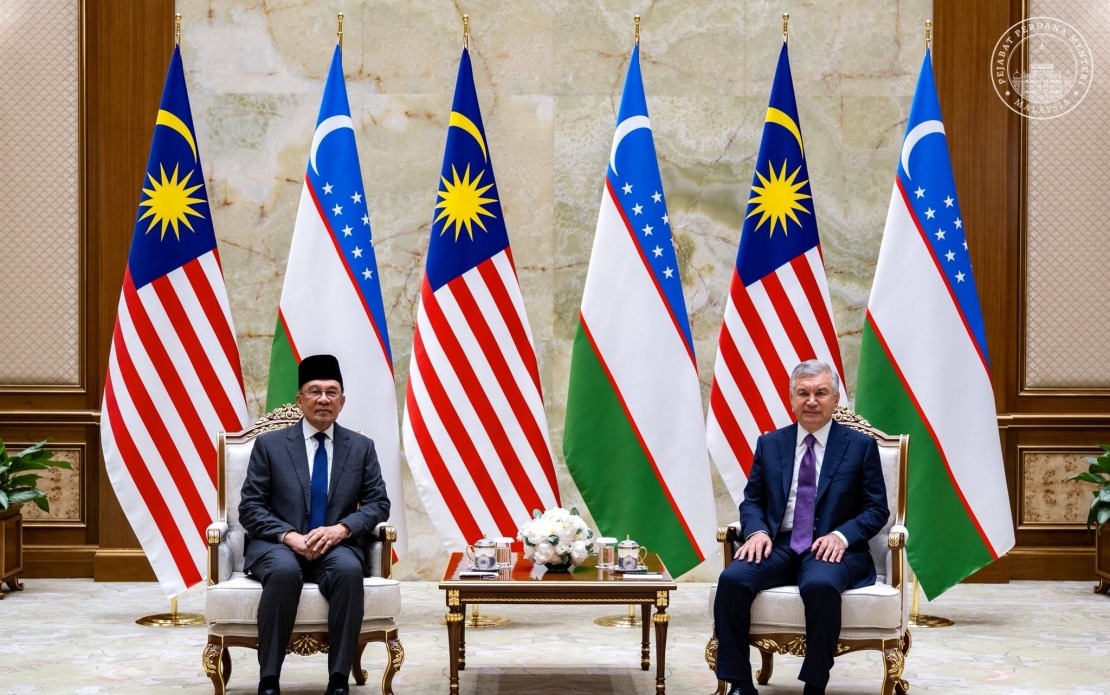
Prime Minister Datuk Seri Anwar Ibrahim has signalled Malaysia's readiness to deepen cooperation with Uzbekistan across multiple economic and cultural fronts, following a bilateral discussion with President Shavkat Mirziyoyev during a transit stop in Tashkent. The unscheduled meeting, which occurred as Anwar travelled to Kazan for the ASEAN-Russia Commemorative Summit on June 17-18, underscores the Malaysian government's commitment to expanding relationships beyond Southeast Asia and into Central Asia's emerging economic landscape.
The two leaders identified several promising areas for expanded engagement, with particular emphasis on the energy sector. Discussions centred on deepening collaboration in gas and petroleum industries, sectors where both nations possess complementary strengths and comparative advantages. For Malaysia, which continues to seek diverse energy partnerships beyond traditional suppliers, Uzbekistan's substantial hydrocarbon reserves and strategic location along Central Asian trade corridors present meaningful opportunities for long-term energy security and commercial benefit. Such arrangements would also align with Malaysia's broader agenda of securing stable, predictable energy supplies to fuel sustained economic growth.
Beyond commodities, the two leaders explored intensified trade and investment channels that could unlock significant economic value. Malaysia's sophisticated financial services sector and established trading infrastructure could serve as a gateway for Central Asian businesses seeking Asian market access, while Uzbekistan's position as Central Asia's most populous nation offers Malaysian companies potential expansion opportunities. The dialogue reflected a recognition that bilateral commerce remains underdeveloped relative to the nations' respective economic scales and geographic positioning, suggesting considerable untapped potential.
Education emerged as another critical pillar for strengthening people-to-people connections. Enhanced academic exchanges, scholarship programmes, and institutional partnerships between Malaysian and Uzbek universities could foster deeper understanding and create skilled workforces attuned to both nations' development priorities. Such educational cooperation typically produces enduring diplomatic dividends, cultivating generations of professionals with personal investment in bilateral relationships.
The halal industry discussion represents a particularly strategic convergence point. Malaysia's established position as a global halal certification and standards hub aligns naturally with Uzbekistan's Muslim-majority population and its aspirations for value-added agricultural and food processing sectors. Malaysia could provide technical expertise, certification frameworks, and market access assistance, positioning Uzbekistan to capitalise on growing global halal product demand while simultaneously expanding Malaysian halal industry influence into Central Asia.
Cultural and civilisational dimensions featured prominently in the leaders' exchange. Both nations sought to reinforce cooperation in preserving Islamic intellectual heritage and scholarly traditions, reflecting shared commitment to advancing knowledge and civilisational progress. This emphasis transcends transactional commerce, suggesting a deeper desire to build partnership rooted in common values and heritage. For Malaysia, engaging Uzbekistan on such grounds strengthens its positioning as a bridge between Islamic civilisation and the broader international community.
Anwar specifically highlighted tourism as a sector ripe for mutual benefit. Malaysia's mature tourism infrastructure and Uzbekistan's rich historical sites along the ancient Silk Road represent complementary assets. Expanded tourism cooperation could involve marketing collaborations, visa facilitation, and hospitality sector partnerships that would mutually amplify visitor flows and foreign exchange earnings for both nations.
The Prime Minister's comments underscore Malaysia's strategic recalibration toward Central Asia, a region historically peripheral to Southeast Asian foreign policy frameworks. This reorientation reflects evolving geopolitical and economic realities, with Central Asian nations increasingly important to regional stability, energy markets, and emerging trade architectures. Malaysia's engagement signifies recognition that contemporary prosperity and security depend upon relationships extending far beyond traditional regional boundaries.
Anwar's appreciation for Uzbekistan's commitment to strengthening ASEAN ties carries particular significance. It acknowledges Uzbekistan's role as a responsible regional actor actively seeking constructive engagement with Southeast Asia, creating mutual strategic benefits. Such cooperation contributes to broadening Asia's interconnected networks of development, preventing siloed regional frameworks, and building resilience through diversified partnerships.
The emphasis on equitable and inclusive development as an overarching cooperation framework reflects contemporary development philosophy emphasising human dignity and knowledge empowerment alongside economic metrics. This positioning suggests both nations view partnership not merely as zero-sum commercial transactions but as collaborative endeavour benefiting broader populations and contributing to sustainable, people-centred growth.
As Malaysia navigates complex geopolitical currents and pursues diverse economic partnerships, deepening engagement with Central Asian nations like Uzbekistan provides strategic hedging value. Such relationships diversify Malaysia's external partnerships, reduce dependency on any single power or region, and open new commercial and diplomatic pathways. For a medium-sized power seeking to maximise influence and prosperity, such multidirectional engagement proves essential.