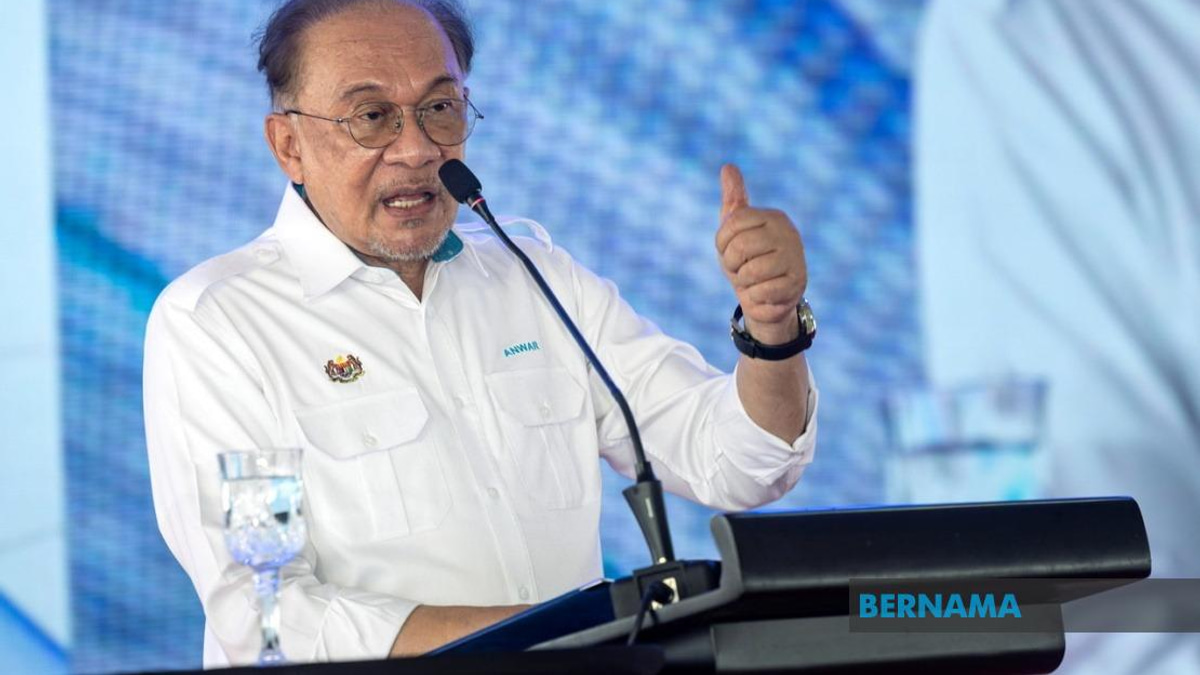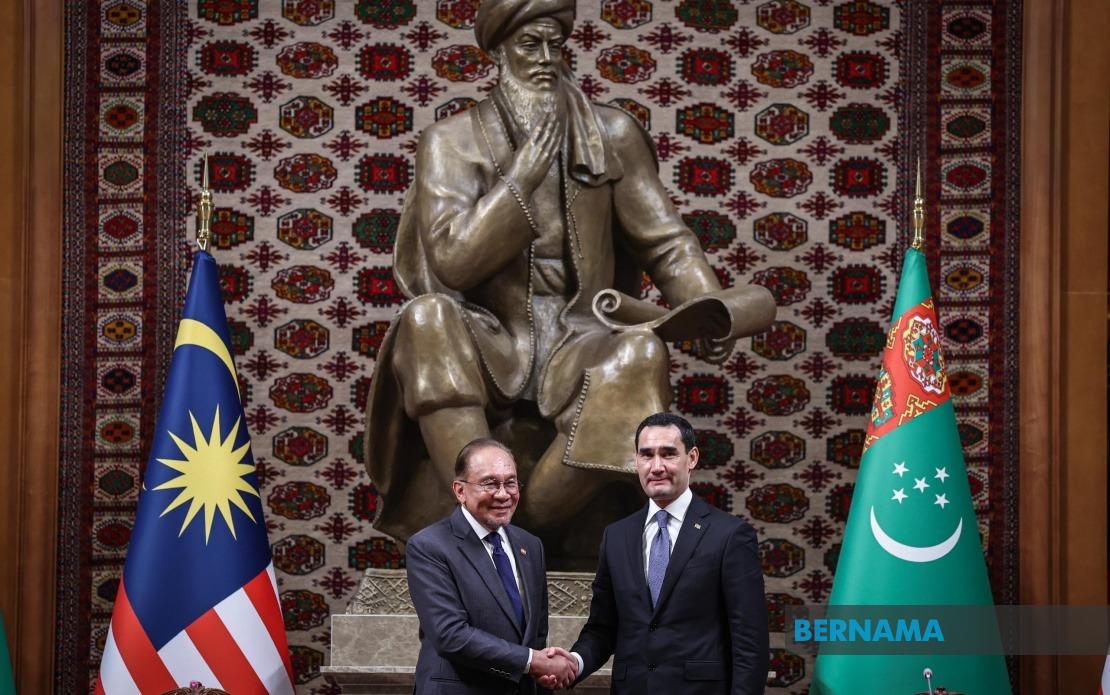
Prime Minister Datuk Seri Anwar Ibrahim has cemented Malaysia's commitment to building a more systematic and forward-looking relationship with Turkmenistan following productive discussions with President Serdar Berdimuhamedov in Ashgabat. The bilateral engagement, held at the Presidential Palace on Friday, resulted in the signing of multiple agreements and memoranda of understanding that aim to anchor cooperation across key economic and strategic sectors benefiting both nations. This visit represents Anwar's inaugural official trip to the Central Asian nation since he assumed office as Malaysia's 10th Prime Minister in November 2022.
The two leaders emphasised that their partnership would be grounded in clear strategic interests and tangible long-term advantages for their respective populations. During the meeting, Anwar and Berdimuhamedov underscored the importance of disciplined, transparent and efficient implementation of all cooperative initiatives, setting a high standard for governance of bilateral programmes. Both sides reaffirmed their mutual commitment to ensuring that agreements translate into concrete outcomes rather than remaining symbolic gestures. This emphasis on accountability reflects a maturation in how Malaysia approaches partnerships with non-traditional allies, particularly in regions beyond Southeast Asia where diplomatic engagement requires sustained institutional support.
The scope of cooperation unveiled during the visit spans multiple strategic domains. Energy emerges as a natural focus given Turkmenistan's status as a major natural gas producer, offering potential opportunities for Malaysian entities in exploration, technology transfer and downstream development. Trade and investment discussions signal Malaysia's interest in diversifying economic partnerships beyond traditional markets, while the halal industry dimension presents particular promise given Turkmenistan's Muslim-majority population and Malaysia's established credentials as a global halal hub. The inclusion of Islamic banking reflects growing recognition that financial services tailored to Sharia-compliant frameworks can facilitate deeper commercial ties in Central Asia.
Education, research and scientific collaboration form another pillar of the partnership framework. Malaysian universities and research institutions stand to benefit from knowledge exchanges with Turkmenistan's academic community, particularly in technical fields. Tourism cooperation could unlock opportunities for Malaysian tour operators and hospitality providers, while air connectivity improvements will reduce friction in people-to-people exchanges and business travel. These softer dimensions of engagement often prove more durable than purely economic arrangements, as they build grassroots familiarity and understanding between populations.
The formal documents exchanged during the visit provide the institutional architecture for implementing these ambitious plans. An Air Services Agreement between the two governments signals intentions to enhance direct flight links, potentially opening new routes that connect Malaysia's hub airports with Turkmenistan's aviation infrastructure. The agreement would likely facilitate greater frequency and flexibility in bilateral air transport, reducing travel times and costs for business professionals and tourists. Such connectivity improvements historically catalyse broader economic integration, as easier logistics lower transaction costs for traders and investors.
Diplomatic and scientific institutions from both countries signed their own memoranda, establishing formal channels for institutional dialogue. Malaysia's Institute of Diplomacy and Foreign Relations partnered with Turkmenistan's Institute of International Relations, creating a platform for regular exchanges among diplomats, analysts and policymakers. Similarly, the Academy of Sciences Malaysia aligned with Turkmenistan's Academy of Sciences to pursue collaborative research projects. These institutional partnerships tend to generate sustained engagement beyond individual governmental terms, as they embed cooperation into permanent bureaucratic structures.
The Ministry of Transport agreement signals infrastructure ambitions extending beyond aviation into broader transport connectivity, while the involvement of Malaysia's Ministry of Investment, Trade and Industry, represented by Datuk Seri Johari Abdul Ghani, underscores the economic dimensions of the visit. Economy Minister Akmal Nasrullah Mohd Nasir's presence alongside Anwar indicates comprehensive government commitment spanning both macroeconomic and sectoral considerations. This whole-of-government approach contrasts with narrower commercial missions and suggests Malaysia views Turkmenistan as strategically significant rather than peripheral.
For Malaysian readers, this partnership carries implications extending beyond bilateral relations. Turkmenistan's geographic position as a bridge between the Caucasus, Central Asia and the Middle East provides Malaysia with potential access to markets and investment opportunities across this geopolitically significant region. As Malaysia seeks to strengthen its non-aligned positioning and diversify its international partnerships, engagement with Central Asian nations helps counter perceptions of overdependence on traditional Western or East Asian relationships. This diversification strategy supports Malaysia's broader foreign policy objective of maintaining strategic autonomy in an increasingly multipolar world.
The Central Asian dimension also connects to broader Muslim world engagement. Turkmenistan's significant Muslim population creates natural affinities with Malaysia's Islamic credentials and halal industry leadership. Deepening cooperation here potentially positions Malaysia as a trusted partner for other Muslim-majority nations in Central Asia seeking to integrate into global halal value chains. The halal industry represents one of Malaysia's genuine competitive advantages internationally, and expanding its footprint into underserved markets like Turkmenistan multiplies commercial opportunities for Malaysian companies.
From an investment perspective, Malaysian firms involved in energy infrastructure, financial services and education technology could identify partnerships opportunities arising from these agreements. Conversely, Turkmenistan's energy resources and mineral wealth may attract Malaysian capital looking for diversification beyond Southeast Asia. The agreements create formal legitimacy and reduced uncertainty for private sector engagement, as they signal government-to-government backing for partnership initiatives. Companies can approach potential collaborators with confidence that bilateral frameworks support their ventures.
The timing of Anwar's visit, occurring well into his tenure as Prime Minister, reflects consolidation of his administration's foreign policy priorities. Unlike early-term visits often conducted for ceremonial purposes, this engagement demonstrates sustained strategic interest in expanding Malaysia's diplomatic footprint. The visit's comprehensive nature, involving multiple cabinet members and detailed sectoral discussions, indicates serious intent rather than performative diplomacy. This depth suggests Malaysia may be preparing for longer-term institutional engagement with Central Asian partners.
Looking forward, the real measure of success will lie in implementation. Memoranda and agreements often languish without dedicated resources, institutional champions and accountability mechanisms. The emphasis placed during the press conference on transparent and disciplined implementation suggests Malaysia's leadership recognises this implementation challenge. Sustained follow-up through joint committees, regular high-level reviews and measurable progress indicators will determine whether the Ashgabat commitments translate into tangible benefits for Malaysian businesses and citizens. The partnership framework established during Anwar's visit provides the foundation; execution will ultimately determine its value.

%22%2F%3E%3C%2Fpattern%3E%3C%2Fdefs%3E%3Crect%20width%3D%22100%25%22%20height%3D%22100%25%22%20fill%3D%22url(%23ph523ndg)%22%2F%3E%3Crect%20width%3D%22100%25%22%20height%3D%22100%25%22%20fill%3D%22url(%23ph523ndp)%22%2F%3E%3Ctext%20x%3D%2250%25%22%20y%3D%2250%25%22%20text-anchor%3D%22middle%22%20dominant-baseline%3D%22central%22%20fill%3D%22rgba(255%2C255%2C255%2C0.95)%22%20font-family%3D%22Georgia%2C%20'Times%20New%20Roman'%2C%20serif%22%20font-weight%3D%22700%22%20font-size%3D%22272%22%20letter-spacing%3D%22-0.02em%22%3EAnwar%3C%2Ftext%3E%3C%2Fsvg%3E)