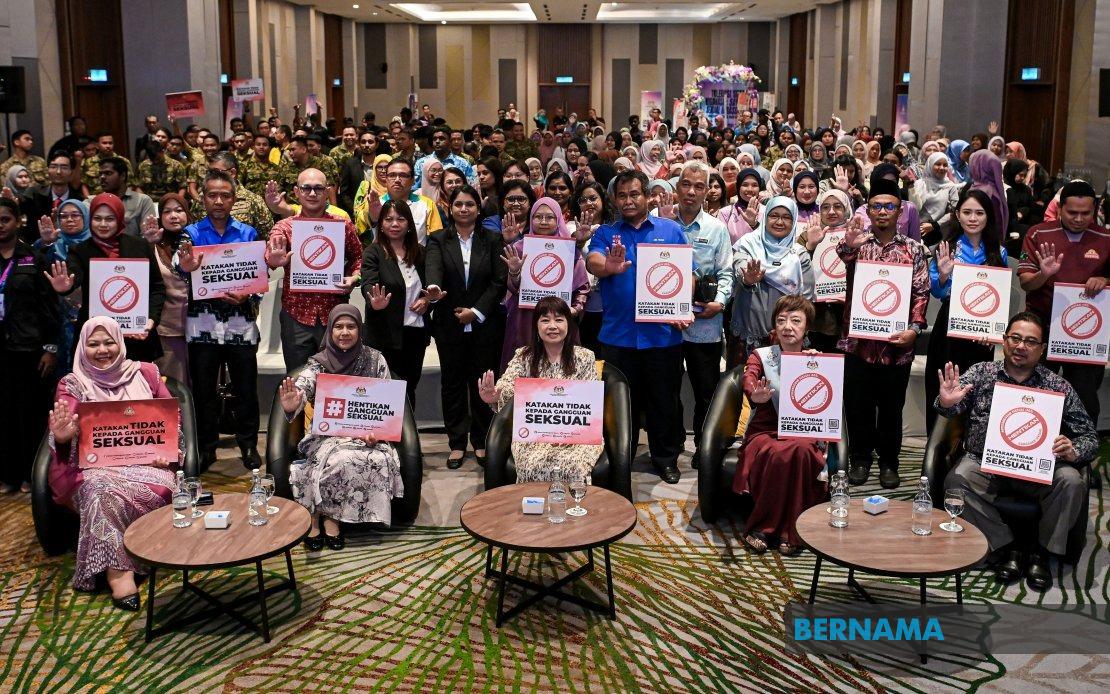
The Ministry of Women, Family and Community Development has documented 388 cases of sexual harassment during the first five months of 2024, marking a continuation of the rising trajectory observed in recent years. Deputy Minister Lim Hui Ying revealed the statistics in Port Dickson on June 18, providing fresh insight into the scope of the problem facing Malaysian society. The figures, compiled from Royal Malaysia Police records, underscore the persistent challenge of workplace misconduct and interpersonal violence affecting individuals across the nation.
Data trends present a striking picture of escalating reports over the past two years. Police statistics demonstrate a significant jump from 477 recorded cases in 2022 to 1,038 cases in 2023, nearly doubling the volume within a single year. While the raw numbers might initially suggest a worsening problem, Lim offered crucial perspective on what the figures actually represent. The Deputy Minister cautioned against viewing the increase solely as evidence of rising prevalence, instead emphasising that the uptick reflects a fundamental shift in social dynamics and victim behaviour.
A more nuanced understanding of the data reveals that heightened reporting reflects positive momentum in breaking down the traditional silence surrounding sexual harassment. Victims and communities increasingly demonstrate courage in coming forward with complaints, representing a cultural transition away from normalisation and towards accountability. This willingness to report represents progress in empowering individuals who previously might have suffered in isolation due to fear, shame or social pressure. The ministry interprets the rise as validation of awareness campaigns and support mechanisms that have encouraged disclosure rather than passive acceptance.
The profile of harassment cases illuminates key patterns within Malaysian workplaces and family structures. Most incidents occur in occupational settings, where power imbalances and proximity create conditions conducive to misconduct. Significantly, many perpetrators maintain family or personal relationships with victims, complicating the dynamics of reporting and response. This relational dimension creates psychological barriers that prevent disclosure. Victims frequently suppress complaints due to concerns about career consequences, family rupture or social shame, meaning the documented 388 cases represent only a fraction of actual incidents occurring behind closed doors.
Gender dimensions of sexual harassment in Malaysia reveal both expected and surprising patterns. While women constitute the majority of recorded victims, the Deputy Minister highlighted that men also experience harassment, albeit in smaller numbers. This acknowledgement addresses a frequently overlooked dimension of the issue, challenging assumptions that sexual misconduct exclusively affects women. The relatively low reporting rate among male victims suggests additional stigma and reluctance to come forward, indicating that comprehensive prevention strategies must account for diverse victim populations.
Institutional mechanisms designed to facilitate justice have demonstrated measurable effectiveness. The Tribunal for Anti-Sexual Harassment (TAGS), established to provide expedited resolution, has received 100 complaints as of mid-June. The tribunal's performance metrics are encouraging, with 82 cases resolved within 60 days of initial hearing, substantially accelerating access to justice compared to traditional court proceedings. This rapid turnaround represents meaningful progress in reducing the protracted stress victims typically endure during lengthy litigation processes.
The Deputy Minister articulated a comprehensive vision of sexual harassment as a grave violation extending beyond immediate harm. Such misconduct undermines victim dignity, compromises emotional wellbeing and degrades overall quality of life. Lim stressed that normalisation of harassment within any sector of society represents a failure of collective responsibility and values. The framing positions sexual harassment not merely as individual wrongdoing but as a systemic problem requiring comprehensive societal response rather than isolated institutional interventions.
Government advocacy initiatives extend beyond complaint mechanisms to encompass broader prevention frameworks. The ministry is implementing Women, Peace and Security advocacy programming aligned with the National Action Plan 2025–2030, integrating gender considerations into security and development priorities. This alignment reflects recognition that gender-based violence fundamentally undermines peace and stability, justifying placement within national security frameworks alongside traditional defence concerns. The approach acknowledges that comprehensive security must address threats emanating from within communities and institutions.
The Deputy Minister emphasised that unaddressed harassment at early stages frequently escalates into more severe manifestations of violence. Failure to intervene during initial incidents permits normalisation and emboldening of perpetrators, potentially triggering progression toward physical assault and additional crimes. This progression pathology justifies early intervention and prevention strategies as cost-effective approaches to broader violence prevention. Early education addressing respect, consent and workplace norms functions as foundational prevention architecture.
Building a zero-tolerance culture requires distributed responsibility across multiple sectors. Parents bear responsibility for instilling respect in children; educators must incorporate relevant content into curriculum; employers must establish clear policies and enforcement mechanisms; colleagues must intervene when witnessing misconduct; and students must internalise values of dignity and respect. This distributed accountability framework moves beyond assigning responsibility exclusively to government bodies or law enforcement. Effective prevention demands that every social institution and individual recognises their role in establishing and maintaining standards.
The support infrastructure available to victims has expanded substantially to address immediate needs. Talian Kasih 15999 provides 24-hour counselling and psychosocial support through a dedicated hotline, ensuring accessibility during crisis moments. Local social support centres supplement national services with community-based assistance, recognising that proximity and cultural familiarity facilitate disclosure and healing for some populations. These integrated channels reflect recognition that different victim populations may feel more comfortable accessing support through different modalities.
The ministry's emphasis on courage as a prerequisite for disclosure acknowledges the personal risk undertaken when victims come forward. Speaking publicly about harassment invites scrutiny, blame, and potential retaliation from perpetrators and social networks. The call for stronger support systems reflects understanding that victims require assurance of protection and belief from institutions before taking these risks. Without institutional commitment to victim protection and perpetrator accountability, expectations for reporting remain unrealistic.
For Malaysian society, the challenge ahead involves sustaining momentum in both reporting and prevention while addressing the systemic conditions permitting harassment. The figures released by Lim Hui Ying represent both progress in disclosure and continuing evidence of widespread misconduct. Whether the upward trajectory continues or plateaus will reflect the effectiveness of prevention initiatives and institutional reforms in removing both perpetrators' opportunities and victims' obstacles to reporting.

%22%2F%3E%3C%2Fpattern%3E%3C%2Fdefs%3E%3Crect%20width%3D%22100%25%22%20height%3D%22100%25%22%20fill%3D%22url(%23ph523ndg)%22%2F%3E%3Crect%20width%3D%22100%25%22%20height%3D%22100%25%22%20fill%3D%22url(%23ph523ndp)%22%2F%3E%3Ctext%20x%3D%2250%25%22%20y%3D%2250%25%22%20text-anchor%3D%22middle%22%20dominant-baseline%3D%22central%22%20fill%3D%22rgba(255%2C255%2C255%2C0.95)%22%20font-family%3D%22Georgia%2C%20'Times%20New%20Roman'%2C%20serif%22%20font-weight%3D%22700%22%20font-size%3D%22272%22%20letter-spacing%3D%22-0.02em%22%3EAnwar%3C%2Ftext%3E%3C%2Fsvg%3E)