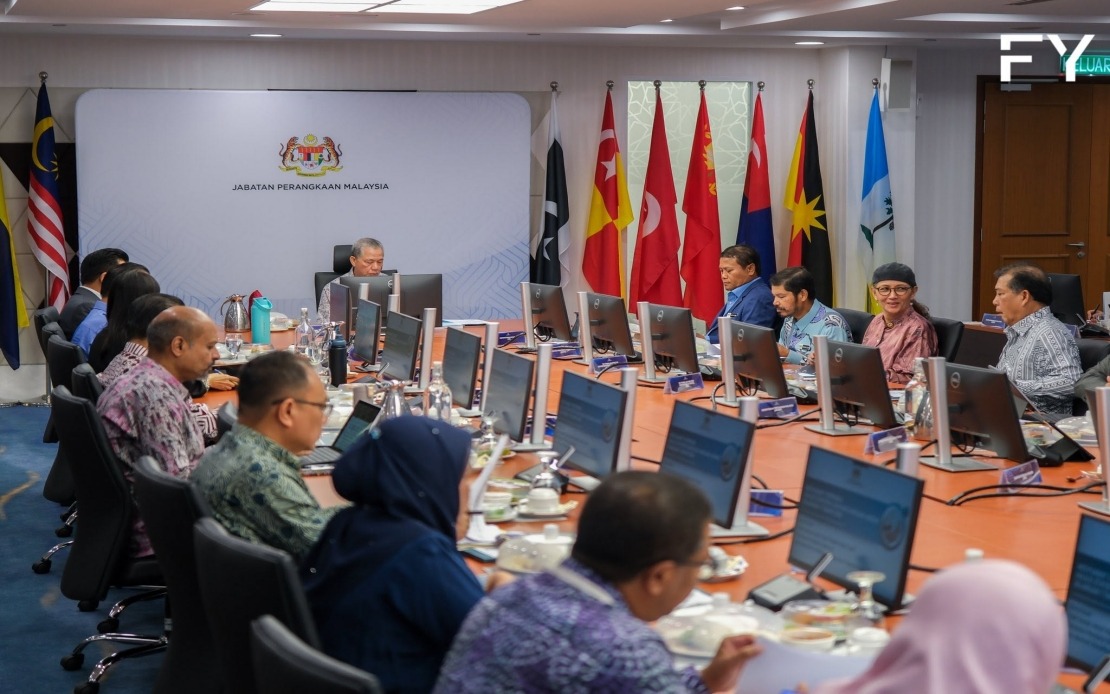
Malaysia's government is placing data infrastructure and artificial intelligence capabilities at the centre of its strategic planning framework as it prepares for the implementation of the 13th Malaysia Plan covering 2026-2030. Deputy Prime Minister Datuk Seri Fadillah Yusof has articulated this priority as essential to navigating an increasingly complex global environment marked by economic volatility, geopolitical realignments, accelerating digital transformation, climate imperatives and rapid technological change. The positioning of data and statistics as foundational pillars of decision-making represents a significant recalibration of how Malaysia's federal government intends to develop and execute policy over the coming five years.
Fadillah's remarks, delivered following a high-level meeting of the National Statistics and Data Council, stress that information has transcended its traditional informational role to become a strategic asset in its own right. This reframing reflects growing international recognition that governments lacking sophisticated data capabilities and analytical depth face disadvantages in responding to contemporary challenges. For Malaysia, a middle-income economy seeking to deepen its regional and global competitiveness, the quality, timeliness and integrity of statistical information directly influences whether policies deliver tangible benefits to citizens or miss their intended targets.
The 13MP's success hinges substantially on the ability of Malaysian policymakers to monitor implementation in real time, evaluate programmes against predetermined outcomes and adjust course when necessary. Comprehensive data collection and analysis enables this feedback loop. Without reliable statistics underpinning each stage of the policy cycle—from initial conception through design, execution, monitoring and final assessment—even well-intentioned initiatives risk inefficient resource deployment or unintended consequences. Fadillah has explicitly linked this data imperative to the government's track record, citing first-quarter 2026 gross domestic product expansion of 5.4 per cent as tangible evidence that data-informed development strategies generate measurable results.
Integration across government represents a central challenge in realising this vision. The meeting brought together permanent representatives from multiple ministries including Works, Health, Communications, Digital, and Economy portfolios, alongside Datuk Seri Dr Mohd Uzir Mahidin, the chief statistician. This breadth of participation underscores the cross-cutting nature of data governance. Each sector generates distinct categories of information—health statistics, infrastructure metrics, digital adoption rates, economic indicators—yet the strategic value emerges only when these disparate datasets can be synthesised into coherent pictures of national performance. The Strengthening of the National Statistical System initiative thus demands unprecedented collaboration between federal ministries, state governments, private enterprises, universities and research institutions.
The digital transition creates both opportunities and complexities for Malaysia's statistical infrastructure. Modern data ecosystems enable the integration of information from multiple sources at scales previously impossible, allowing governments to identify patterns, anticipate problems and target interventions with precision. Yet this capability requires robust data governance frameworks, security protocols and ethical guardrails. The integration of administrative data—records generated through routine government operations—presents particular promise for understanding population dynamics, service utilisation and programme effectiveness without requiring new data collection efforts. Similarly, big data analytics applied to existing information repositories can yield insights unavailable through traditional statistical methods.
Artificial intelligence applications represent the frontier of this evolution. Machine learning algorithms trained on historical and real-time data can support forecasting, anomaly detection, resource optimisation and scenario modelling. For Malaysia, AI-powered analytics could enhance decision-making in critical domains including energy transition, climate adaptation, water sector management and sustainable development. These sectors demand the integration of complex environmental, economic and social variables often measured in different units and collected by different organisations. AI tools can synthesise this heterogeneity into actionable intelligence guiding investment and regulatory decisions.
The government has identified several concrete initiatives demanding enhanced data support. Standardisation of official statistical standards creates common frameworks enabling comparison and aggregation. Strengthening data governance establishes clear protocols for collection, storage, access and use. Integration of administrative data reduces reporting burdens while expanding information availability. Development of a science, technology and innovation talent database supports human capital planning. Youth development programmes require granular demographic and opportunity data to target effectively. National road asset management demands comprehensive infrastructure information to optimise maintenance and investment allocation. Each initiative contributes to what Fadillah describes as a more integrated, high-integrity, development-oriented national data ecosystem.
For Malaysia's regional standing, sophisticated statistical and data systems confer competitive advantages. As Southeast Asian economies compete for foreign investment, skilled workers and technological partnerships, their capacity to demonstrate evidence-based governance, transparent reporting and data-driven innovation becomes increasingly consequential. International investors increasingly evaluate governance quality through proxies including statistical reliability, regulatory clarity and policy consistency. A government demonstrating command of its data landscape and commitment to evidence-based decision-making projects institutional competence and reduces perceived risk for foreign partners.
The emphasis on data infrastructure also reflects lessons from Malaysia's recent experience with pandemic response, supply chain disruptions and sectoral transitions. Events of the past four years highlighted how quickly conditions change and how critical rapid information flows become in enabling adaptive responses. Governments that maintained comprehensive, integrated datasets and analytics capabilities could respond more quickly than those handicapped by fragmented information systems or analytical bottlenecks. Building this institutional capacity now, before the next major disruption, constitutes prudent governance.
Implementing this vision requires sustained commitment and resource allocation. Statistical agencies require adequate funding, skilled personnel and modern technology platforms. Data governance frameworks must balance openness enabling beneficial analysis against legitimate privacy and security concerns. Coordination mechanisms must incentivise rather than compel ministry participation. Civil service culture must shift toward embracing evidence and data-driven justification for policy choices. These institutional and cultural changes unfold gradually and face resistance from entrenched practices and interests. The National Statistics and Data Council's elevation to a high-level forum chaired by the Deputy Prime Minister signals serious commitment, yet follow-through execution remains critical.
For Malaysian citizens and businesses, the long-term implications are substantial though often opaque. Governments equipped with comprehensive data and analytical capacity can theoretically deliver services more efficiently, target assistance more precisely and ensure public resources generate greater returns. Educational systems could be refined based on granular learning outcome data. Healthcare could be optimised through analysis of disease patterns and treatment efficacy. Infrastructure investment could focus on documented need rather than political preference. Economic development could target highest-potential sectors and regions through empirical assessment rather than assumption. The prerequisite is establishing the foundational data architecture and analytical capability. Fadillah's remarks suggest Malaysia intends to make this investment, betting that the complex, data-intensive governance demands of the 2026-2030 period justify the institutional commitment required.

%22%2F%3E%3C%2Fpattern%3E%3C%2Fdefs%3E%3Crect%20width%3D%22100%25%22%20height%3D%22100%25%22%20fill%3D%22url(%23ph523ndg)%22%2F%3E%3Crect%20width%3D%22100%25%22%20height%3D%22100%25%22%20fill%3D%22url(%23ph523ndp)%22%2F%3E%3Ctext%20x%3D%2250%25%22%20y%3D%2250%25%22%20text-anchor%3D%22middle%22%20dominant-baseline%3D%22central%22%20fill%3D%22rgba(255%2C255%2C255%2C0.95)%22%20font-family%3D%22Georgia%2C%20'Times%20New%20Roman'%2C%20serif%22%20font-weight%3D%22700%22%20font-size%3D%22272%22%20letter-spacing%3D%22-0.02em%22%3EAnwar%3C%2Ftext%3E%3C%2Fsvg%3E)