%22%2F%3E%3C%2Fpattern%3E%3C%2Fdefs%3E%3Crect%20width%3D%22100%25%22%20height%3D%22100%25%22%20fill%3D%22url(%23ph41529g)%22%2F%3E%3Crect%20width%3D%22100%25%22%20height%3D%22100%25%22%20fill%3D%22url(%23ph41529p)%22%2F%3E%3Ctext%20x%3D%2250%25%22%20y%3D%2250%25%22%20text-anchor%3D%22middle%22%20dominant-baseline%3D%22central%22%20fill%3D%22rgba(255%2C255%2C255%2C0.95)%22%20font-family%3D%22Georgia%2C%20'Times%20New%20Roman'%2C%20serif%22%20font-weight%3D%22700%22%20font-size%3D%22170%22%20letter-spacing%3D%22-0.02em%22%3EMalaysia%3C%2Ftext%3E%3C%2Fsvg%3E)
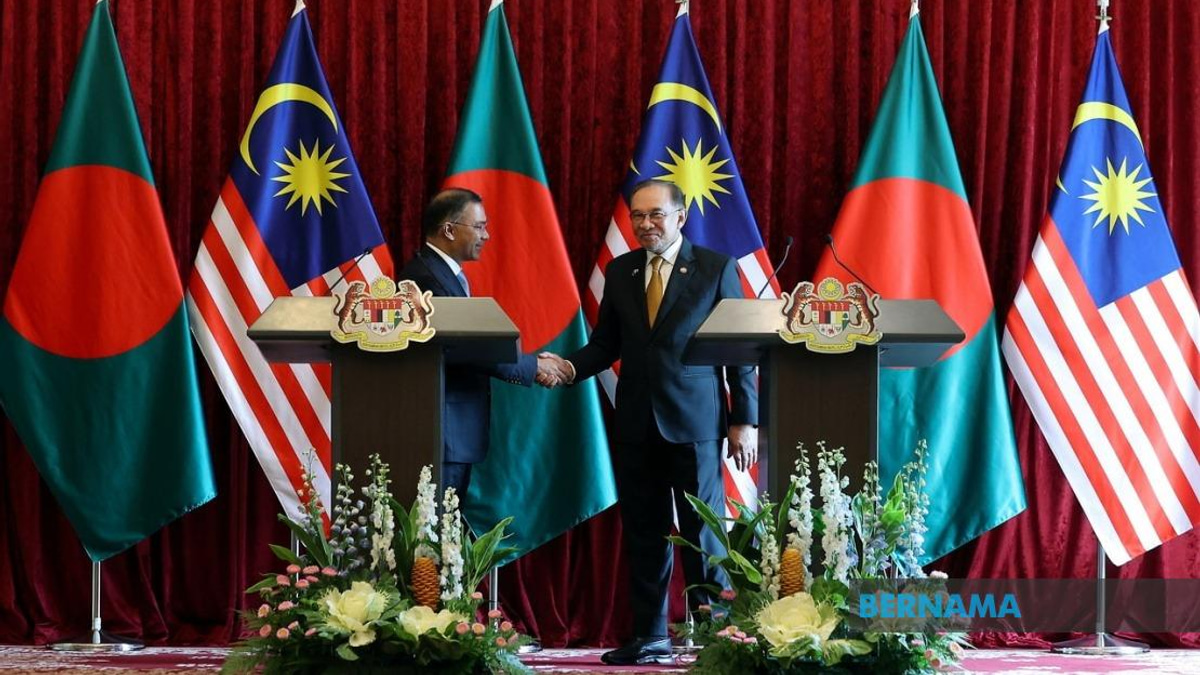
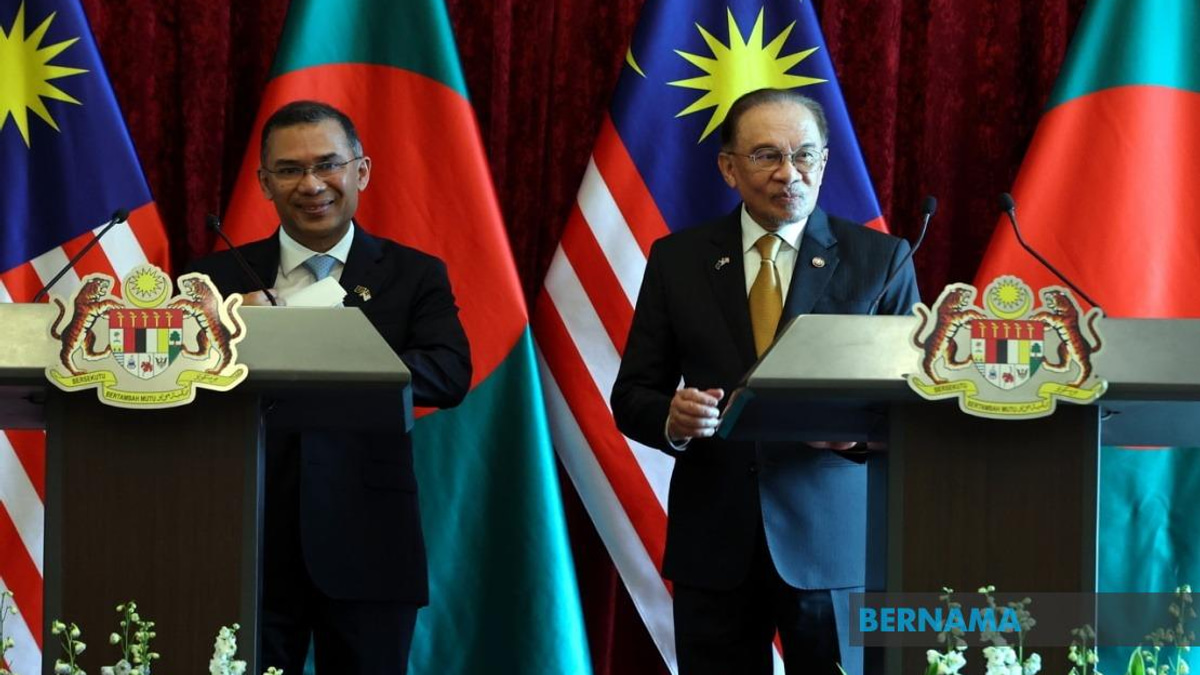
Prime Minister Datuk Seri Anwar Ibrahim has signalled a significant shift in Malaysia-Bangladesh relations, calling for the two nations to deepen their economic engagement in frontier industries rather than relying solely on conventional trade. Speaking alongside visiting Bangladesh Prime Minister Tarique Rahman in Putrajaya on June 22, Anwar outlined an ambitious agenda that positions both countries to capitalise on the digital transformation sweeping across Asia.
The strategic reorientation reflects mounting recognition among policymakers in both capitals that traditional sectors, while important, can no longer be the sole foundation of bilateral economic ties. Agriculture will continue to play a role in the partnership, Anwar acknowledged, yet the prime minister emphasised that semiconductor technology, the digital economy, energy infrastructure, and advanced manufacturing represent the genuine frontier where mutual prosperity can be unlocked. This perspective signals Malaysia's determination to leverage its existing strengths in electronics and semiconductor fabrication whilst simultaneously supporting Bangladesh's ambitions to industrialise.
Artificial intelligence emerged as perhaps the most compelling priority in Anwar's remarks. The technology presents what he termed a key challenge for the future—one that neither nation can afford to navigate in isolation. Malaysia's established tech ecosystem and Bangladesh's substantial talent pool in software development and business process outsourcing create natural complementarities. Collaboration in AI research, development, and deployment could position the Malaysia-Bangladesh axis as a meaningful player in Southeast Asia's artificial intelligence landscape, potentially attracting multinational investment and fostering innovation hubs in both nations.
Energy cooperation carries equally strategic weight, particularly as both countries grapple with rising electricity demand and pressure to transition toward cleaner sources. Bangladesh, with its growing population and expanding manufacturing base, faces acute energy security challenges. Malaysia, meanwhile, possesses expertise in liquefied natural gas operations and renewable energy deployment. Joint initiatives in solar technology, biomass energy, and grid modernisation could accelerate Bangladesh's energy transition whilst creating profitable opportunities for Malaysian enterprises. The energy sector also offers potential for technology transfer and skills development, strengthening the human capital base in both nations.
The semiconductor sector represents perhaps the most economically consequential dimension of the expanded partnership. Malaysia hosts one of the world's most sophisticated semiconductor ecosystems, hosting major fabrication plants, design centres, and supply chain operations. Bangladesh, by contrast, represents an emerging market with limited but growing semiconductor capabilities. Enhanced cooperation could involve Malaysian firms establishing manufacturing or assembly operations in Bangladesh, training engineers and technicians, and integrating Bangladeshi suppliers into regional semiconductor value chains. For Malaysia, such expansion into Bangladesh offers an alternative to rising labour costs at home, whilst Bangladesh gains access to world-class expertise and investment.
Formal mechanisms have already begun materialising. During the bilateral engagement, both governments exchanged a Memorandum of Understanding focused on cultural cooperation, signalling that the partnership extends beyond purely commercial considerations into people-to-people connections. Simultaneously, two Exchanges of Notes were formalised—one addressing counter-terrorism research, the other establishing frameworks for investment promotion and facilitation. These instruments demonstrate a comprehensive approach to bilateral relations, acknowledging that security cooperation and institutional infrastructure are prerequisites for sustained economic collaboration.
The counter-terrorism research initiative carries particular significance for Southeast Asia. Both Malaysia and Bangladesh have grappled with security challenges related to extremism and transnational terrorist networks. Joint research programmes, intelligence sharing protocols, and capacity-building initiatives can enhance both nations' ability to counter shared security threats. Such cooperation ultimately creates a more stable environment for the commercial partnerships in AI, energy, and semiconductors that both governments are eager to develop.
Investment facilitation mechanisms warrant close attention from business communities in both nations. By formalising procedures for project approvals, regulatory clearances, and dispute resolution, the exchange of notes removes friction that historically constrained cross-border investment. Malaysian companies exploring opportunities in Bangladesh manufacturing will benefit from clearer pathways to market entry. Similarly, Bangladeshi entrepreneurs seeking to establish presence in Malaysia's more developed financial and technology sectors will encounter fewer bureaucratic obstacles. This institutional smoothing effect often proves as valuable as preferential tariffs in driving genuine commercial activity.
The timing of Rahman's two-day official visit reflects broader geopolitical currents in South and Southeast Asia. As India and China compete for influence across the Indian Ocean region, Malaysia and Bangladesh possess incentives to strengthen ties with each other. Enhanced economic interdependence creates mutual interest in regional stability and offers both nations greater agency in navigating great power dynamics. For Malaysia, deepening ties with Bangladesh reinforces its position as a bridge between South Asia and Southeast Asia. For Bangladesh, strengthening partnerships with Malaysia and other Southeast Asian economies reduces dependence on any single power centre.
The expansion into emerging technology sectors also responds to global supply chain reconfiguration accelerated by geopolitical tensions and pandemic disruptions. Companies worldwide are actively diversifying manufacturing bases away from concentration in single jurisdictions. Malaysia's existing semiconductor cluster and Bangladesh's competitive labour advantage make both nations attractive candidates for this geographic redistribution. Joint ventures and collaborative manufacturing could position the Malaysia-Bangladesh partnership as a compelling alternative for companies seeking supply chain resilience and risk reduction.
Looking ahead, translating the announced intentions into concrete investment and technology transfer will require sustained commitment from both governments. Trade promotion agencies, investment boards, and industry associations in each nation must actively cultivate relationships between Malaysian and Bangladeshi enterprises. Educational institutions should expand student exchange programmes and collaborative research initiatives in AI and advanced manufacturing. Regular bilateral consultations at ministerial and technical levels will ensure that institutional frameworks evolve alongside shifting commercial requirements.
The bilateral partnership's expansion into AI, energy, and semiconductors ultimately reflects a mature recognition that 21st-century prosperity flows to nations that master emerging technologies rather than those content with traditional comparative advantages. By committing to deepened cooperation in these sectors, Malaysia and Bangladesh are positioning themselves not merely as consumers of global technology but as active participants in its creation and deployment—a posture that promises disproportionate economic rewards in the decades ahead.