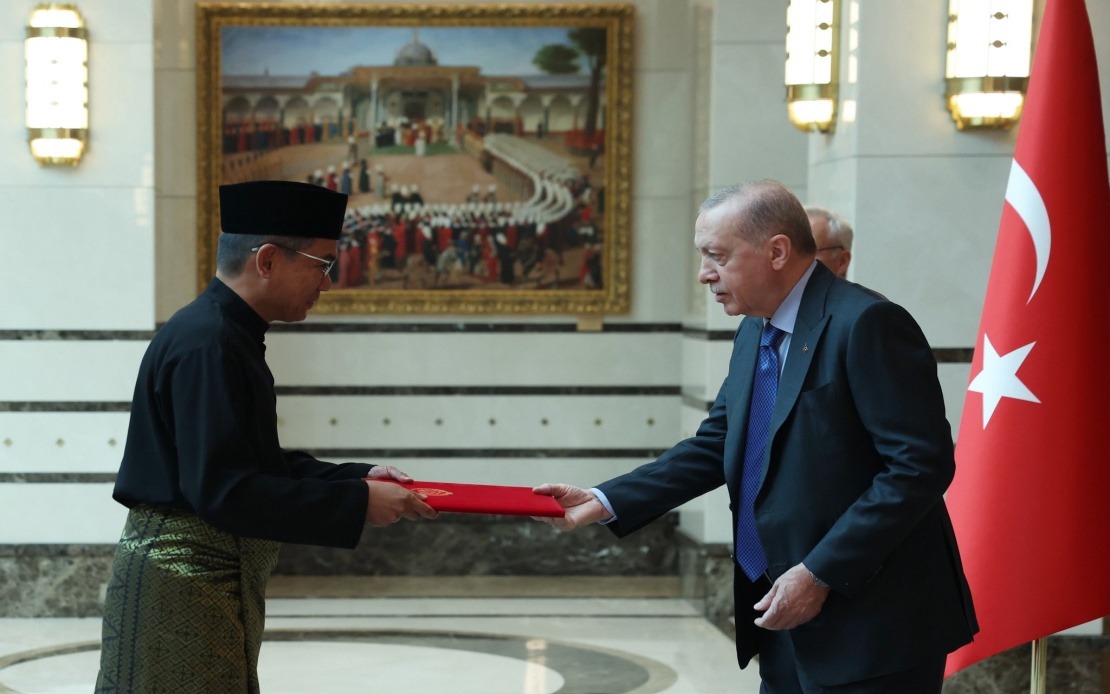
Malaysia has formally endorsed Türkiye's aspiration to achieve ASEAN Dialogue Partner status, signalling strong support for deepening the Turkish nation's institutional ties with Southeast Asia. The backing was communicated during a ceremonial meeting between Malaysian Ambassador to Türkiye Adlan Mohd Shaffieq and Turkish President Recep Tayyip Erdoğan at the Presidential Complex in Ankara on June 17, when the ambassador formally presented his credentials. This diplomatic gesture underscores Malaysia's commitment to expanding Ankara's role within the regional architecture and reflects the broader strategic importance both nations place on their bilateral relationship.
Ambassador Shaffieq characterised Türkiye as an increasingly vital partner for Southeast Asia, emphasising how the country has demonstrated growing economic commitment alongside a sophisticated understanding of regional dynamics. The ambassador highlighted three pillars that have strengthened Türkiye's standing with ASEAN members: expanding commercial engagement that reflects mutual economic interests, a strategic orientation aligned with regional priorities, and flourishing people-to-people connections that create deeper cultural and social bonds. These dimensions collectively position Türkiye as more than a distant observer of Asian affairs, but rather as a stakeholder invested in the region's trajectory.
The diplomatic overture included warm personal greetings from His Majesty Sultan Ibrahim, King of Malaysia, and Prime Minister Datuk Seri Anwar Ibrahim to President Erdoğan, demonstrating that the support for Türkiye's dialogue partner application enjoys backing at Malaysia's highest levels. This personal dimension is significant in Southeast Asian diplomacy, where leadership relationships often drive policy direction and institutional arrangements. The inclusion of both the monarch and prime minister's greetings suggests the Malaysian government views this matter as meriting high-level attention.
Malaysia and Türkiye have cultivated a multifaceted partnership extending across several crucial sectors. Education has emerged as a cornerstone, with Turkish universities attracting Malaysian students and collaborative research initiatives bridging both nations. Defence cooperation reflects shared security concerns and has expanded through military training, technology exchanges, and strategic consultations. Perhaps most distinctive is the burgeoning halal industry collaboration, where Türkiye's significant position in Islamic commerce aligns with Malaysia's aspirations as a global halal hub. These sectoral partnerships create practical foundations for the broader diplomatic relationship.
Ambassador Shaffieq framed the Malaysia-Türkiye relationship as resting on mutual trust and shared values, anchored in complementary visions for peace, prosperity, and sustainable development. This characterisation moves beyond transactional diplomacy toward a values-based partnership. He specifically highlighted the personal rapport that has developed between President Erdoğan and Prime Minister Anwar Ibrahim, suggesting that this relationship could serve as a catalyst for expanded cooperation. In regional politics, such personal connections between leaders often translate into accelerated institutional collaboration and priority-setting that benefits both nations.
The ambassador called for leveraging the strong interpersonal dynamics between the two leaders to deepen collaboration across all economic and strategic sectors. This suggests Malaysia views the current political leadership in both capitals as exceptionally well-positioned to advance bilateral interests. The framing implies that strategic initiatives pursued now could establish frameworks and momentum extending beyond the current administration cycles.
For Türkiye, achieving ASEAN Dialogue Partner status would represent a significant institutional gain within regional frameworks. Such designation grants formal consultation rights and participation in ASEAN forums without full membership, allowing countries to deepen engagement with the bloc while maintaining independent foreign policy flexibility. Dialogue partnerships range from established relationships with powers like the United States, China, and India to more recent additions, each bringing distinct geopolitical weight and strategic interests to ASEAN discussions.
President Erdoğan reciprocated the Malaysian overtures by expressing confidence that bilateral trade relations would continue expanding, referencing an ambitious US$10 billion target. This figure indicates both countries envision substantially elevated commercial activity, suggesting current bilateral trade volumes fall well below this aspiration. Achieving this target would require deliberate sectoral development, reduced trade barriers, and systematic promotion of commercial linkages between private sectors.
Türkiye's growing engagement with ASEAN member states reflects Ankara's broader Indo-Pacific strategy, positioning the country as a bridge between Europe, the Middle East, and Asia. This geographic and geopolitical positioning potentially offers ASEAN value as a counterbalance to existing dialogue partners and as a fresh perspective on regional challenges. Türkiye's own maritime interests in the Eastern Mediterranean provide parallel concerns with Southeast Asian states regarding sea-lane security and freedom of navigation.
Malaysia's backing carries particular weight within ASEAN given Kuala Lumpur's traditional role as a bridge-builder and consensus-seeker within the bloc. Malaysian support signals that Türkiye's application enjoys backing from a respected ASEAN member comfortable with its strategic vision. This endorsement may influence other member states' positions, though ASEAN consensus processes typically require broader agreement.
The halal industry dimension deserves particular attention for Malaysian readers, as this sector represents a genuine competitive advantage for both nations. Türkiye's established export markets in Muslim-majority countries and its sophisticated certification infrastructure complement Malaysia's global halal standards-setting role. Deepened cooperation could position Southeast Asia and Türkiye as codeterminants of global halal commerce standards.
Longer-term implications of Türkiye achieving dialogue partner status could include expanded participation in ASEAN-affiliated forums addressing maritime security, counterterrorism, and economic integration. Such involvement might accelerate the already-growing Turkish presence in regional defence discussions and trade negotiations.