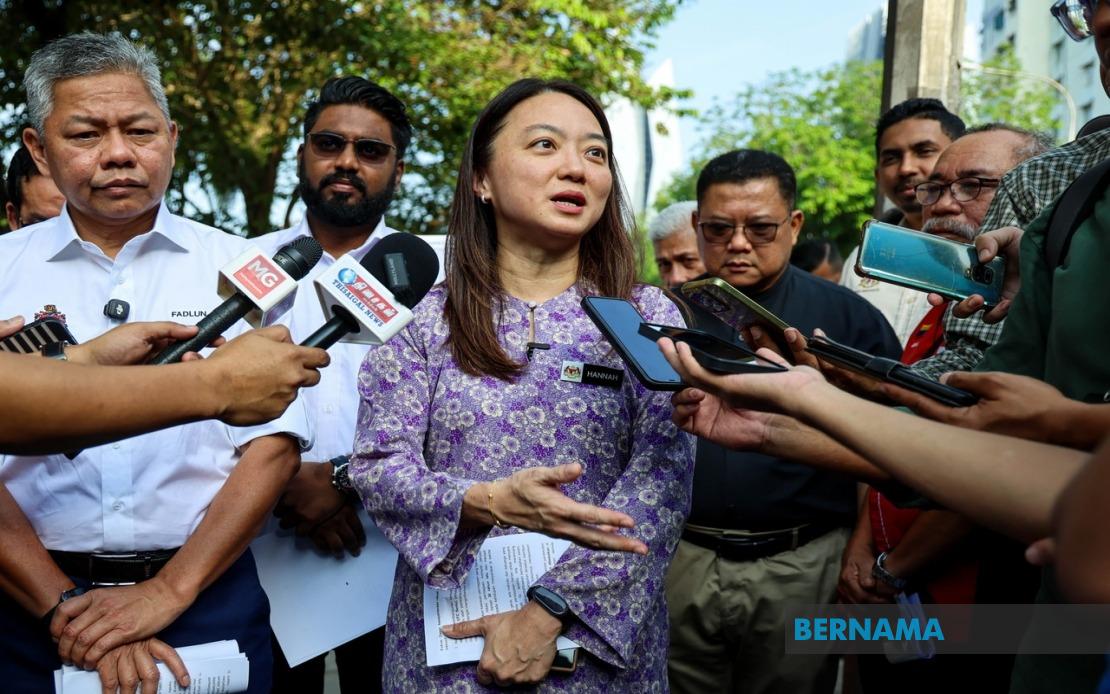
Malaysia's local authorities face mounting pressure to take ownership of public facility maintenance rather than waiting for infrastructure failures to dominate social media discourse, according to Minister in the Prime Minister's Department (Federal Territories) Hannah Yeoh. Speaking after observing a hawker facilities enhancement initiative under the Sustainable Business Programme near the Urban Transformation Centre (UTC) Sentul in Kuala Lumpur on June 19, Yeoh stressed that fundamental upkeep operations must become embedded in the operational culture of every local authority across the country, with no room for excuses when it comes to cleanliness and safety standards.
The minister's comments came in response to a recent wave of online complaints regarding deteriorating conditions at public amenities in Putrajaya, including non-functional lifts and escalators that sparked viral social media posts. Her remarks underscore a growing friction point between government maintenance responsibilities and public expectations, particularly in high-profile locations that attract both domestic and international visitors. Putrajaya, as Malaysia's administrative capital and a destination targeted for tourism development, serves as a visible case study in how infrastructure lapses can quickly erode a city's reputation when documented and amplified through digital channels.
Yeoh emphasised that while substantive renovation and modernisation projects may demand budgetary considerations and lengthy procurement processes, the routine operational maintenance that keeps facilities safe and presentable should never be contingent on securing additional resources. This distinction between capital-intensive upgrades and daily housekeeping represents a fundamental shift in how local authorities should conceptualise their responsibilities. The minister indicated that Putrajaya Corporation has already mobilised repair teams following the social media controversy, demonstrating that swift corrective action is feasible when attention is focused on the issue.
The call for heightened vigilance extends beyond reactive responses to complaints. Yeoh advocated for comprehensive site visitation schedules that allow municipal leadership to identify and address problems before they accumulate or become serious enough to warrant public outcry. This preventive strategy would require local authorities to establish systematic inspection protocols, assign clear accountability for different facility categories, and allocate sufficient personnel to conduct regular assessments across their jurisdictions. For densely populated urban areas and tourism-dependent municipalities, the implementation of such frameworks could substantially reduce the volume of infrastructure-related disputes that currently proliferate online.
However, Yeoh also articulated a parallel concern about the nature of information dissemination in the digital age, cautioning social media users to exercise greater discernment before amplifying grievances. She noted that short video clips and photographs shared online frequently capture only fragmentary perspectives of complex situations, potentially misrepresenting the full context or timeline of an issue. The minister's comments reflect an apparent tension between, on one hand, acknowledging the legitimate role of citizen reporting in flagging maintenance deficiencies and, on the other, expressing concern that sensationalised or incomplete information can distort public perception and potentially undermine confidence in institutions.
This debate carries particular relevance for Southeast Asian cities where rapid urbanisation has outpaced the capacity of many municipal governments to maintain existing infrastructure effectively. Countries including Malaysia, Thailand, Indonesia, and the Philippines face similar challenges in keeping pace with deteriorating public facilities while managing budget constraints and competing development priorities. The Malaysian government's emphasis on proactive maintenance reflects recognition that social media scrutiny of infrastructure conditions is unlikely to diminish, making robust preventive strategies essential for maintaining public trust and institutional credibility.
Yeoh's differentiated messaging—simultaneously demanding more rigorous performance from local authorities while encouraging public scepticism toward viral content—highlights the complex landscape that modern governance must navigate. Local authorities cannot claim insufficient resources as justification for neglecting fundamental maintenance tasks, yet the public must also understand that government agencies often contend with legitimate logistical and financial constraints that determine which projects receive priority. This calibrated approach attempts to reset expectations on both sides: officials must commit to non-negotiable standards, while citizens should seek fuller context before condemning entire institutions based on isolated incidents.
The implications for Malaysia's municipal governance structures are substantive. If implemented across the country's diverse array of local authorities—from large city councils managing millions of residents to smaller town municipalities—the adoption of systematic maintenance protocols could meaningfully reduce the frequency and severity of public facility failures. This would particularly benefit tourism-dependent municipalities like Putrajaya, George Town, and Malacca, where infrastructure conditions directly influence visitor satisfaction and economic outcomes. Enhanced maintenance practices could also reduce the volume of politically contentious social media disputes that erode public confidence in governance institutions.
The minister's comments also implicitly acknowledge that the relationship between government agencies and citizens has fundamentally transformed through digital connectivity. Where infrastructure complaints once required formal channels, community networks, or media intermediaries to reach officials, social media now enables instantaneous documentation and broadcast of problems to potentially millions of viewers. This shift compels local authorities to internalise higher maintenance standards not merely as ideals but as operational imperatives, recognising that any significant lapse risks rapid public exposure and reputational damage.
Looking forward, the success of Yeoh's advocacy will depend on whether local authorities throughout Malaysia translate her directives into concrete procedural changes. Establishing dedicated maintenance teams, implementing transparent inspection schedules, creating rapid-response protocols for urgent repairs, and assigning clear accountability represent the practical steps necessary to embed the recommended cultural shift. For Malaysian residents and visitors, the outcome could determine whether public facilities across the country evolve toward reliable, well-maintained standards or continue their trajectory of sporadic complaints and reactive interventions.

%22%2F%3E%3C%2Fpattern%3E%3C%2Fdefs%3E%3Crect%20width%3D%22100%25%22%20height%3D%22100%25%22%20fill%3D%22url(%23ph523ndg)%22%2F%3E%3Crect%20width%3D%22100%25%22%20height%3D%22100%25%22%20fill%3D%22url(%23ph523ndp)%22%2F%3E%3Ctext%20x%3D%2250%25%22%20y%3D%2250%25%22%20text-anchor%3D%22middle%22%20dominant-baseline%3D%22central%22%20fill%3D%22rgba(255%2C255%2C255%2C0.95)%22%20font-family%3D%22Georgia%2C%20'Times%20New%20Roman'%2C%20serif%22%20font-weight%3D%22700%22%20font-size%3D%22272%22%20letter-spacing%3D%22-0.02em%22%3EAnwar%3C%2Ftext%3E%3C%2Fsvg%3E)