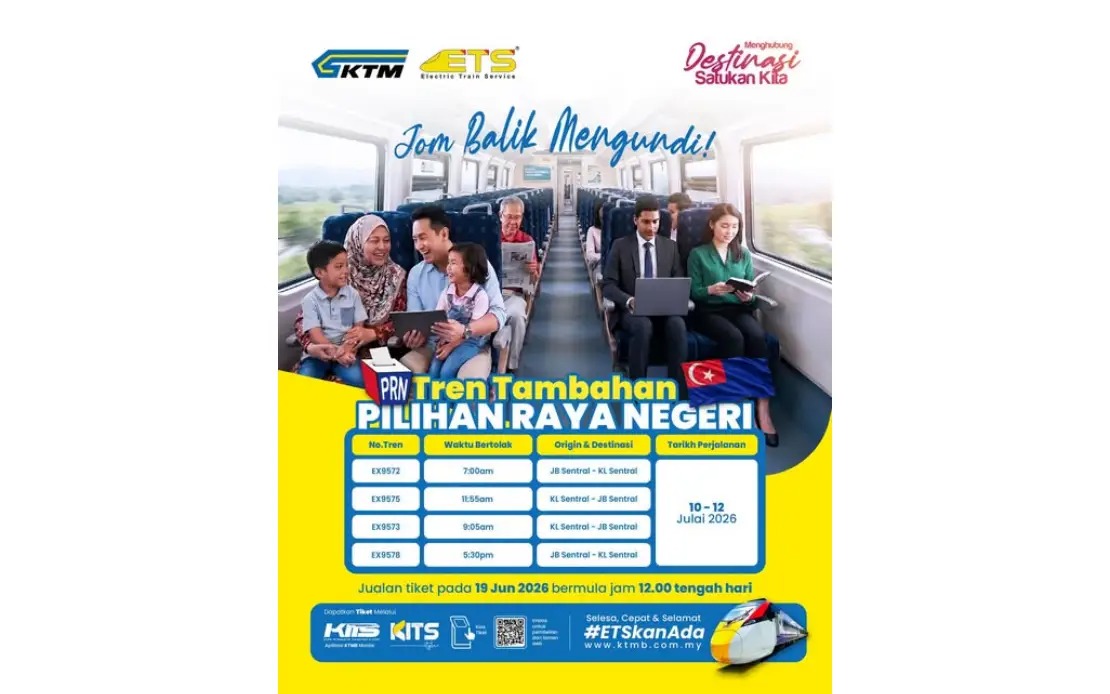
Keretapi Tanah Melayu Berhad (KTMB) is preparing to handle an anticipated surge in passenger demand by deploying additional ETS trains on southern routes ahead of the Johor state election scheduled for July 11. The national railway operator announced the expanded service window through its social media channels, signalling a coordinated effort to ensure voters can reach their home constituencies to cast their ballots.
Ticket reservations will commence from midday today, with KTMB offering multiple channels for purchasing seats to suit diverse commuter preferences. Travellers can access bookings through the KTMB Mobile app, the KITS Style application, the company's website at online.ktmb.com.my, or by visiting physical ticket counters at stations. This multi-channel approach reflects growing recognition that accessibility—both digital and physical—remains essential for serving Malaysia's dispersed voting population.
The extra train capacity will operate across a three-day window spanning July 10 through July 12, strategically bracketing polling day to accommodate voters departing from urban centres and returning afterwards. This timeline provides flexibility for those who need to travel considerable distances, particularly relevant for states like Johor where communities extend across significant geographical areas. The arrangement acknowledges that many Malaysians, especially younger voters and professionals, have migrated to work or study in other regions and require accessible transport to fulfil their electoral obligations.
The Election Commission formally dissolved the Johor State Legislative Assembly on June 1, setting in motion the electoral process that culminates in the July 11 election. This procedural timeline has given government agencies, including KTMB, adequate notice to plan and coordinate with other stakeholders. Railway operators in other Malaysian states often face similar challenges during state and federal elections, making KTMB's proactive announcement a potential model for future electoral cycles.
Transport accessibility during election periods carries broader implications for voter participation rates. When citizens encounter logistical barriers—inadequate transport, prohibitive travel costs, or inconvenient schedules—turnout suffers disproportionately among those residing far from polling stations. By expanding capacity, KTMB is directly addressing a structural obstacle to democratic participation, particularly for rural voters and those in smaller towns who depend on long-distance rail connections to major urban centres where they may have established their electoral registrations.
The ETS network's southern corridor serves communities across several critical constituencies within Johor, connecting major towns and enabling efficient movement of high volumes of passengers. Enhanced frequency during election periods demonstrates how infrastructure investment in public transport yields societal benefits beyond regular commercial operations. The flexibility of modern railway systems to respond to temporary demand surges showcases the value of maintaining robust public transport networks.
KTMB's announcement reflects coordination with electoral authorities, as railway operators must coordinate scheduling adjustments with the Election Commission and local authorities to ensure smooth operations. Such coordination is essential for managing crowd flows at stations, preventing congestion, and maintaining the reliability that commuters depend upon. The lead time provided by the announcement allows KTMB to deploy additional staff and resources strategically.
Pricing and accessibility remain crucial considerations. While the source does not detail ticket pricing for the extra services, KTMB's decision to open reservations in advance allows budget-conscious voters to plan expenses accordingly. For many Malaysians in rural areas or smaller towns, transport costs represent a material consideration in their decision to travel for voting, making timely information and reasonable pricing critical to ensuring inclusive participation.
The precedent established through this election may influence how Malaysian state-owned enterprises approach future electoral cycles. If these additional services prove effective in facilitating voter participation without straining operational capacity, the model could be replicated for other state elections and federal parliamentary elections. This evolution would represent growing institutional recognition that enabling voter participation is a legitimate public service objective alongside commercial performance metrics.

%22%2F%3E%3C%2Fpattern%3E%3C%2Fdefs%3E%3Crect%20width%3D%22100%25%22%20height%3D%22100%25%22%20fill%3D%22url(%23ph523ndg)%22%2F%3E%3Crect%20width%3D%22100%25%22%20height%3D%22100%25%22%20fill%3D%22url(%23ph523ndp)%22%2F%3E%3Ctext%20x%3D%2250%25%22%20y%3D%2250%25%22%20text-anchor%3D%22middle%22%20dominant-baseline%3D%22central%22%20fill%3D%22rgba(255%2C255%2C255%2C0.95)%22%20font-family%3D%22Georgia%2C%20'Times%20New%20Roman'%2C%20serif%22%20font-weight%3D%22700%22%20font-size%3D%22272%22%20letter-spacing%3D%22-0.02em%22%3EAnwar%3C%2Ftext%3E%3C%2Fsvg%3E)