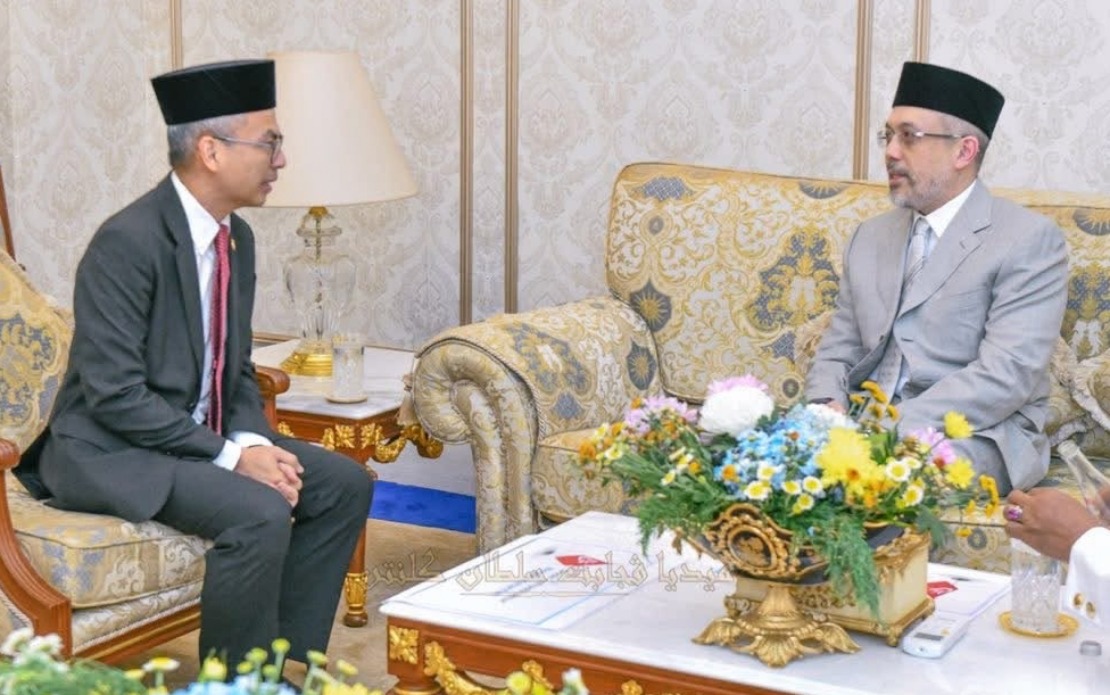
Communications Minister Datuk Fahmi Fadzil met with the Regent of Kelantan, Tengku Muhammad Fakhry Petra, at the Kota Lama Palace in Kota Bharu yesterday to brief the royal office on current challenges facing Malaysia's digital landscape, with particular emphasis on the surging problem of fraudulent social media accounts spreading false information.
The audience, held at 5 pm and lasting approximately an hour, formed part of the ministry's broader engagement with state leadership on matters affecting Malaysia's information ecosystem. The Kelantan Sultan's Media Office confirmed in a statement that the meeting focused on briefing the Regent about the latest developments emerging from the Communications Ministry's mandate and recent findings regarding threats in the digital sphere.
Among the critical issues examined during the session were contemporary affairs related to the ministry's portfolio and the increasingly troublesome phenomenon of fake accounts proliferating across social media platforms. Officials highlighted how these fraudulent profiles have become vehicles for disseminating fabricated narratives and damaging content specifically targeting the Malaysian Royal Institution—a matter of constitutional and cultural significance that has drawn heightened government scrutiny.
The growth of fake account networks represents a multifaceted challenge for Malaysia's regulatory framework. Beyond the immediate concern of misinformation, these accounts undermine public discourse, erode trust in legitimate information sources, and create vulnerabilities that hostile actors can exploit. The targeting of the Royal Institution in particular strikes at the heart of Malaysia's constitutional monarchy and national identity, making this issue both a cybersecurity and national governance concern.
For Malaysian readers, the meeting underscores growing government awareness that social media platforms require more robust oversight mechanisms. The problem extends beyond individual bad actors to sophisticated disinformation campaigns that weaponize false information about institutions central to Malaysia's political stability. This challenge becomes increasingly pressing as more Malaysians conduct their daily lives, conduct commerce, and form political opinions through digital channels where verification is difficult and misinformation spreads rapidly.
The engagement between Fahmi and the Kelantan regent reflects a broader governmental strategy of coordinating with state leadership on matters that transcend federal-state boundaries. Royal households maintain unique positions within Malaysia's constitutional framework, and keeping them informed about emerging threats—particularly those targeting the institution itself—represents prudent governance and demonstrates the seriousness with which the Communications Ministry regards these developments.
Regional implications also merit attention. Southeast Asia has emerged as a focal point for coordinated disinformation campaigns, with fake account networks often crossing national borders and targeting multiple countries simultaneously. The sophistication of these operations has escalated considerably, employing artificial intelligence, automated bot networks, and sophisticated targeting algorithms to maximize impact. Malaysia's experience with protecting its institutions from such threats may serve as a cautionary or instructive example for neighbouring countries facing comparable challenges.
During the meeting, Minister Fahmi presented the Regent with a memento as a gesture of respect and goodwill. The accompanying delegation included the Senior Private Secretary to the Communications Minister, MohamadAsif Afifi Mohd Yusof, along with other ministry officials and staff. The Kelantan Sultan's Office fielded senior officers to receive the minister, and the formal proceedings concluded with informal engagement between the parties, including photographs documenting the occasion.
The Communications Ministry faces considerable pressure to demonstrate effectiveness in combating digital threats while balancing fundamental principles of free expression and information access. The ministry's approach increasingly involves consultation with state-level authorities and royal institutions, recognizing that protecting national institutions requires comprehensive coordination across multiple governance levels. Recent months have seen intensified focus on developing regulatory frameworks that can address the speed and scale at which misinformation spreads online without creating mechanisms vulnerable to abuse.
Looking ahead, this meeting signals that Malaysia's government intends to elevate the priority of digital integrity and institutional protection on the national agenda. The Communications Ministry's engagement with state leadership suggests that addressing fake accounts and disinformation will require sustained effort, potentially involving legislative reforms, platform accountability measures, and public awareness initiatives. For Malaysian citizens and businesses relying increasingly on digital platforms, clearer rules and enforcement mechanisms could significantly enhance online safety and information reliability.
The protection of the Royal Institution from coordinated online attacks represents a threshold issue in Malaysia's broader digital governance challenge. As fake account networks become more sophisticated and disinformation becomes more difficult to distinguish from legitimate information, the need for coherent, well-resourced government responses becomes correspondingly urgent. The Communications Ministry's focus on this matter, evidenced by direct engagement with state leadership, indicates recognition that safeguarding Malaysia's institutional integrity in the digital age demands attention at the highest levels of governance.