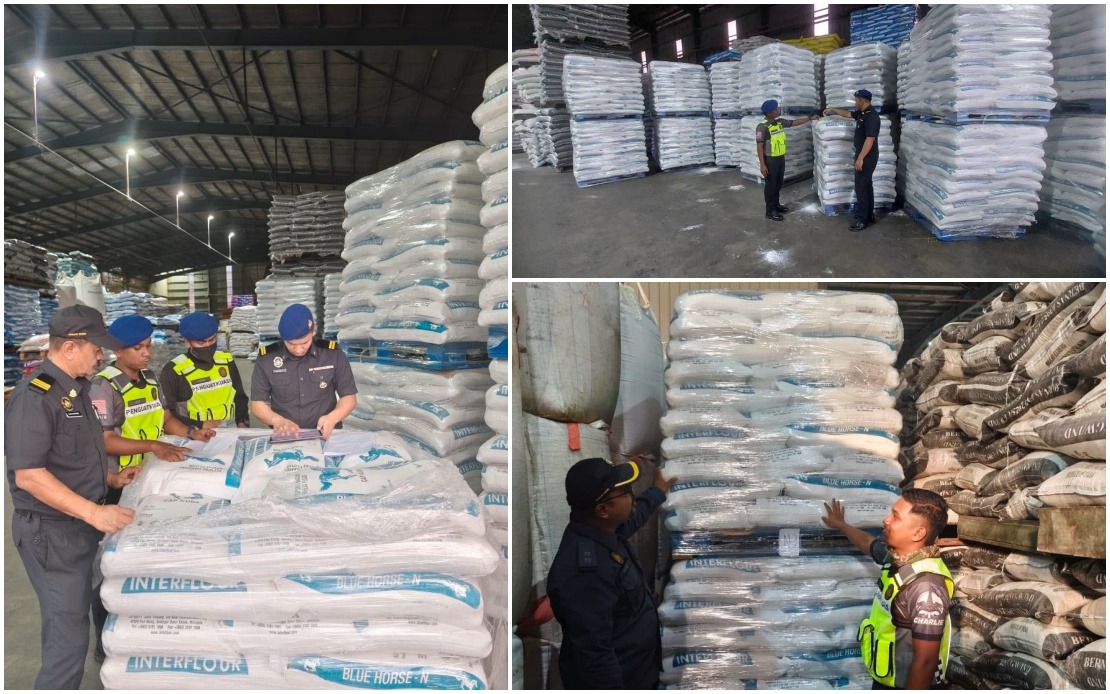
The Ministry of Domestic Trade and Cost of Living's Kedah branch conducted an enforcement operation at an animal feed processing facility in Kuala Ketil Industrial Area, uncovering substantial quantities of wheat flour stored without proper authorisation. The raid, carried out by four officers from the Baling branch on the afternoon of June 16, revealed what investigators believe was flour intended for the company's animal feed manufacturing processes, marking a notable breach of storage regulations in the state's industrial sector.
During the inspection, enforcement personnel discovered and seized a total of 53,325 kilogrammes of wheat flour with an estimated market value of RM100,251. This substantial seizure underscores the scale of the operation and raises questions about how long such storage may have been occurring undetected. The quantity involved suggests the facility may have been processing significant volumes of animal feed products, making the compliance failure all the more significant from a regulatory perspective.
According to Kedah KPDN director Muhammad Nizam Jamaludin, the factory manager—a 25-year-old Malaysian national—was unable to furnish any documentation demonstrating that he possessed the necessary permits or approval from the Supply Controller to maintain flour stocks at the premises. This absence of authorisation forms the crux of the violation, as flour storage in industrial settings is subject to controlled regulations designed to prevent mismanagement of subsidised goods and ensure transparent supply chain oversight.
The investigation has been initiated under Section 21 of the Control of Supplies Act 1961, a legal framework that empowers authorities to monitor and regulate the storage, distribution, and use of essential commodities. This particular statute carries significant weight in Malaysia's regulatory arsenal, as it was specifically designed to prevent diversion, hoarding, or unauthorised handling of controlled supplies. The application of this legislation signals that authorities view the incident as a potentially serious compliance matter rather than a minor administrative oversight.
The implications of this case extend beyond the individual factory, reflecting broader concerns within Malaysia's agricultural and manufacturing sectors regarding supply chain integrity. Wheat flour occupies a unique position in domestic commerce, as it qualifies for government price support mechanisms intended to stabilise costs for food manufacturers and ultimately consumers. Any unauthorised storage or potential diversion of subsidised flour represents not merely a regulatory breach but potentially a distortion of market mechanisms designed to protect vulnerable populations from commodity price volatility.
For animal feed manufacturers operating throughout Kedah and other states, this enforcement action serves as a stark reminder that regulatory compliance cannot be treated as optional. The sector depends heavily on access to affordable raw materials, and maintaining proper documentation and obtaining requisite approvals for storage facilities are foundational business requirements. Companies operating without such authorisation expose themselves not only to seizure of materials but potentially to legal prosecution and reputational damage.
The broader regional context adds another dimension to this incident. Southeast Asia has experienced recurring challenges with subsidy leakage and supply chain irregularities, particularly affecting price-controlled commodities. Malaysia's experience mirrors similar enforcement challenges faced in neighbouring countries, where authorities struggle to maintain the integrity of subsidised supply systems. This raid in Kedah demonstrates the government's determination to tighten oversight mechanisms and prevent such breaches from undermining policy objectives.
Muhammad Nizam's statement emphasising that firm action would be taken against any party found misusing or diverting subsidised goods signals a hardline approach to enforcement. This messaging is deliberate and strategic, intended to deter other operators from attempting similar violations. In an industrial landscape where cost considerations are paramount, such clarity regarding enforcement intentions helps level the playing field for legitimate businesses that invest in proper compliance infrastructure.
The incident also highlights potential vulnerabilities in the current oversight system. The fact that a facility could accumulate over 53 tonnes of flour without detection for an indeterminate period raises questions about the frequency and effectiveness of routine inspections by regulatory bodies. Whether this represents a resource constraint, a knowledge gap in the sector, or simply an isolated case requiring investigation remains unclear, but it underscores the importance of proactive compliance monitoring in industrial areas.
For stakeholders in Malaysia's food processing and animal feed industries, the message is unambiguous: regulatory frameworks exist not to create obstacles but to ensure fair competition and protect market stability. The costs and inconvenience of obtaining proper authorisation and maintaining compliant storage facilities represent necessary investments in legitimate business operations. Companies seeking to operate sustainably in this sector must prioritise their relationships with regulatory agencies and maintain transparent documentation of all supply chain activities.
As the investigation proceeds, the outcome will likely set precedent for how similar cases are handled moving forward. Whether the factory manager faces prosecution, faces administrative penalties, or receives warnings will influence perceptions of enforcement consistency throughout the region. Regulatory credibility depends substantially on demonstrated follow-through, making the handling of this case significant beyond its immediate circumstances.