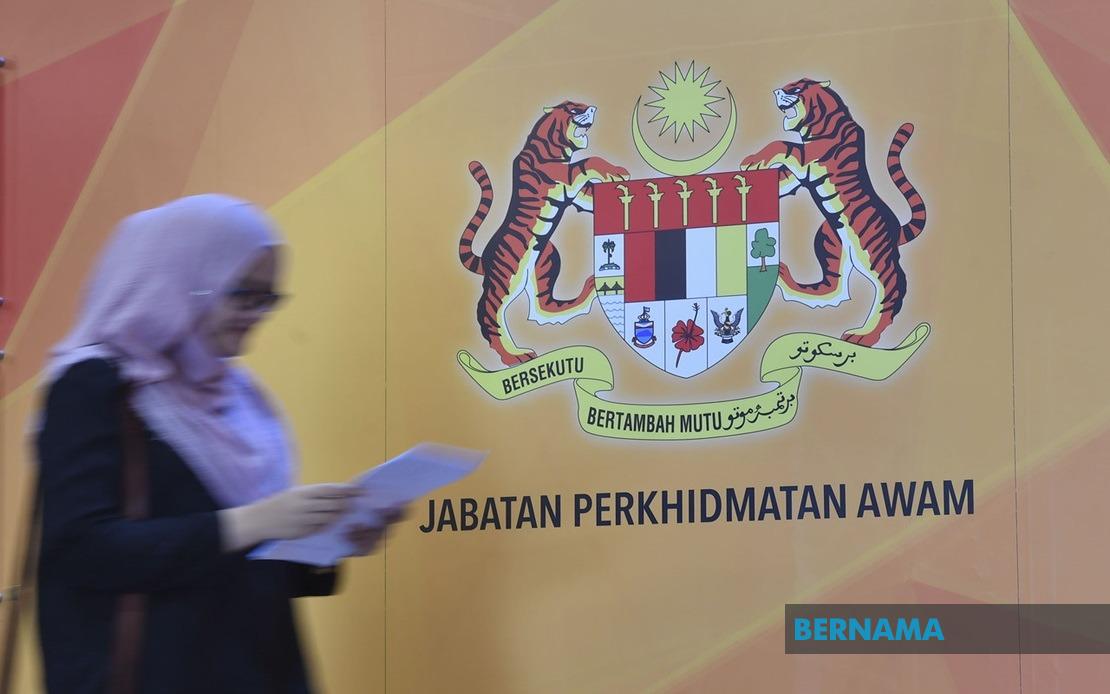
The Public Service Department (JPA) has unveiled a comprehensive sponsorship initiative offering 640 opportunities for 2026 SPM graduates, marking a significant investment in nurturing Malaysia's next generation of skilled professionals. This announcement reflects the government's strategic focus on building a competitive human capital base capable of addressing the nation's evolving economic needs. The timing of the initiative underscores the ongoing emphasis on educational access and merit-based advancement in Malaysia's talent development framework.
The four-pronged sponsorship structure reflects JPA's nuanced approach to talent cultivation across different educational pathways. The National Sponsorship Programme accounts for 30 slots and serves as the foundational tier, while the Special Programme targeting Japan, Korea, France and Germany provides 140 openings—signalling Malaysia's commitment to strengthening bilateral educational ties with key developed economies. The Special Programme for Domestic SPM Graduates comprises 200 positions, ensuring a substantial portion of funding remains directed toward local tertiary institutions. The JPA-MARA Special Programme (PKJM), representing the largest single component at 270 slots, demonstrates the government's expanded capacity to sponsor high-achieving students.
These sponsorship packages are deliberately structured to address skills gaps in sectors deemed critical for Malaysia's long-term economic transformation. The focus on engineering, science and technology reflects the nation's pivot toward high-value manufacturing, renewable energy, and digital innovation. The inclusion of social sciences programmes acknowledges that sustainable development requires expertise in policy-making, economics, public administration, and social development—disciplines that will shape effective governance and inclusive economic policies across the region.
The geographic diversity of host institutions represents a calculated strategy to expose Malaysian students to different educational systems and innovation ecosystems. Universities in the United States, Australia, Japan, South Korea, France, Germany, the United Kingdom and New Zealand each bring distinct pedagogical strengths and research capabilities. For Southeast Asian students, international exposure creates networks that extend beyond traditional Commonwealth connections, positioning Malaysia's professionals within global talent ecosystems while maintaining domestic institutional competitiveness through simultaneous domestic sponsorship options.
A notable feature of the 2026 sponsorship cycle is the shift toward the Academic Merit-Based Convertible Loan (PBUA), introduced by JPA in June 2025. This mechanism represents a departure from traditional scholarship models by introducing loan convertibility—meaning that recipients who maintain exemplary academic performance may see portions of their loans forgiven. The approach balances government investment in education with fiscal responsibility while creating direct incentives for sustained academic excellence. For prospective applicants, this structure implies that initial financial burden is reduced compared to traditional loans, yet performance expectations are clearly articulated.
The convertible loan framework carries implications for Malaysia's broader education financing landscape. By conditioning loan forgiveness on academic achievement rather than distributing grants outright, JPA signals confidence in merit-based selection while communicating to recipients that educational sponsorship represents mutual commitment rather than one-directional subsidy. This model may influence how other Malaysian funding bodies approach scholarship design, particularly as institutions seek to maximise social return on educational investment.
For Malaysian secondary school students, the 640 available slots represent tangible opportunity within a highly competitive landscape. Given that Malaysia's annual SPM cohort typically exceeds 400,000 candidates, these positions remain selective—approximately 0.16 percent of the year group. Nevertheless, the sheer number of openings across four distinct programmes suggests that JPA is deliberately expanding access beyond the narrowest top performers. Students with strong but not exceptional academic records may find pathways through the domestic programme, while high achievers in specific subject combinations may align with international programme priorities.
The application timeline—with results available from 10 am on the announcement date through June 22—provides a concentrated window for candidates to access outcomes through JPA's online portal. This compressed timeframe reflects digitalisation of government services and enables rapid communication of results, allowing successful applicants to begin planning transition to tertiary education. For families, the clarity of outcome communication represents important administrative modernisation compared to historical delays in scholarship announcements.
Regionally, Malaysia's public commitment to sponsoring 640 tertiary students annually situates the nation as a significant investor in human capital development within Southeast Asia. The emphasis on sending students to premier institutions globally, rather than consolidating investment domestically, demonstrates confidence in Malaysian students' competitiveness at world-class universities. Simultaneously, the substantial domestic allocation recognises the quality of Malaysia's own higher education institutions and the economic efficiency of developing talent locally for immediate domestic deployment.
The sponsorship initiative carries workforce development implications extending beyond individual recipients. Graduates trained in critical fields with government support typically experience formal or implicit expectations to serve national development priorities, either through civil service pathways or through contributions to priority sectors. The concentration on engineering and technology suggests JPA anticipates sustained demand for these skill sets across government agencies, statutory bodies, and critical national infrastructure projects over the coming decade.
Looking ahead, the 2026 sponsorship cycle establishes baseline expectations for future iterations. If demand significantly exceeds supply—a likely scenario given the prestige of JPA sponsorship and the compression of competition within Malaysia's secondary education system—subsequent years may see further expansion of slot allocations. Conversely, if performance metrics among PBUA recipients fall short of institutional expectations, the convertible loan model may be refined to strengthen academic incentives or support mechanisms.
For prospective applicants and their families, engagement with the sponsorship process represents more than securing educational funding. JPA sponsorship carries long-term career implications, establishing networks within government and civil service circles that typically extend throughout recipients' professional lives. Success in this competitive process signals academic capability to future employers both within and beyond the public sector, enhancing career trajectory prospects across Malaysia's entire professional landscape.

%22%2F%3E%3C%2Fpattern%3E%3C%2Fdefs%3E%3Crect%20width%3D%22100%25%22%20height%3D%22100%25%22%20fill%3D%22url(%23ph523ndg)%22%2F%3E%3Crect%20width%3D%22100%25%22%20height%3D%22100%25%22%20fill%3D%22url(%23ph523ndp)%22%2F%3E%3Ctext%20x%3D%2250%25%22%20y%3D%2250%25%22%20text-anchor%3D%22middle%22%20dominant-baseline%3D%22central%22%20fill%3D%22rgba(255%2C255%2C255%2C0.95)%22%20font-family%3D%22Georgia%2C%20'Times%20New%20Roman'%2C%20serif%22%20font-weight%3D%22700%22%20font-size%3D%22272%22%20letter-spacing%3D%22-0.02em%22%3EAnwar%3C%2Ftext%3E%3C%2Fsvg%3E)